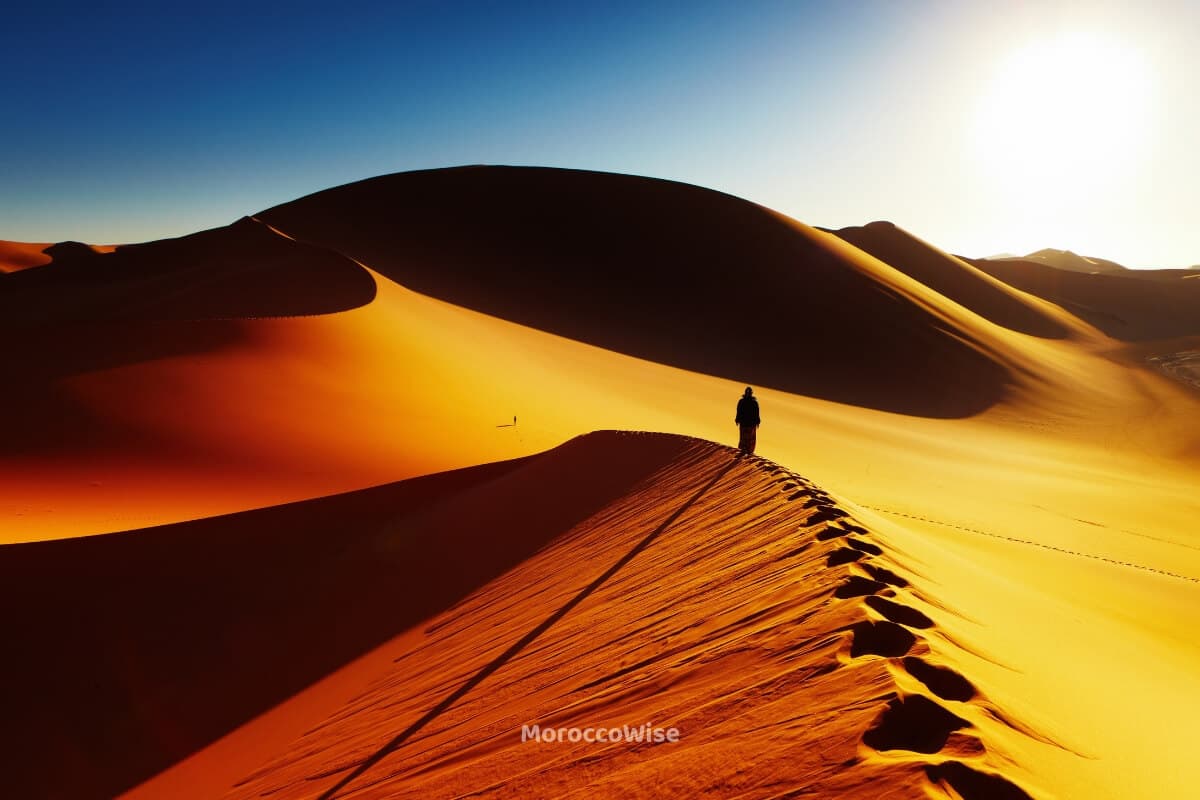
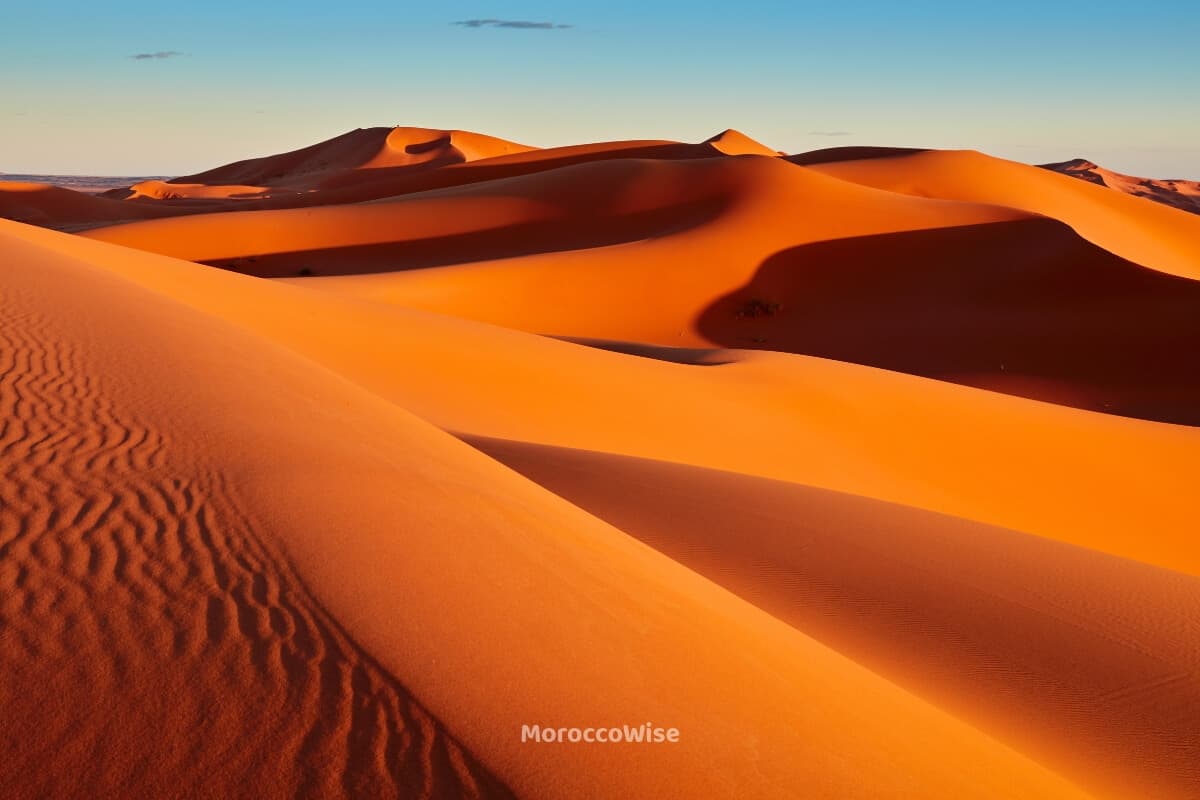
A landscape, many journeys
Find your own way into the desert
Morocco’s Sahara experiences vary by region, season, and travel style. Some visitors choose the tall, accessible dunes of Erg Chebbi; others seek the quieter distances around Erg Chigaga. Either way, allow enough time to appreciate the road as well as the destination, travel with a responsible local operator, and approach desert communities as hosts—not as scenery.
01 / Choose your dunes
Erg Chebbi or Erg Chigaga?
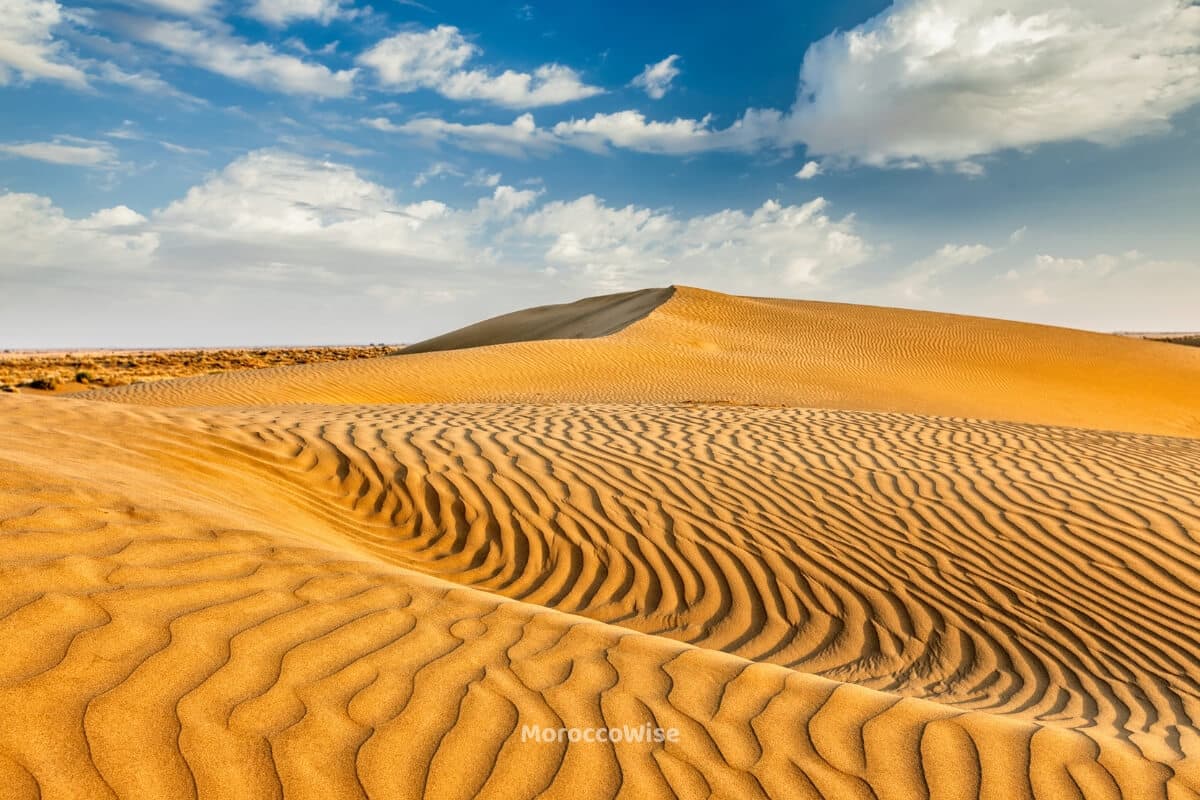
Two distinct gateways into Morocco’s dune country.
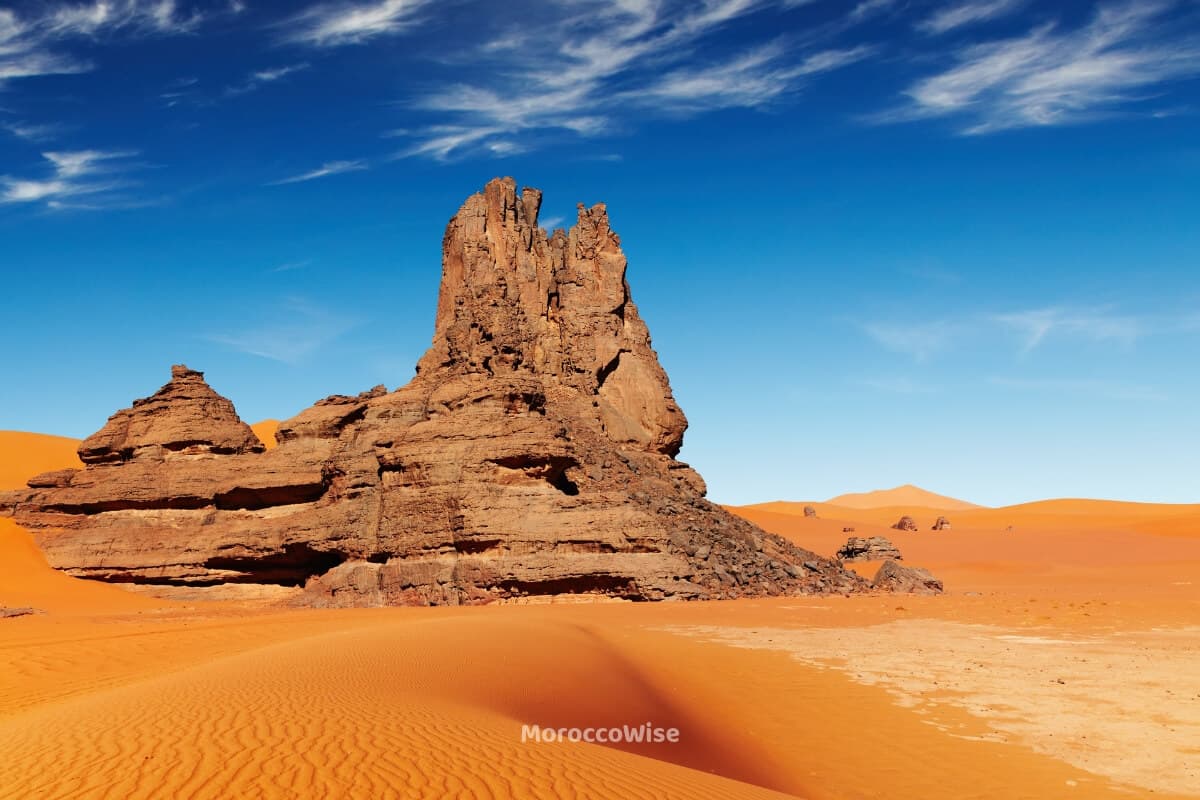
“The Sahara” is an immense region rather than one single sea of dunes on a day-trip map. Morocco’s most visited sand landscapes are ergs: areas where wind has gathered sand into dunes. The two names visitors most often compare are Erg Chebbi, beside Merzouga in the southeast, and Erg Chigaga, reached from the M’Hamid area farther west. Both deliver the unmistakable desert horizon, but the experience of getting there, the scale of the surrounding landscape, and the balance of access and remoteness are different.
Erg Chebbi is the classic choice for travelers who want striking dunes with comparatively straightforward access. The sand rises dramatically from the stony hamada around Merzouga, with high ridges catching a changing palette of orange and gold through the day. Guesthouses and hotels cluster near the dune edge, and a wide choice of camps and locally organized activities makes it possible to tailor a short stay or a multi-night visit. That convenience makes Chebbi especially suitable for a first Sahara trip, a family itinerary, or a traveler working within a limited schedule.
Erg Chigaga feels more remote because reaching its dunes generally involves a longer journey from M’Hamid and a transfer by four-wheel-drive vehicle over desert tracks. The route passes through a spare, open landscape of gravel, dry riverbeds, low vegetation, and scattered settlements before the dunes appear. Chigaga’s attraction is not simply a claim that it is “better” or “wilder”; it is the sense of distance and the transition through varied terrain. A knowledgeable driver, suitable vehicle, and realistic timing are essential. This is not a place to attempt an improvised self-drive across unfamiliar desert ground.
Your decision should start with the trip you actually want. Choose Erg Chebbi if you value iconic tall dunes, a larger range of accommodation, easier logistics, and more choice of activities. Choose Erg Chigaga if the journey itself is part of the adventure, you have extra time, and you want a camp reached by a more remote route. Ask any operator how long transfers take in practice, where the vehicle meets the camp, what is included, and whether the route changes with weather or track conditions.
There is also a common planning misconception to avoid: Zagora is not itself a towering dune field equivalent to Erg Chebbi. It is a useful gateway for southern Morocco and onward travel toward M’Hamid and Chigaga. If dramatic dunes are your priority, confirm the exact destination and overnight location rather than booking on a vague promise of a “Sahara tour.” Distances in the south are considerable, and a tour advertised from Marrakech may include many hours of road travel before the sand experience begins.
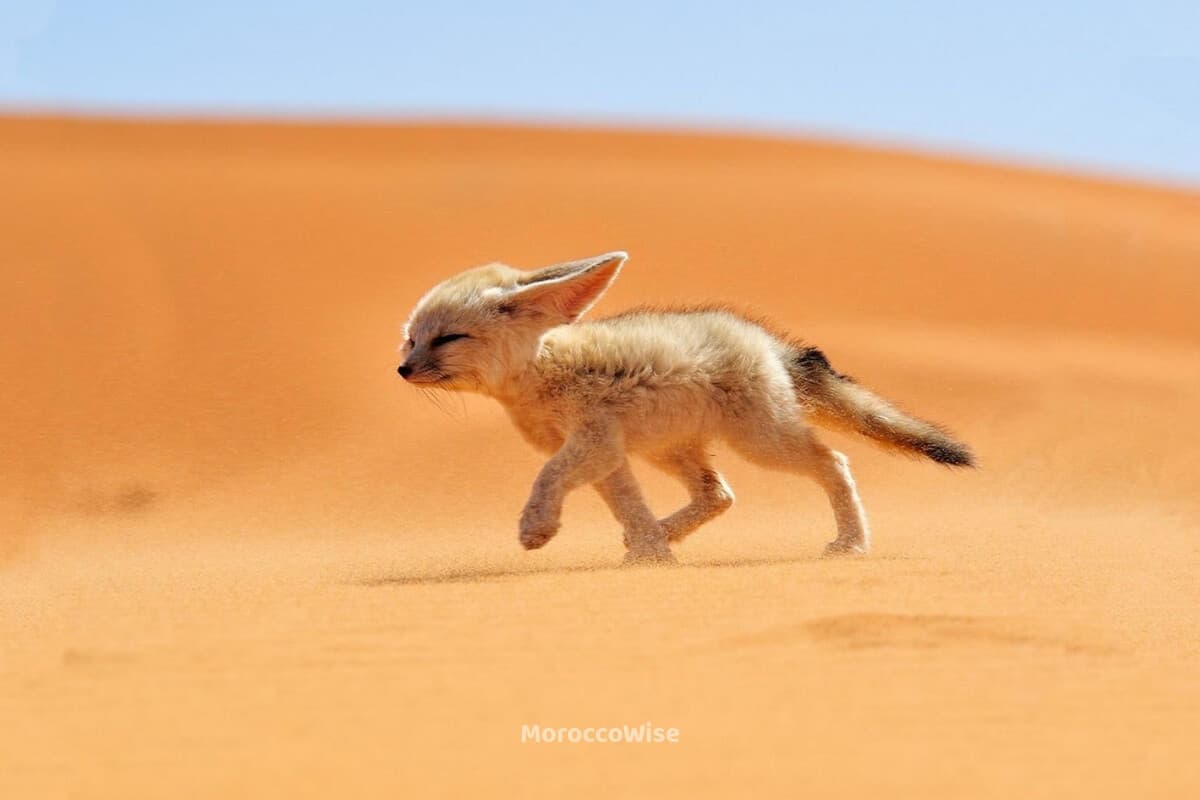
In either region, treat dunes as a living environment. Wind reshapes ridges and softens footprints; vegetation around the sand helps stabilize fragile ground. Follow guides on foot and in vehicles, avoid driving over plants, carry out litter, and do not collect wildlife or cultural objects. Desert ecosystems can look empty at first glance, yet small plants, insects, reptiles, and birds are adapted to this demanding environment. Traveling lightly is part of preserving the very quiet and openness that draw people here.
Read the landscape, not just the map
A map shows a destination; the route reveals its character. Around Merzouga, the contrast between sand and dark, stony desert is immediate. The inhabited edge of the dunes makes an early-morning walk or sunset outing simple to arrange, though the most popular viewpoints can be busy at peak times. Further from the settled edge, the pattern of ridges and valleys becomes quieter. A local guide can help you choose a route that suits your fitness, the temperature, and the light.
The country beyond M’Hamid feels more open and less predictable. Chigaga is only one part of a broader landscape, and the journey may include old tracks, grazing ground, and places whose names hold meaning for local families. Its remote character calls for preparation: carry water, use a driver who knows current conditions, and confirm the return plan. A remote camp may have limited connectivity and services. That is often a welcome change, but visitors should know what to expect before setting out.
Photographers often chase the last light, but early morning has its own rewards: cooler temperatures, sharper dune contours, and a chance to see tracks left overnight. Midday light flattens the color and can make walking uncomfortable, so plan a shaded rest rather than filling every hour. The weather is dynamic; a breeze, haze, or cloud can alter visibility and color. Give the landscape time instead of expecting it to perform on demand.
Build an itinerary with breathing room
For Erg Chebbi, a single night in a camp can work if you arrive in Merzouga early enough to rest, transfer, and reach the dunes before sunset. Two nights allow a slower morning and a deeper sense of place. For Erg Chigaga, account for the drive from Marrakech, the overnight stops needed on the way, and the off-road transfer from M’Hamid. Trying to cross the High Atlas, visit several major attractions, and sleep deep in the dunes on one compressed day makes the journey exhausting and increases pressure on drivers. Choose fewer stops and enjoy them properly.
02 / Travel at a gentler pace
The rhythm of the caravan
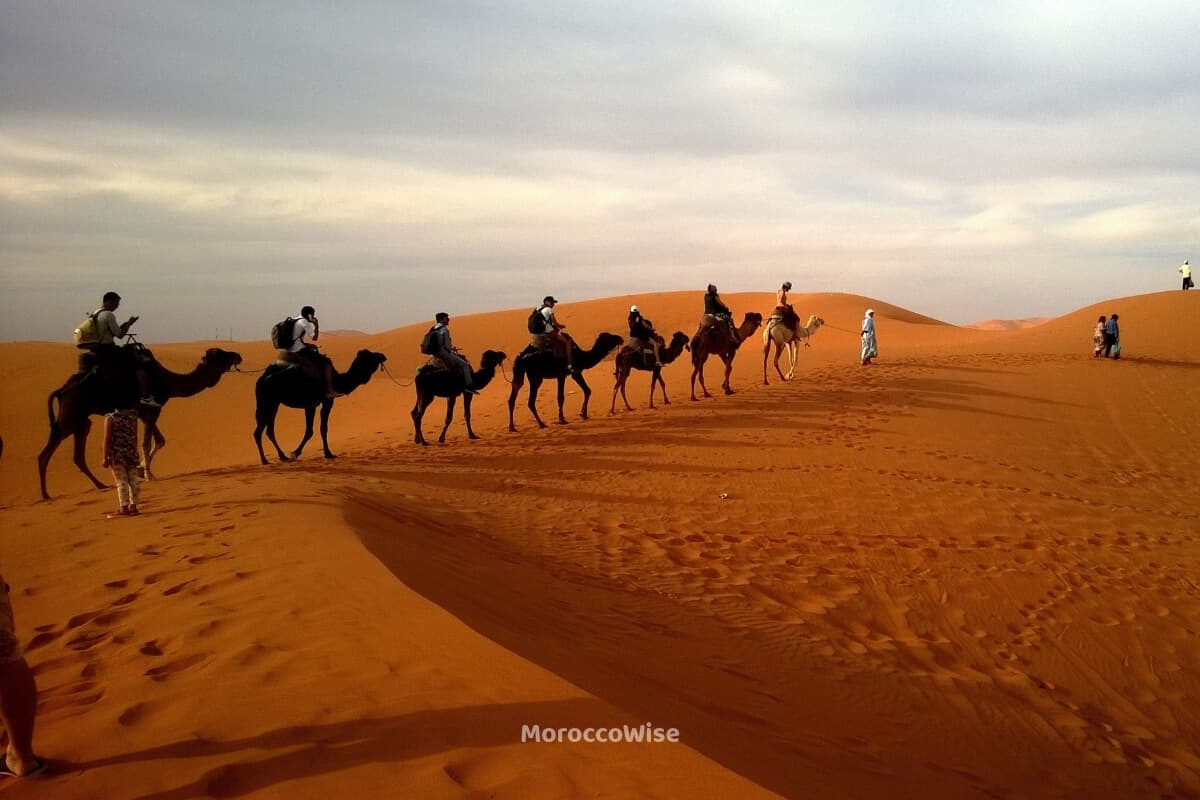
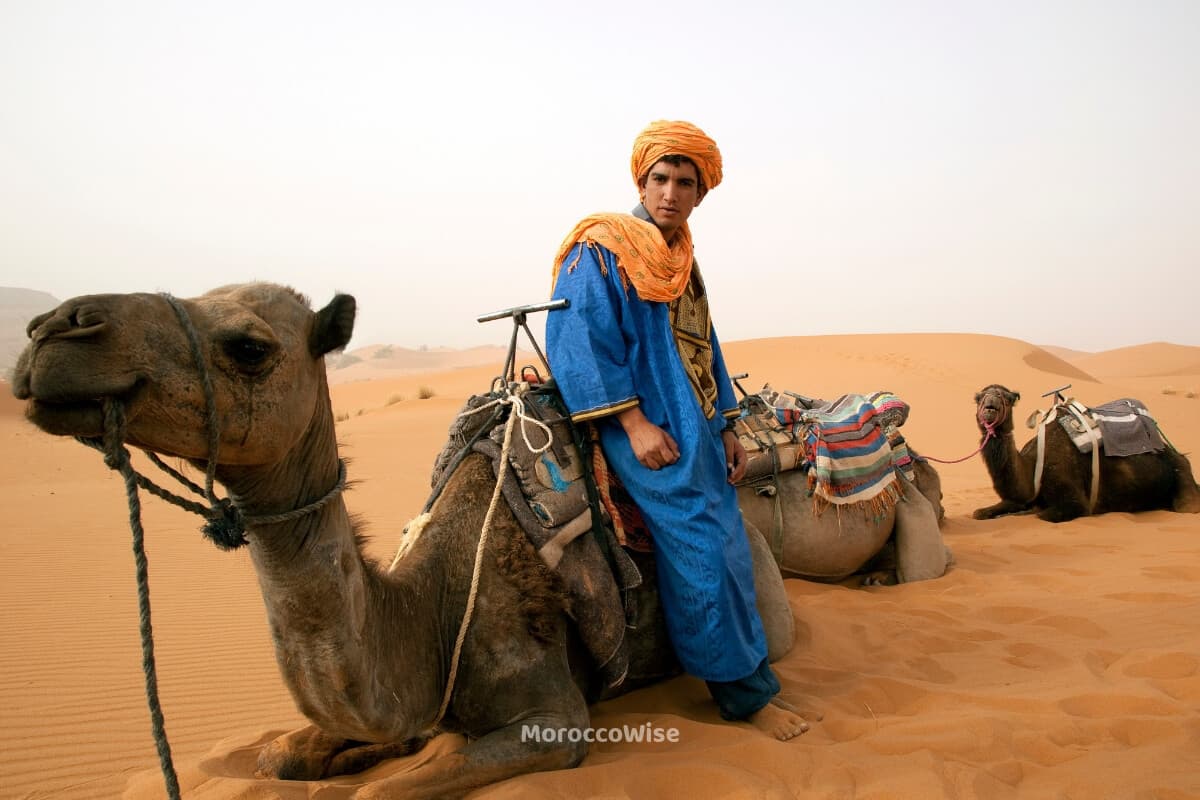
A camel trek can be a memorable way to enter a dune landscape, especially when the rhythm of walking replaces the pace of the road. Camels are well adapted to arid environments and have supported life and travel across North African deserts for centuries. The animal most often used for tourist treks in Morocco is a dromedary, with one hump. It is not a plush ride: mounting and dismounting feel unfamiliar, the saddle can be firm, and the rolling gait takes getting used to. A short ride is often enough for the experience.
Before setting out, listen carefully to the guide’s instructions. Hold the saddle as advised while the camel stands and kneels, keep your weight centered, and avoid sudden movements around the animal. Wear long, comfortable trousers, closed shoes, and sun protection. If you have balance, mobility, back, or joint concerns, discuss them honestly with the operator before booking; walking beside the caravan or reaching camp by vehicle may be a better option. Children should ride only under the operator’s guidance and according to its safety policy.
The classic sunset departure begins when the day’s heat starts to soften. A handler leads the camel string away from the edge of the settlement and into the sand. With each rise, the view opens across ridges that seem to change shape as the sun drops. The guide chooses a pace and route that work for the group and conditions. There may be a pause for photographs, but the most rewarding moments can be the ones between: the hush of footsteps on sand, the small movements of the caravan, and the growing coolness of evening.
A sunrise trek begins before dawn, so bring a warm layer and a headlamp if the operator recommends one. The desert is cooler before the sun clears the horizon, and the sky changes quickly from deep blue to pink and gold. From a ridge, look for the edge of shadow moving over the dune faces. Sunrise is often quieter than the busiest sunset window, though it requires an early wake-up and a reliable plan with camp staff. Ask about departure times the previous evening and arrange any wake-up call before turning in.
Camel routes are also a reminder of the long history of movement across the Sahara. For many centuries, networks of caravan routes linked North African cities and oases with communities south of the desert. Traders moved commodities such as salt, textiles, and other goods across difficult terrain; routes shifted over time in response to politics, water, and markets. These were not empty passages but connected worlds sustained by knowledge of wells, seasonal conditions, and hospitality. Modern excursions are not reenactments of those historic journeys, but understanding that history lends a deeper perspective to a slow crossing of the dunes.
Choose an operator who can explain how animals are cared for, how long rides last, how much weight they carry, and what alternatives exist for guests who prefer not to ride. A respectful handler gives the camel time to kneel and stand, handles it calmly, and does not overload the animal. Ask whether the trek includes an experienced local guide and what happens in extreme heat or poor weather. There is no need to ride a camel to have a meaningful desert stay: a walk with a guide, a short transfer, or a quiet view from camp can be just as rewarding.
03 / A night beneath the open sky
Desert camps and star-filled nights
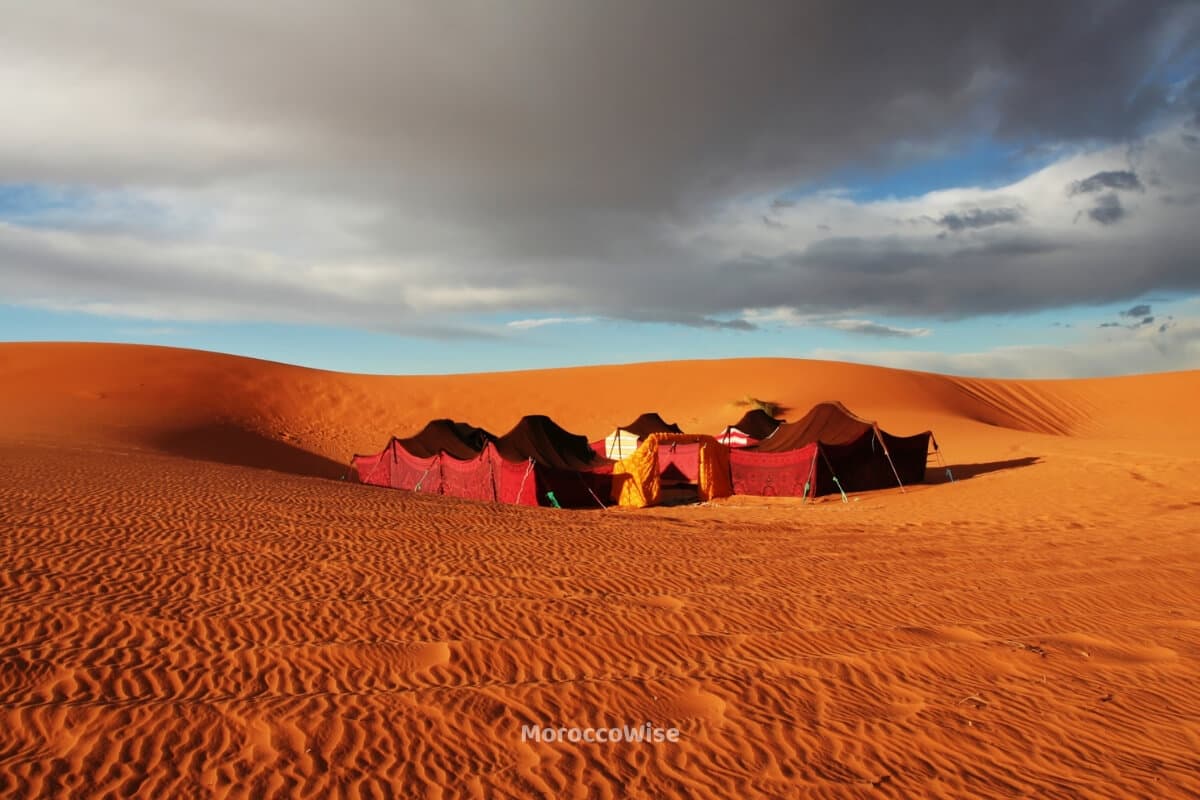
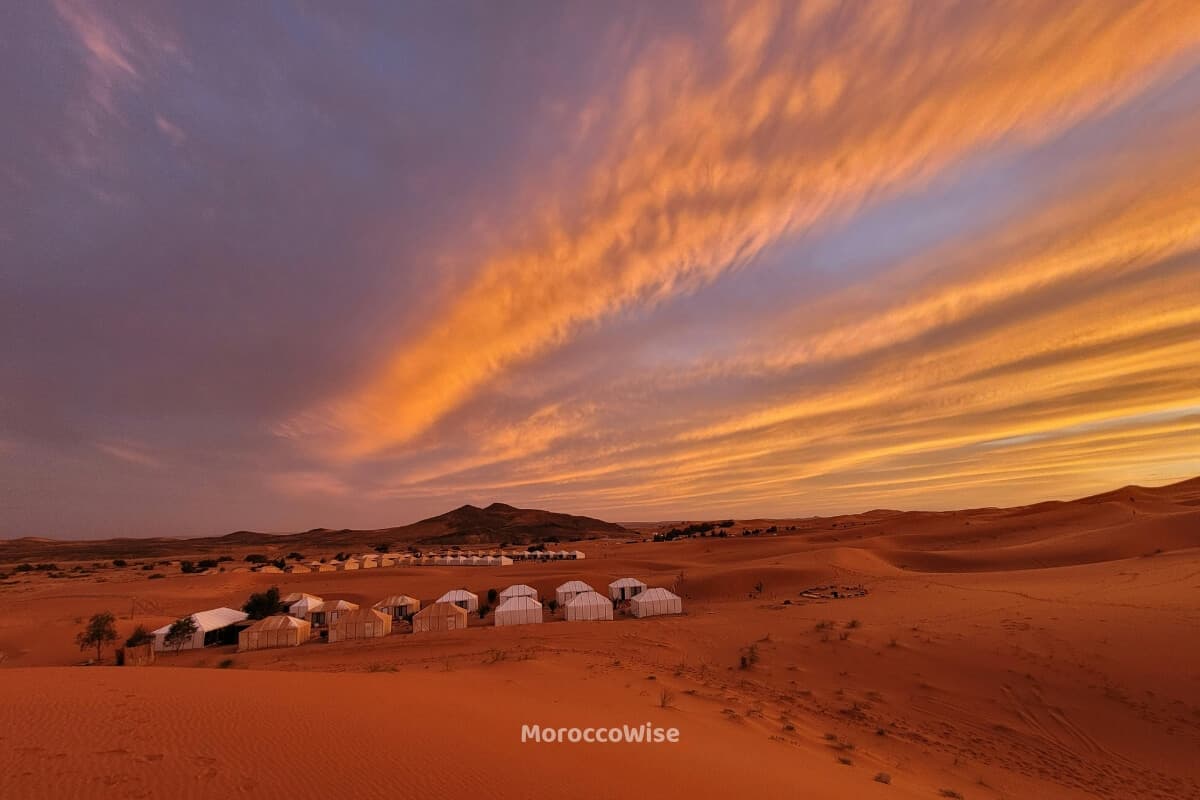
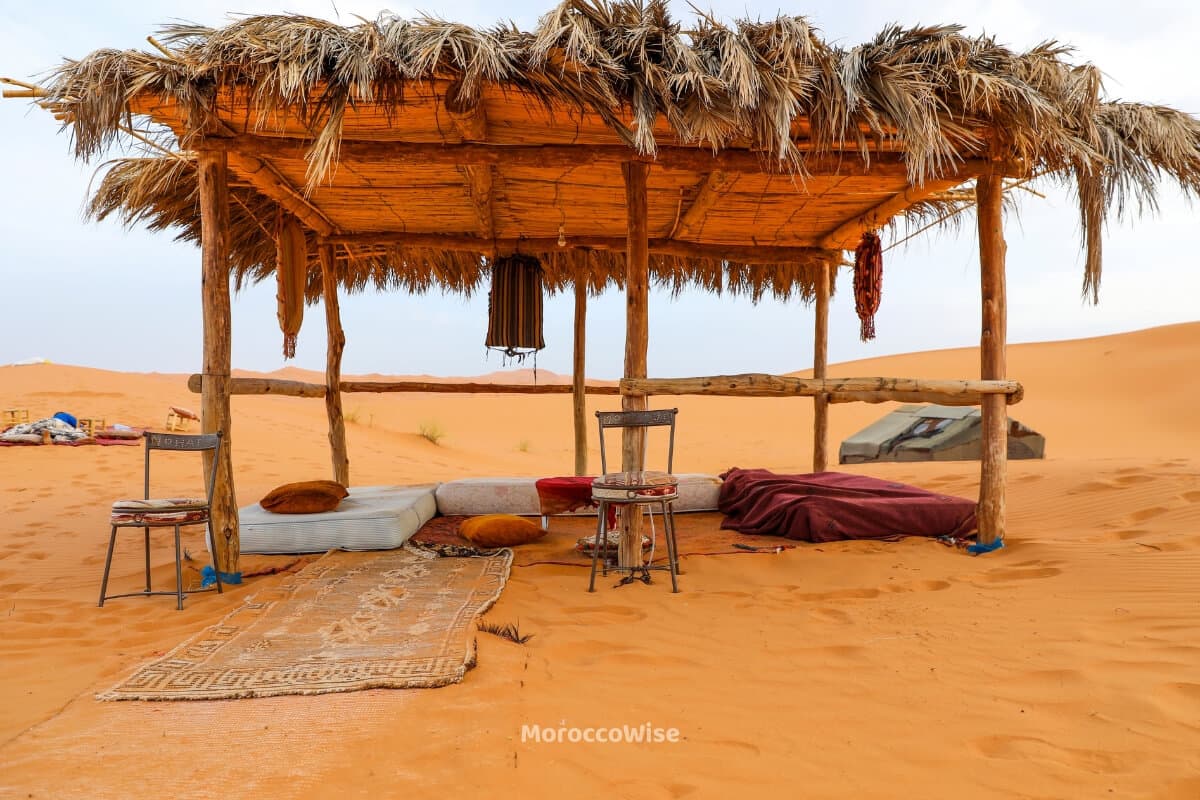
Sleeping in the dunes is often the moment travelers imagine first, but “desert camp” can describe very different stays. At one end are simple bivouacs: shared or basic private tents, straightforward bedding, communal meals, and facilities that may be limited or shared. This style can feel close to the elements and may suit travelers who value simplicity over amenities. Ask in advance about bathrooms, electricity, drinking water, blankets, and how far the camp is from vehicle access.
More comfortable camps may offer private tents, proper beds, charging points, rugs, and a dining tent. At the luxury end, some properties provide en-suite bathrooms, hot showers, private terraces, and attentive dining. The word “luxury” is not standardized, and facilities vary by camp and season. Ask for recent, specific information: Is the bathroom inside the tent? Is hot water available all day or at set hours? Does the quoted price include transfers, meals, and drinks? Are tents heated in winter? Clear answers prevent disappointment and help you compare like with like.
Location matters as much as the tent. Camps close to the edge of Erg Chebbi are easier to reach and can still provide a beautiful dune setting, but there may be more vehicle or camp activity nearby. More remote camps can feel quieter, though they require additional transfer planning. In the Chigaga area, the approach is commonly part of the experience and camps are separated from paved roads. Ask whether the final transfer is by four-wheel drive, camel, or a combination, and confirm what to do if a guest needs to leave early.
After dinner, step away from bright lights if it is safe and permitted by camp staff. The night sky is the destination’s great shared spectacle. Away from city lighting, the Milky Way may be visible when skies are clear and the moon is not too bright. Let your eyes adjust for several minutes; avoid looking at a phone screen, or switch it to a dim red setting. You do not need sophisticated equipment to enjoy the stars, though binoculars can reveal more detail in the moon and constellations. A local guide may point out familiar patterns and share the stories used to navigate by the sky.
Desert silence is not literal absence of sound. Wind brushes the tent, a camel shifts outside, someone tends a fire, and voices carry across the sand. What feels extraordinary is the scale of the quiet: no steady city traffic, no walls of buildings, and a horizon without obvious landmarks. Give yourself a little time without music or a camera. The experience often becomes more vivid when you stop trying to capture every moment.
Temperature can change sharply after sunset. Even a warm day can become a cold night, particularly in winter, so bring layers and confirm what bedding the camp provides. Sand can find its way into luggage and electronics; keep valuables in a closed bag and use a small torch for paths between tents. Follow staff guidance about walking after dark, wildlife, fire safety, and water use. Camps operate in fragile environments, and considerate guests help keep them comfortable for everyone.
04 / People and place
Amazigh hospitality and nomadic culture
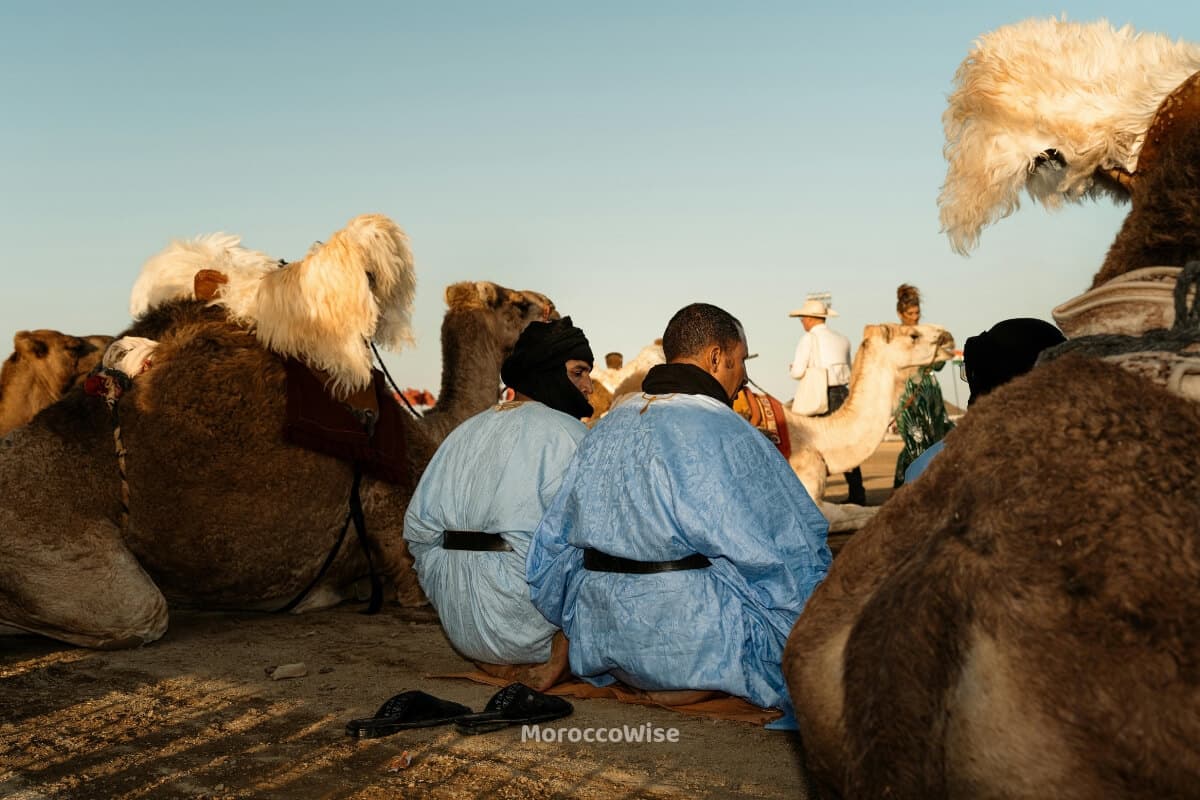
Morocco’s desert regions are home to communities with varied histories and ways of life. Amazigh—often written “Berber” in older travel material—is the name many people use for the Indigenous peoples and languages of North Africa. In southern Morocco, local identity reflects Amazigh heritage, Arabic-speaking communities, regional histories, and generations of movement and exchange. There is no single “desert culture” that describes everyone. The most respectful way to learn is to listen to the people who live here and avoid treating a community as a costume or a performance.
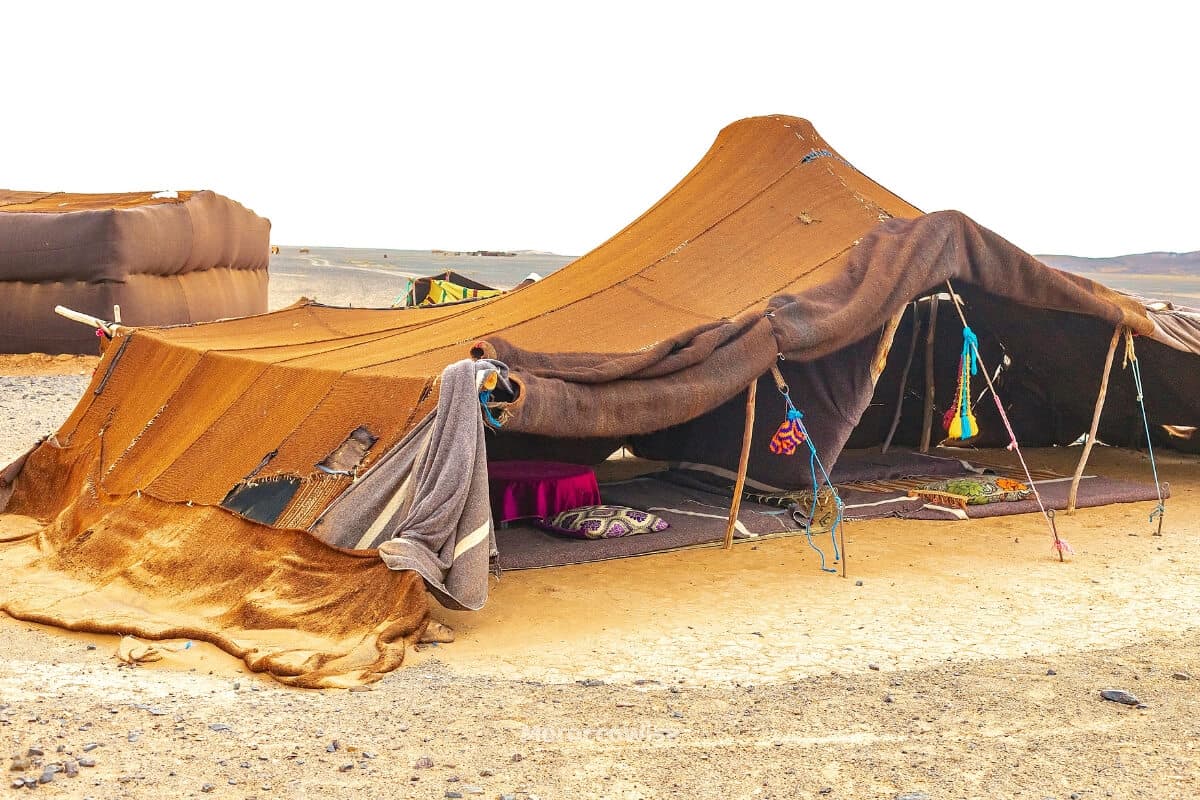
Nomadic and semi-nomadic lifeways have long been adapted to water availability, pasture, trade, and seasonal conditions. Today, families balance tradition with changing education, work, climate, and economic realities. A visit to a family or settlement should only happen through a locally appropriate invitation or an operator with clear community relationships. Ask what visitors are welcome to see, whether a contribution is expected, and whether photography is appropriate. Never assume that a person’s home, tent, or daily routine is automatically part of a tour.
Mint tea is a familiar gesture of welcome throughout Morocco, including desert settings. Preparation can be an unhurried ritual: tea is steeped with fresh mint and sugar according to the household’s taste, then poured from a height into small glasses. The pour aerates the tea and creates a light froth. Accepting a glass is a warm way to join a conversation; if you do not drink sweet tea, communicate that kindly. There is no need to stage the moment for photographs. Let your host set the pace, and appreciate the welcome as an exchange rather than a photo opportunity.
At camp, an evening around the fire may include songs, hand drums, clapping, or stories. Music varies by region, family, and group of performers, and it is best experienced with curiosity rather than assumptions about a single “traditional” sound. Join in if you are invited, ask before recording performers, and listen when a song carries a story or a meaning you do not yet understand. A simple question asked with respect can open a conversation about language, instruments, and local life.
Knowledge of the desert is practical and relational. People who travel or work here understand where tracks lead, how weather changes visibility, when a route is passable, and how to plan around limited water. That expertise is not a romantic survival myth; it is accumulated skill and local knowledge. A responsible guide will talk about the environment without claiming that every family lives the same way or that modern communities exist outside contemporary life.
Support local businesses where you can: book guides based in the region, buy crafts directly from makers, and ask tour operators how work and income are shared. Fair payment, safe working conditions, and a clear understanding of what a trip includes matter more than a vague promise of “authenticity.” Learn a greeting, pronounce names as carefully as you can, and be willing to follow local etiquette. Small gestures of respect make travel more meaningful for visitors and hosts alike.
05 / A journey worth taking slowly
The road south and a thousand kasbahs
The drive from Marrakech to the Sahara is one of Morocco’s great overland journeys, but it is not a quick transfer. The route climbs out of the city and crosses the High Atlas Mountains on the Tizi n’Tichka pass, then descends toward the arid south. Distance, mountain bends, traffic, weather, roadworks, and stops all affect travel time. A reputable driver plans conservatively and takes breaks. Resist an itinerary that promises a leisurely visit to several far-apart sights and a long final drive all in one day.
Tizi n’Tichka reaches high elevations and offers broad mountain views, but conditions are not identical every day. Winter weather can bring cold, rain, or occasional snow at altitude, and summer brings its own demands on drivers. Keep water and a warm layer accessible in the vehicle and follow current road advice. The pass is a working highway linking communities, not just a scenic photo stop; take care when pulling over, use safe viewpoints, and do not block traffic for a photograph.
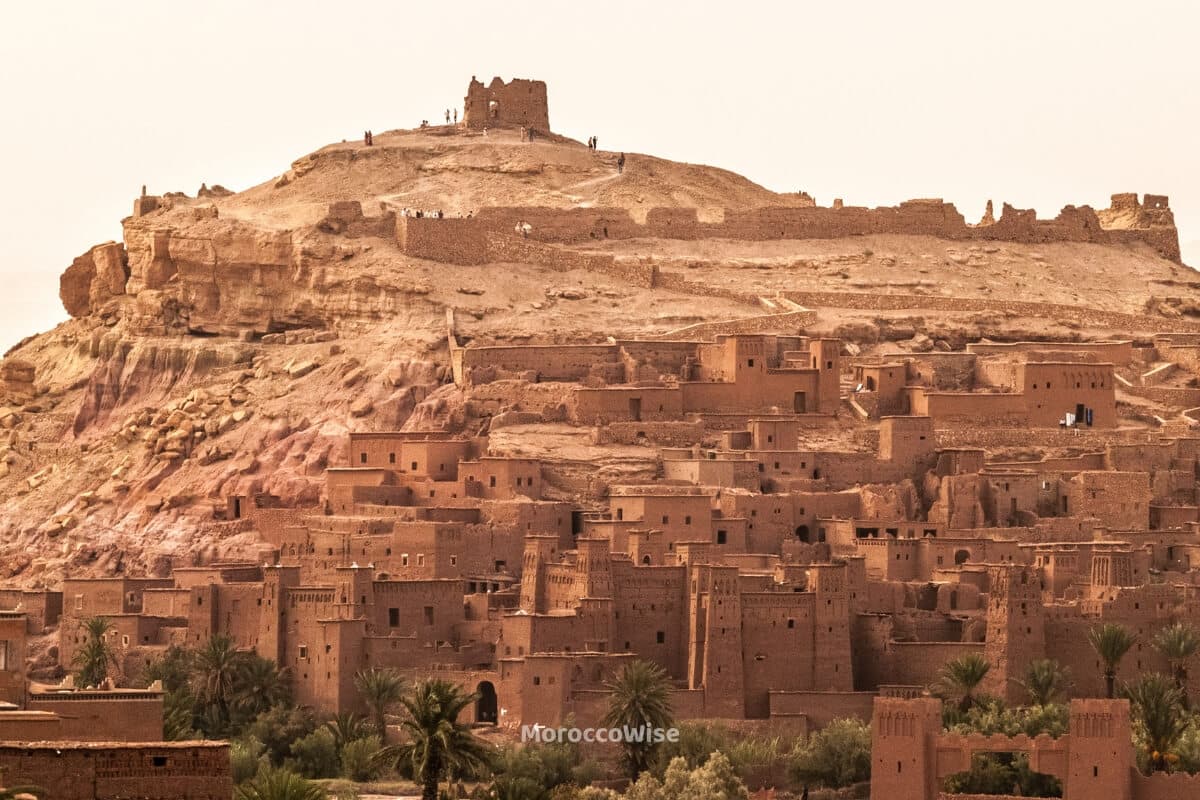
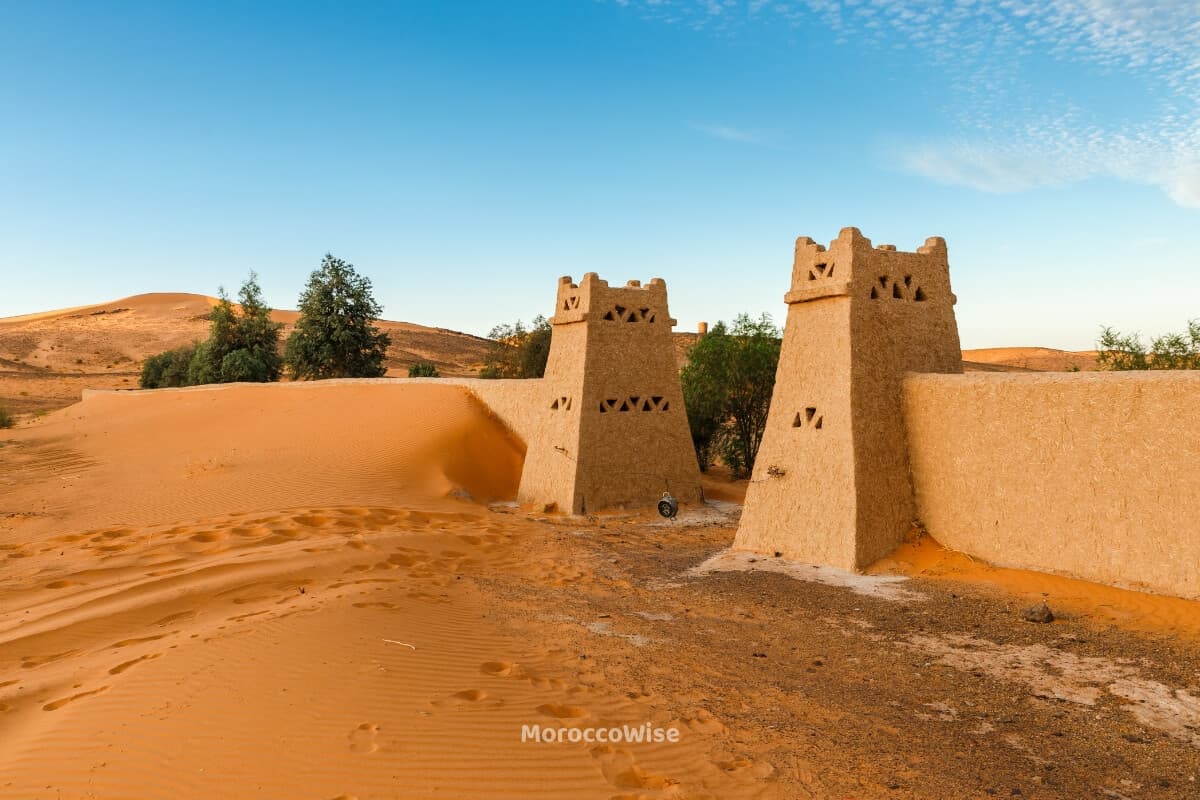
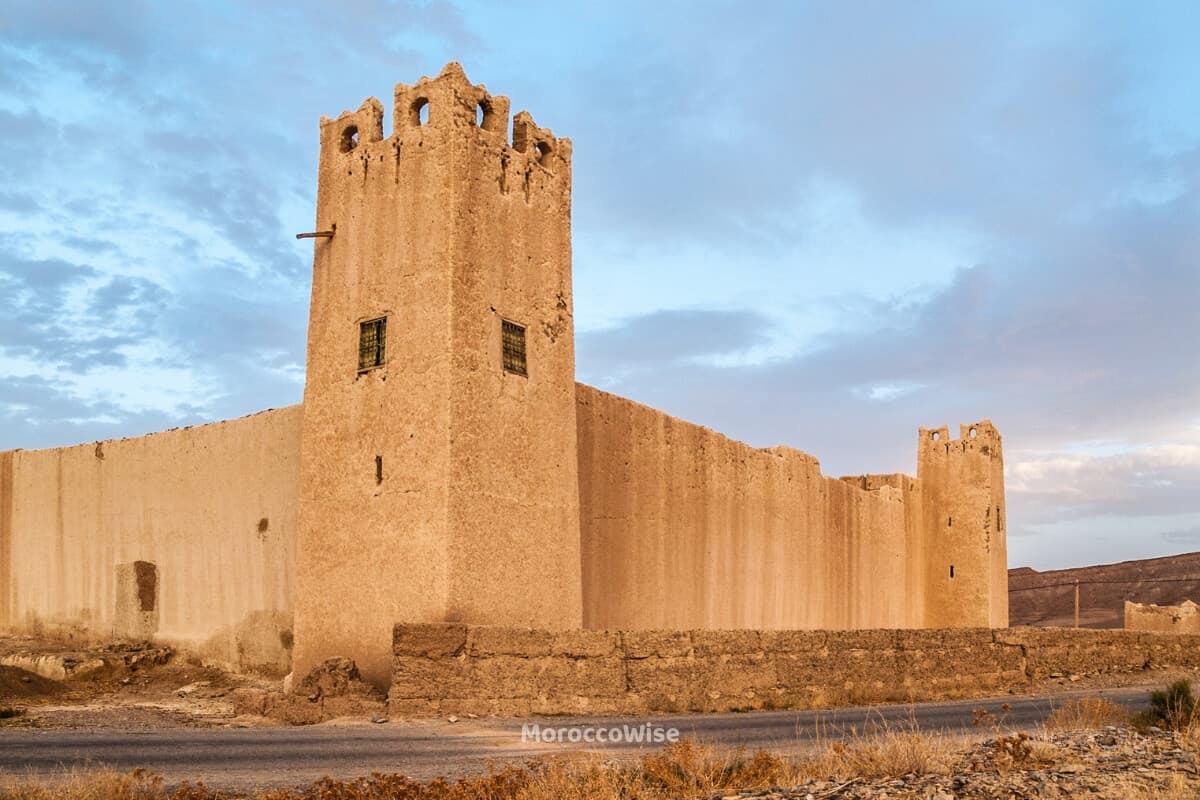
Aït Benhaddou, a historic ksar and UNESCO World Heritage site, is a memorable stop when approached with enough time. Its earthen architecture rises above the river valley in a cluster of fortified dwellings. Walk across the river crossing when conditions allow, explore the lanes respectfully, and consider a local guide who can explain how the settlement is built and maintained. Film crews have used the landscape, but the site is much more than a backdrop: it is part of a living region and a remarkable example of earthen building traditions. Ask before photographing residents or entering private spaces.
Ouarzazate and the surrounding valleys offer a natural place to pause on the route. Depending on your itinerary, you may continue through Skoura and the Dades Valley, where palm groves, kasbahs, and villages appear among dramatic rock formations. The Road of a Thousand Kasbahs is a traveler’s name for a route through a region rich in fortified earthen architecture; it does not mean every structure is a preserved monument or open to visitors. Some are homes, some are in ruins, and others are being restored. See them as part of the landscape and living communities.
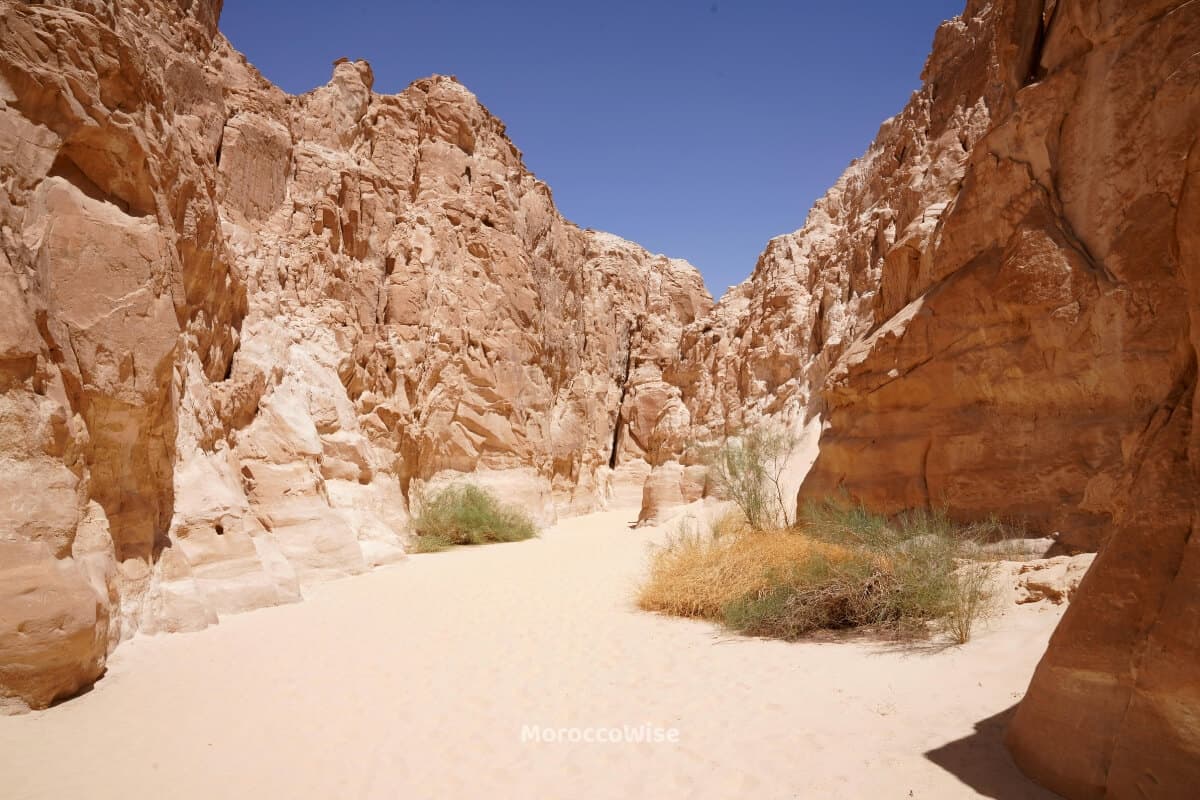
The Dades Gorge road winds through striking geology and cultivated valleys. Farther east, the Todra Gorge narrows into high limestone walls that attract walkers and climbers. Both make worthwhile diversions, but adding both to a rushed transfer can leave little time to enjoy either. Choose stops based on whether you want a short viewpoint, a walk, a night in a valley guesthouse, or a longer visit with a local guide. A multi-day route makes the landscapes feel connected instead of turning the trip into a string of hurried roadside photographs.
From the Dades or Todra area, routes toward Merzouga continue across changing terrain to the edge of Erg Chebbi. Travelers heading for Erg Chigaga generally follow a western route toward Zagora and M’Hamid, then transfer by four-wheel drive across tracks to the dunes. Which route is best depends on your chosen erg; they are not neighboring camps that can be casually combined. Check the overnight sequence, distances, and transfer arrangements before paying a deposit.
Think of the journey south as an itinerary in its own right. One night near Aït Benhaddou or Ouarzazate and another in a valley can break the drive and create time for walking, meals, and conversation. If you have fewer days, consider a private transfer or a carefully planned group tour with a realistic route and clear inclusions. The best route is not the one with the longest checklist; it is the one that gives you enough energy to experience the destination after you arrive.
06 / Prepare for the elements
Practical Sahara travel information
Thoughtful timing, clear questions, and a few useful layers make a desert journey safer and more comfortable. Conditions vary by region and season, so treat local advice and current forecasts as part of the plan.
When to visit the Moroccan Sahara
Spring and autumn are often the most comfortable seasons for a Sahara trip. March through May brings warmer days and generally more manageable conditions for walking, though spring weather can still vary and the desert may be windy. September through November is another popular window as the intensity of summer heat eases. These shoulder seasons are not guarantees of perfect weather: check forecasts for the specific region and dates, and ask your operator how it adjusts activities if wind, dust, or temperature changes.
December, January, and February can offer clear skies and pleasant daytime exploration, but nights may be very cold. Confirm that your camp has adequate bedding and ask whether heating or additional blankets are available. Summer, particularly July and August, can bring intense daytime heat that makes long drives and outdoor activities uncomfortable or unsafe. Avoid planning strenuous dune walks in the hottest hours. If you must travel in summer, consult experienced local operators, keep plans flexible, and follow advice about hydration and shade.
What to pack for hot days and cold nights
Pack light, breathable clothing that covers shoulders and legs, comfortable walking shoes, sunglasses, and high-protection sunscreen. A scarf or shemagh can help shield your face and neck from sun and wind; ask your guide to show you a comfortable way to wear it. Bring a warm fleece or insulated layer for evening, a windproof outer layer, and warmer sleepwear in winter. Temperature drops can be surprising after a hot afternoon.
Keep a refillable water bottle accessible and ask the operator whether safe drinking water is supplied or whether you should bring additional water. A small daypack, headlamp, power bank, personal medication, lip balm, and basic first-aid items are useful. Protect cameras and phones from fine sand with a sealed pouch, and bring spare batteries because cold nights can reduce battery life. Pack modestly; a huge suitcase is awkward in a 4x4 and may not fit inside a camp transfer vehicle.
Choosing a responsible tour operator
Ask for a written itinerary that names the destination, overnight stops, vehicle type, transfers, meals, and what is included in the price. Confirm whether the advertised camp is actually in the dunes, what accommodation and bathroom facilities are provided, and whether camel rides are optional. Clarify group size, pickup and drop-off locations, luggage limits, cancellation terms, and how the operator handles breakdowns, severe weather, or a guest who becomes ill. A professional company should answer plainly rather than pressure you to book immediately.
Look for experienced, licensed drivers and guides, vehicles suited to the route, and a realistic schedule with rest breaks. Reviews can help, but look for recent, specific details rather than relying on a single glowing rating. Ask how local guides, drivers, camp staff, and makers benefit from the trip. Responsible operators respect animal welfare, avoid unsafe driving over dunes, manage waste, and do not promise guaranteed wildlife sightings or “untouched” encounters that disregard communities. Compare what is included, not only the headline price.
Safety, health, and staying comfortable
Heat illness and dehydration are preventable risks. Drink water regularly, use shade, and tell your guide promptly if you feel dizzy, unusually weak, nauseated, or confused. Avoid long walks in peak heat and do not leave camp alone without telling staff. Follow local guidance on insects, sun exposure, and food safety. Travelers with medical needs should carry their medication in hand luggage and discuss access to assistance with the operator before departing.
Mobile coverage and charging can be limited, especially at remote camps. Let someone know your route, save important contacts offline, and ask the operator how it communicates in an emergency. Travel insurance should cover the activities you plan to undertake, including any adventure sports if relevant. Respect barriers and instructions around wells, roads, and protected areas. Never drive into the dunes without suitable training, a capable vehicle, local knowledge, and appropriate recovery equipment.
Money, connectivity, and trip length
Carry some Moroccan dirhams for small purchases, tips, and places that do not accept cards. Cash access can be less convenient in remote areas than in major cities, so plan ahead without carrying more than you need. Ask what gratuities are customary for the specific service rather than assuming they are included. Keep receipts for deposits and confirm the final balance and payment method before the tour begins.
A multi-day trip from Marrakech is generally more rewarding than attempting a very long round trip in a single overnight. The drive itself is substantial, and every extra stop adds time. For Erg Chebbi, allow enough nights to break the road journey and enjoy the dunes without immediately turning back. For Erg Chigaga, plan additional time for the route to M’Hamid and the off-road transfer. The right duration depends on your starting point, but a slower itinerary usually means a more comfortable trip and more meaningful encounters along the way.
Traveling with care
Ask before photographing people, especially children, homes, and private gatherings. Learn a few greetings, listen to local guidance on dress and behavior, and remember that a small community is not a theme park. Buy crafts directly when possible and ask how an item was made. Carry out everything you bring in, avoid disposable plastic where practical, and use water thoughtfully. Leave dunes, plants, and archaeological or cultural materials undisturbed.
Above all, leave space in the itinerary for the unplanned: a pause for tea, an extra stop at a valley, or a quiet hour watching the shadows move. The Sahara is not measured only by distance covered or activities completed. A journey becomes memorable when you have enough time to notice the light, hear the wind, and meet the landscape at a human pace.
Route access, weather, road conditions, camp services, and transport schedules change. Confirm the latest details with your accommodation and local operator before departure.
Desert light / 10 frames
A moment in the dunes
Follow the changing colors, caravan trails, and quiet horizons of the Moroccan Sahara.
Swipe, scroll, or use the arrows