A city of monumental contrasts
Imperial scale, everyday warmth
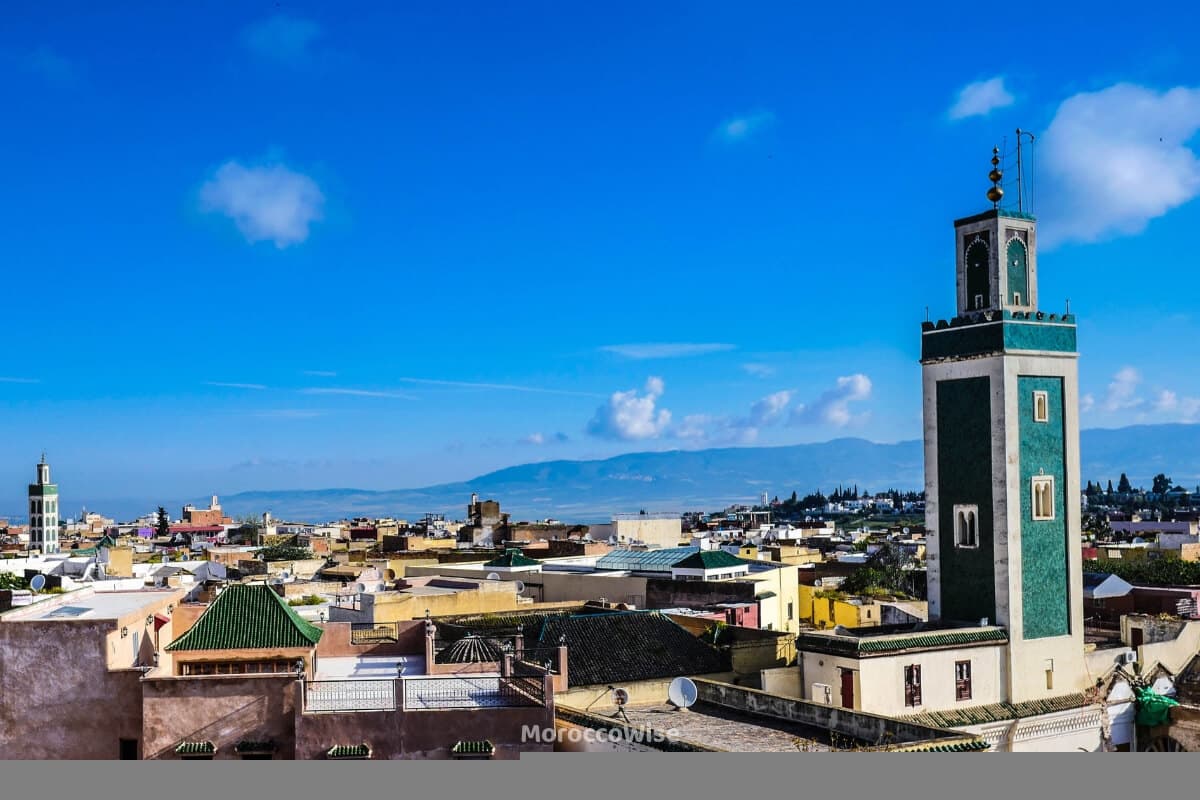
Meknes rewards travelers who look beyond the famous gate. Follow the energy of Place el-Hedim into the medina, then discover the ambition of Moulay Ismail’s royal precinct and the fertile countryside beyond the walls. With Volubilis and Moulay Idriss Zerhoun close enough for thoughtful day trips, Meknes makes a compelling base for exploring a layered part of northern Morocco.
01 / The old city in motion
Lahdim Square and the medina
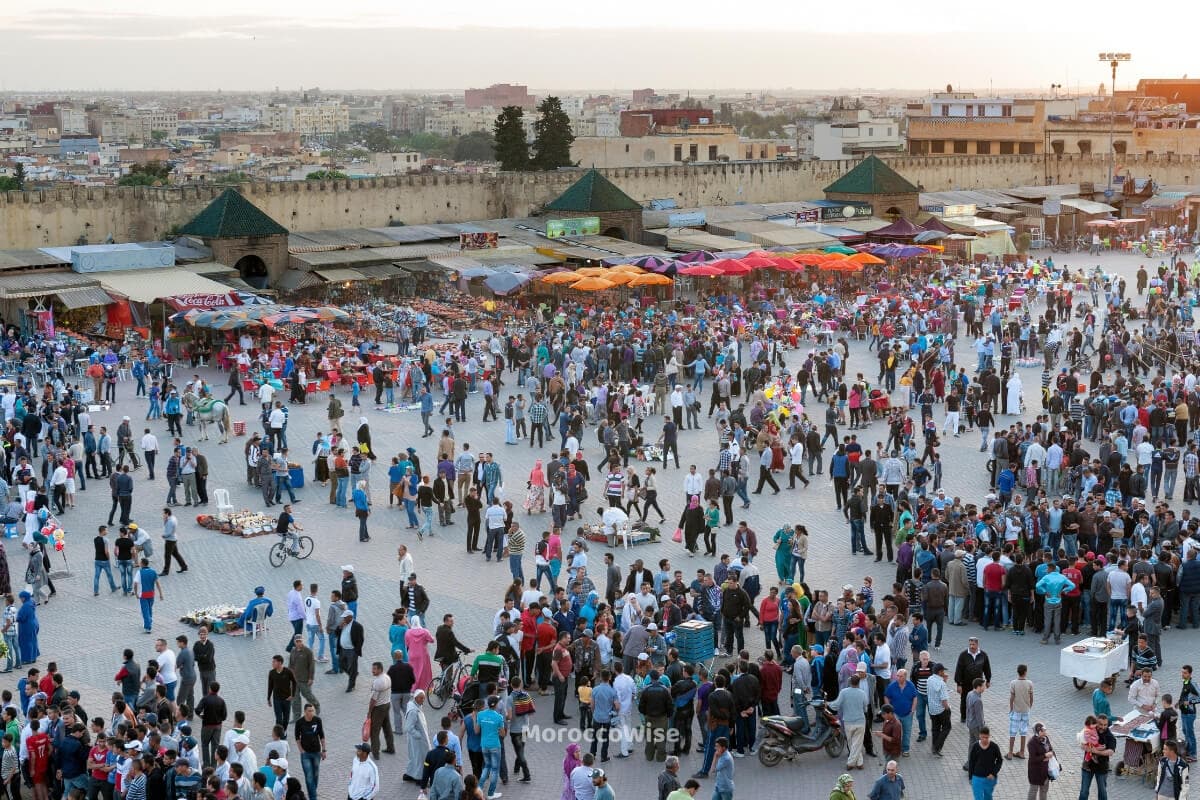
Place el-Hedim—also written Place Lahdim or Place el-Hedim—is the natural starting point for a first walk through Meknes. The broad square stands between the old medina and the imperial precinct, with the great Bab Mansour gate forming its most dramatic backdrop. Its name is often associated with the removal of earth during the construction of Moulay Ismail’s city. Today, rather than an empty ceremonial forecourt, it is a public room: people cross it on their way home, vendors set up their stalls, and visitors pause to take in the changing architecture around its edges.
Visit at more than one hour if you can. In the morning, the square has a practical, local rhythm as shops open and deliveries arrive. Later in the day, families gather, snack sellers attract a crowd, and the light begins to warm the stonework. After sunset the atmosphere grows especially animated, but the square can be busy and noisy. Find a place at the edge, watch the scene unfold, and take the time to notice how the square connects the monumental gate to the narrow, shaded streets beyond.
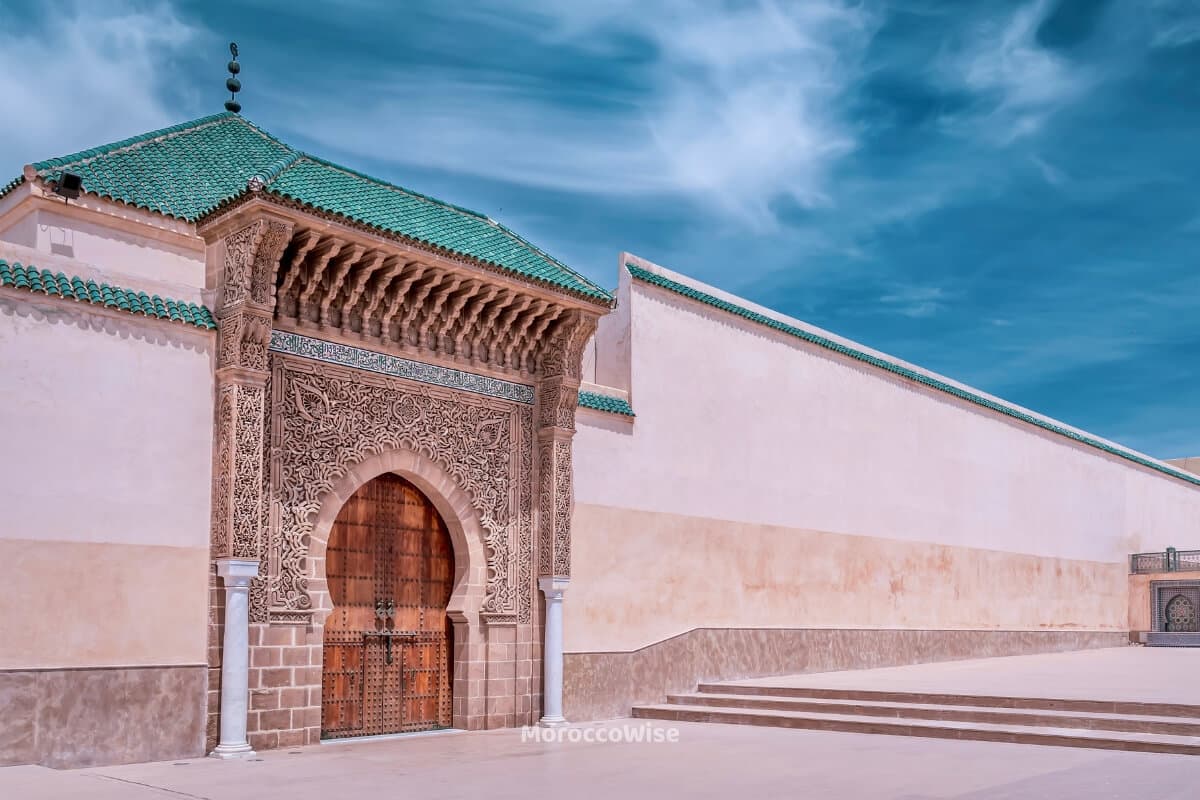
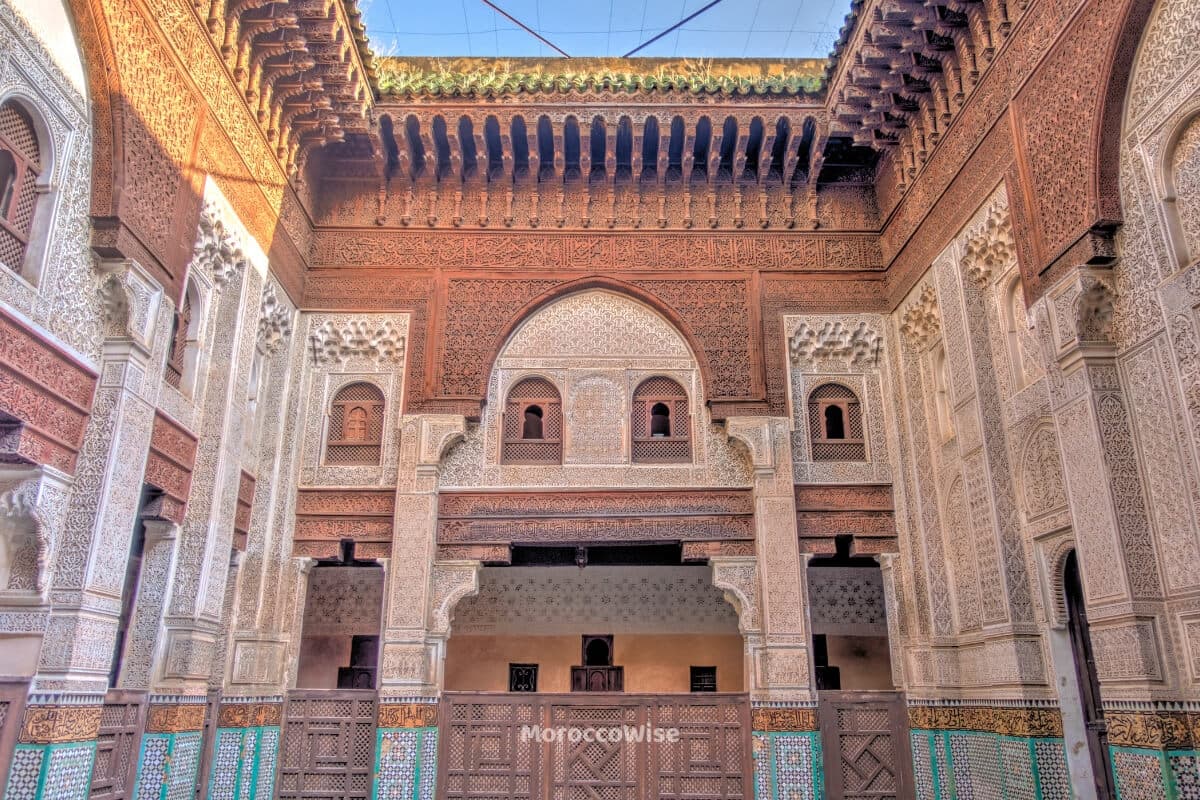
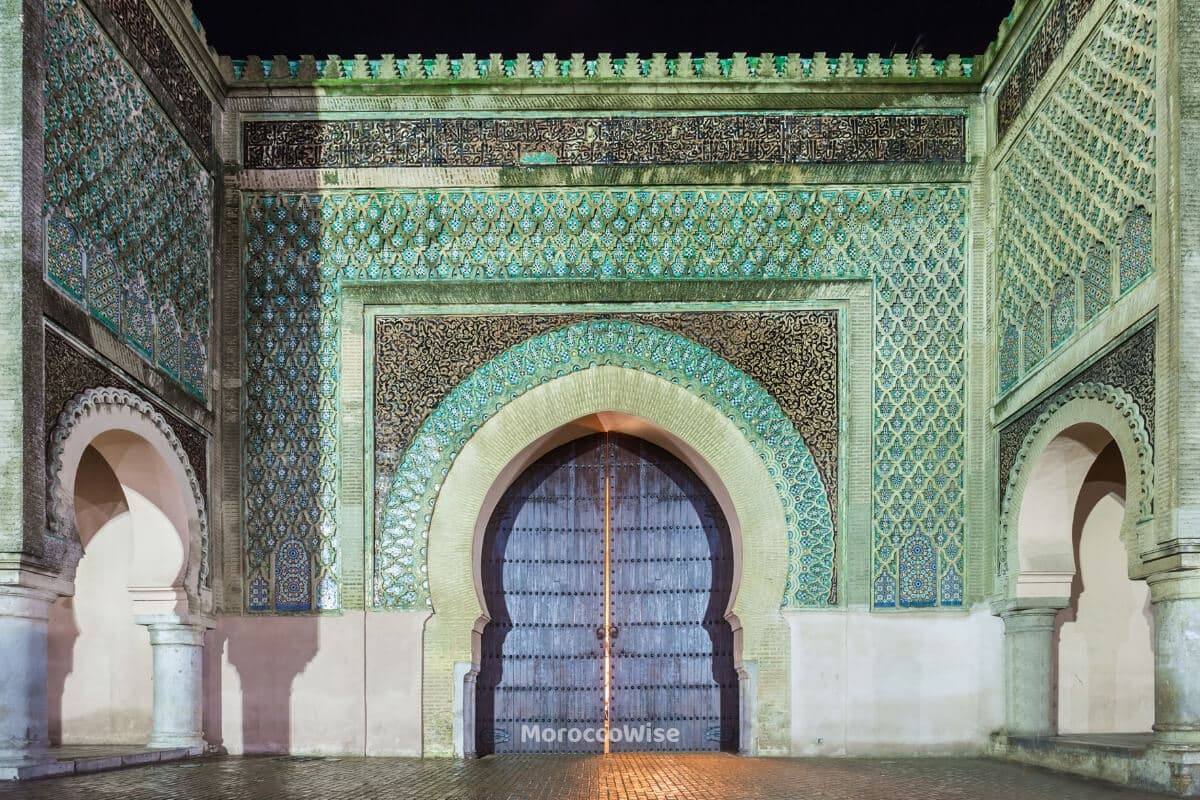
Bab Mansour el-Aleuj is one of Morocco’s most celebrated monumental gates. Its name is linked to a Christian convert who was associated with its construction, and the gate was completed after the reign of Moulay Ismail. Its scale, carefully composed proportions, carved surfaces, and striking tilework make it feel like a threshold between two worlds. Zellij patterns and decorative details reward a closer look: step back to understand the full composition, then move nearer to appreciate how geometry, color, and calligraphy bring depth to the façade.
The gate has also been subject to conservation and changing access arrangements. Do not assume visitors can walk through every doorway or enter every space; check current local guidance and enjoy the exterior even when an interior is closed. The best way to understand Bab Mansour is to see it in context: the square before it, the walls extending to either side, and the royal city it once helped define.
Into the medina: markets, lanes, and small discoveries
On the opposite side of the square, the medina’s lanes pull you into a more intimate scale. Follow the traditional souk streets and you will find food stalls, household goods, textiles, metalwork, and everyday services serving Meknes residents. The market is not staged for visitors; its character comes from ordinary commerce. Take care not to block shop entrances, greet sellers before browsing, and ask permission before photographing people or their work.
Getting slightly lost is part of the pleasure, but it helps to remember a few landmarks and keep a map available offline. The medina is walkable, though the pavement can be uneven and lanes may become crowded around shopping hours. Look for small courtyards, traditional doorways, neighborhood bakeries, and the transitions from a busy commercial street to a quiet residential passage. Give yourself time to stop for mint tea or a simple lunch rather than trying to cover every lane in one circuit.
Meknes is sometimes overshadowed by Fes and Marrakech, and that can be an advantage for visitors seeking a more measured pace. The medina still has a strong local identity, while the monumental core offers a distinct chapter in Morocco’s imperial history. Balance the two: spend time in the square, then explore beyond the postcard view and let the daily city set the rhythm.
02 / The ambition of a sultan
The royal stables and Agdal Basin
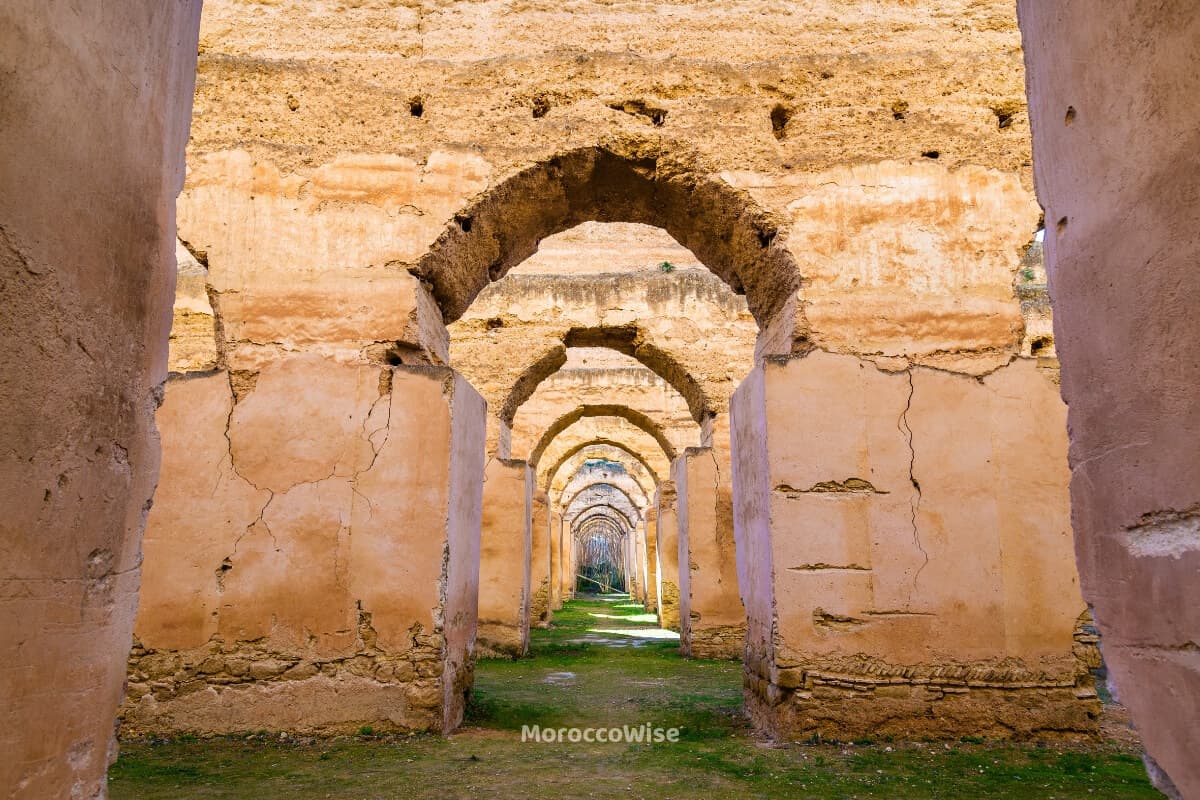
Meknes’s royal precinct was designed to support a powerful court as well as impress visitors. Among its most remarkable surviving complexes are Heri es-Souani, commonly described as the royal granaries and stables, and the vast Agdal Basin. Together they help explain the practical side of Moulay Ismail’s ambitions: a capital needed food storage, water management, animal care, and the logistics to sustain a large household and military presence.
Heri es-Souani is often associated with storage rooms and stabling, although historical descriptions and modern popular accounts sometimes simplify the precise functions of individual spaces. The remaining masonry conveys the scale of the undertaking. Long, vaulted passages create a cool, rhythmic interior, with thick walls and carefully planned openings that help control temperature. As you move through the complex, imagine not just a grand palace but the labor of maintaining provisions, transport animals, and daily operations across a far-reaching royal city.
The famous account that the stables held an enormous number of horses is part of Meknes’s enduring legend. Rather than treating every figure repeated in guidebooks as settled fact, appreciate what the site can show directly: a monumental system of spaces built for storage and the movement of people and animals. The architecture’s repetition and mass communicate organization on a scale that still feels startling today.
Nearby, the Agdal Basin stretches across a broad open expanse. This reservoir formed part of the city’s water infrastructure, collecting and holding water for the palace complex and its surroundings. In a region where managing water is essential, the basin is more than an impressive view; it represents planning, engineering, and a relationship between the city and its environment. The scale becomes clearer when you walk along the edge and take in the distance from one side to the other.
Reading the imperial landscape
Visit with comfortable shoes, sun protection, and water. The complex includes large exposed areas as well as shaded interiors, and the ground may be rough underfoot. Opening arrangements, access to individual rooms, and restoration work can change, so check locally before making a tight schedule. A guide can connect the architecture to the wider royal city, explain what is known about its construction, and distinguish surviving evidence from the legends that have accumulated around Moulay Ismail’s reign.
These sites are best understood alongside the gates, walls, and palaces that once linked them. Meknes was not built as a collection of isolated attractions; it was an interconnected capital whose water, food, defenses, ceremonial spaces, and residential quarters served different purposes. Allow a generous half day for the monumental precinct, and leave room to pause rather than rushing from one photograph to the next.
03 / A Roman city in North Africa
The ancient ruins of Volubilis
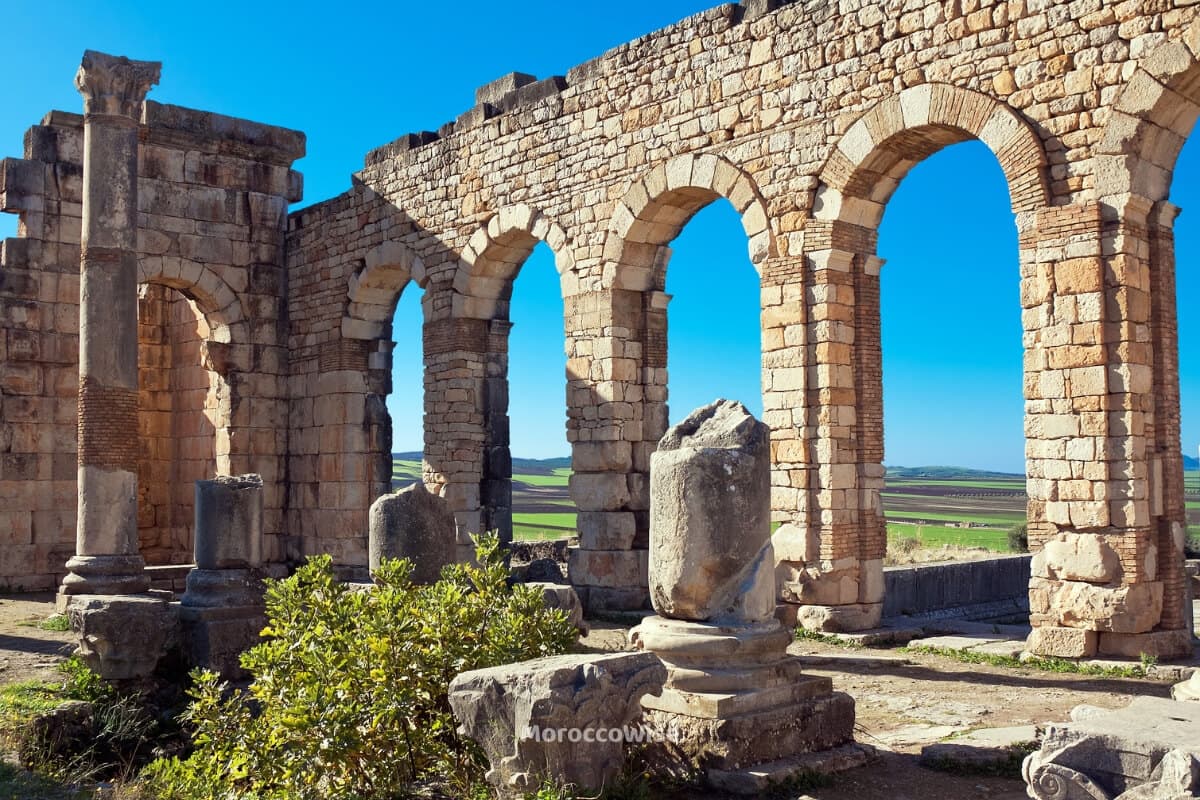
A visit to Meknes often becomes a journey through several layers of history, and Volubilis is one of the most striking. This archaeological site, inscribed on the UNESCO World Heritage List, preserves the remains of a major Roman-period settlement in the province of Mauretania Tingitana. Set amid fertile plains at the edge of the Zerhoun hills, it offers a vivid sense of how cities, agriculture, trade, and imperial power intersected in North Africa.
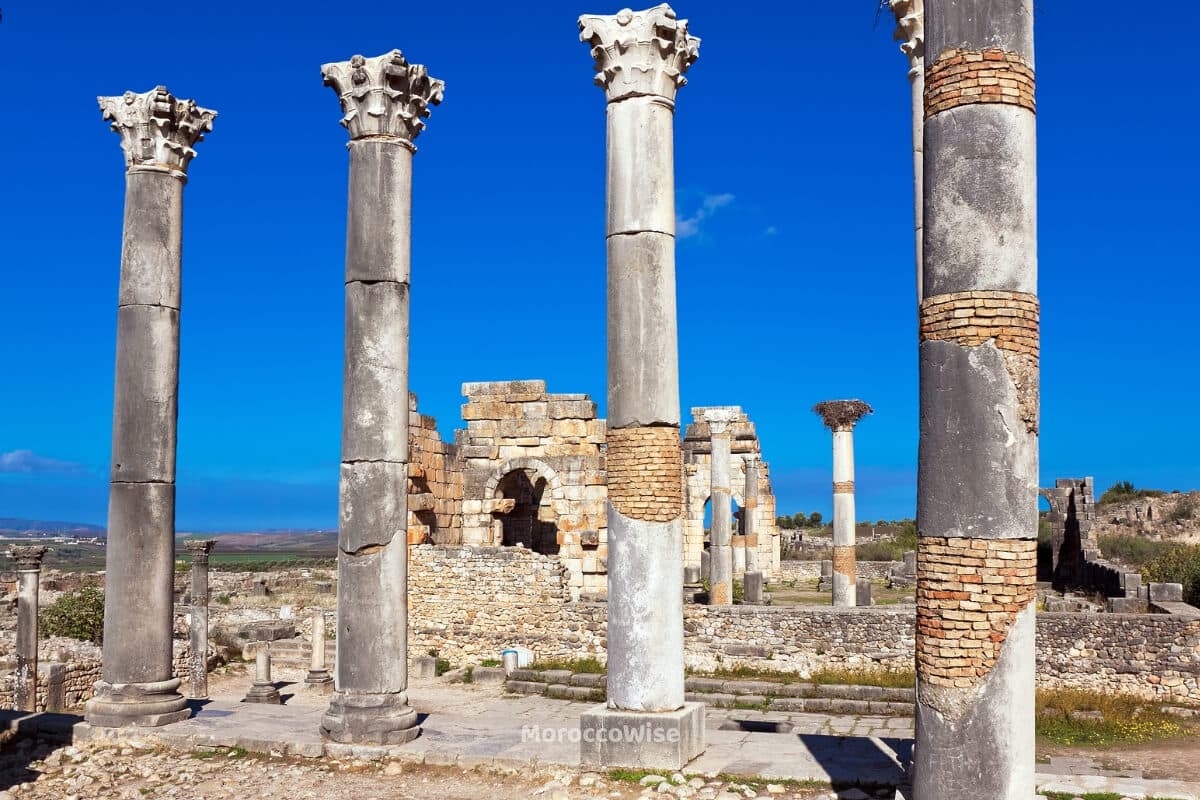
Volubilis existed before the Roman annexation of the region and developed into an important urban center under Roman rule. Its prosperity was linked to the agricultural wealth of the surrounding land, including olive oil production. The remains include sections of the Decumanus Maximus, public buildings, houses, workshops, triumphal arches, and an impressive basilica. The visible plan invites you to imagine a functioning town rather than a collection of fallen stones: streets organized movement, civic buildings framed public life, and homes reflected the varied fortunes of residents.
The mosaics are among the site’s most celebrated features. Their mythological scenes, geometric borders, and careful arrangements of color reveal artistic skill and the tastes of some wealthy households. Subjects drawn from Greek and Roman stories appear in floors designed to be seen as part of domestic space. Mosaics are fragile, and their condition depends on conservation; stay on marked paths, do not touch surfaces, and follow site rules even when a scene looks close enough to examine by hand.
The Arch of Caracalla stands at the end of the main street and provides a memorable point of orientation. Elsewhere, the basilica and Capitol area indicate civic and religious functions, while the remains of presses and domestic spaces speak to production and everyday life. Bring a guidebook or arrange a licensed local guide if you want to understand the differences between structures and the evidence archaeologists use to interpret them. Without context, it is easy to see only columns; with context, the site becomes a city whose people worked, worshipped, traded, and gathered.
Plan for sun, distance, and time
Volubilis is an open-air site with limited shade. A morning or late-afternoon visit can be more comfortable in warm months, and a hat, water, sunscreen, and sturdy shoes are important. The ground is uneven, so allow time and care for anyone who has mobility needs. Check current ticketing and visitor arrangements before travelling; facilities and access conditions can change. Avoid climbing on masonry or entering restricted areas, both to protect the ruins and for your own safety.
From Meknes, Volubilis is commonly combined with Moulay Idriss Zerhoun on a day trip. The order can depend on heat, transport, and your interests. Some travelers prefer the archaeological site in the morning and the hillside town later; others enjoy arriving early at Volubilis and stopping for lunch nearby. Arrange transport and return timing in advance, especially if you are not using a private driver. Do not assume that an informal taxi will be waiting when you finish exploring.
The countryside around Volubilis matters as much as the monuments. Olive groves, cultivated fields, and distant hills show why this location supported a thriving settlement. Look outward from the ruins and connect the ancient city to the living agricultural landscape that continues to shape the region. That perspective makes Volubilis feel less like an isolated Roman outpost and more like part of a long, changing story of North African life.
04 / A town of spiritual significance
Moulay Idriss Zerhoun
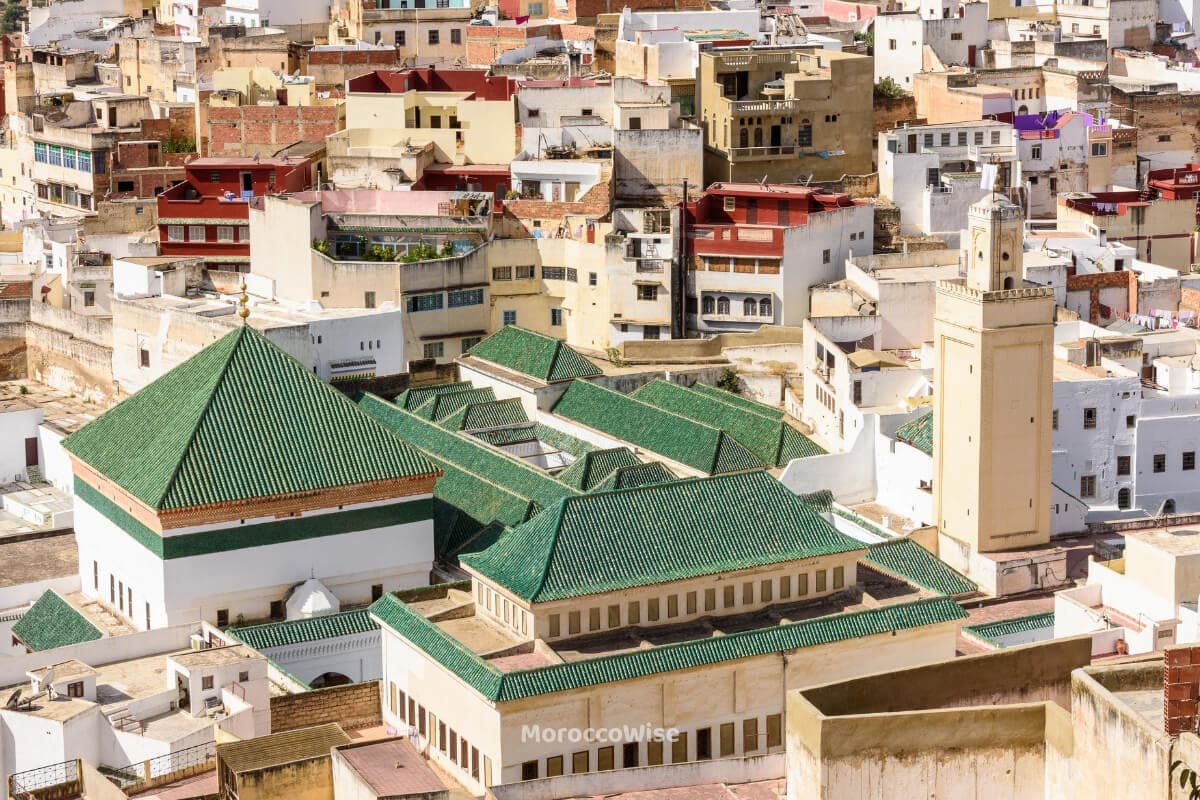
Built into the slopes of the Zerhoun hills, Moulay Idriss Zerhoun is one of Morocco’s most important pilgrimage towns. It is associated with Moulay Idriss I, a descendant of the Prophet Muhammad who established the Idrisid dynasty in the eighth century. His arrival and rule are closely linked to the early history of Islamic Morocco, and the town that carries his name remains a place of spiritual meaning as well as a community where people live, work, and welcome visitors.
The town’s white and green buildings climb the hillside in compact layers, making the approach a memorable part of the visit. From a distance, the settlement appears to rise almost vertically above the valley; from within, narrow streets, stairways, small squares, and changing viewpoints reveal its steep topography. Wear shoes with good grip and be prepared for uphill walking. The layout is not a staged viewpoint but a lived-in urban fabric, so keep doorways clear and respect the privacy of residents.
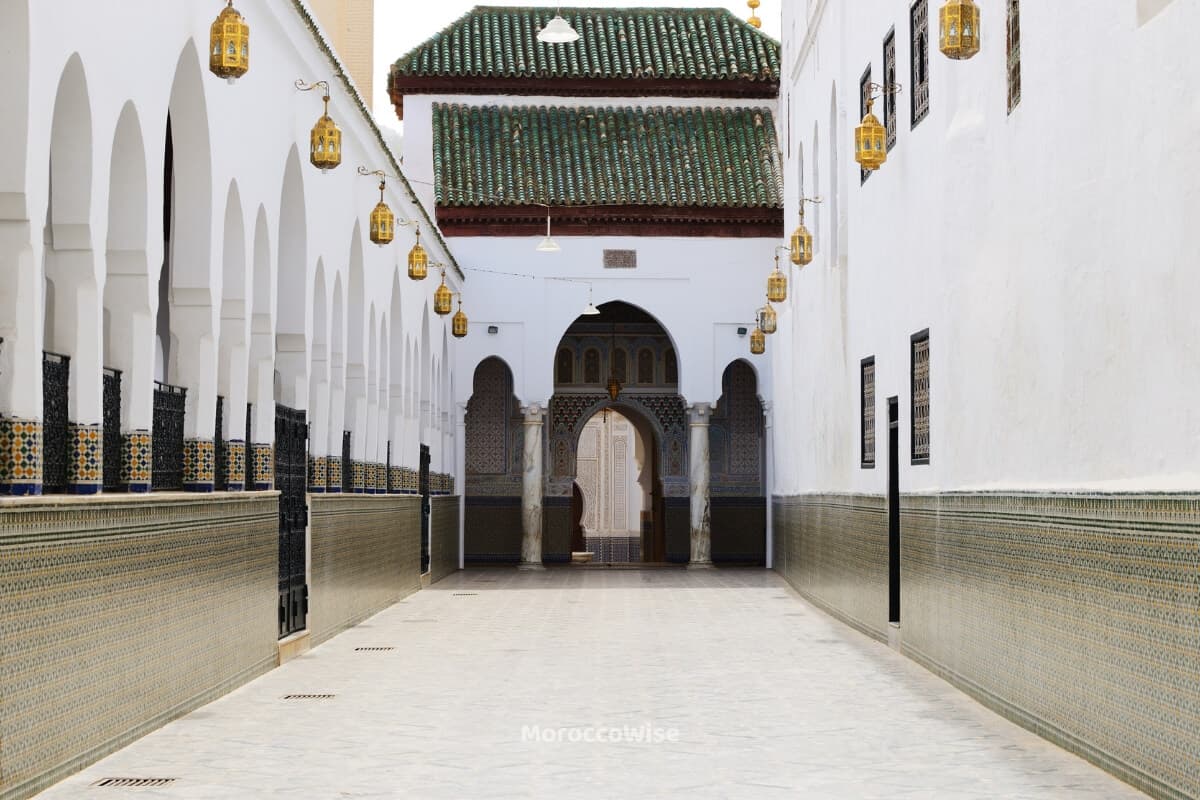
The mausoleum of Moulay Idriss is the town’s spiritual heart. Access rules for non-Muslim visitors and for particular parts of the sanctuary can be restricted and may change; approach respectfully and follow the current instructions of local authorities and guides. The town has long welcomed pilgrims, and visitors should remember that religious practice is not a tourist attraction to be interrupted. Dress modestly, ask before taking photographs, and enjoy the town’s architecture and views without pressing into private or sacred spaces.
From the terraces and upper lanes, the view reaches over farmland and olive groves toward the wider Zerhoun landscape. On a clear day, the relationship between the town, the hills, and nearby Volubilis becomes easy to understand. The two places are close geographically but distinct in character: Volubilis tells a story through archaeological remains, while Moulay Idriss continues as a living center of faith and community.
The annual moussem
The town’s annual moussem, a religious gathering associated with Moulay Idriss, draws pilgrims and visitors from across Morocco. The dates follow the Islamic calendar and can shift relative to the Gregorian calendar each year. During the gathering, the town’s rhythm, transport, and accommodation demand change significantly. Check the timing before planning a visit, book well ahead if you intend to attend, and seek current advice about access and etiquette.
Visitors who arrive outside the moussem can still sense the town’s devotional importance in its shrines, local shops, and steady flow of visitors. A respectful trip does not require a formal religious itinerary. Take time for a walk, a meal, and a conversation with a local guide, and let the quiet views be part of the experience. If invited to learn about a custom or tradition, listen first and follow the host’s lead.
For a day trip, coordinate transport with Volubilis rather than assuming frequent connections between the sites. A driver can make it easier to adjust the order around heat and walking pace. If you are travelling independently, confirm return transport before setting off and keep enough time to get back to Meknes. The roads cross rural countryside, and a flexible schedule is more comfortable than relying on an unverified last-minute ride.
05 / Makers and fertile earth
Artisanal crafts and olive groves
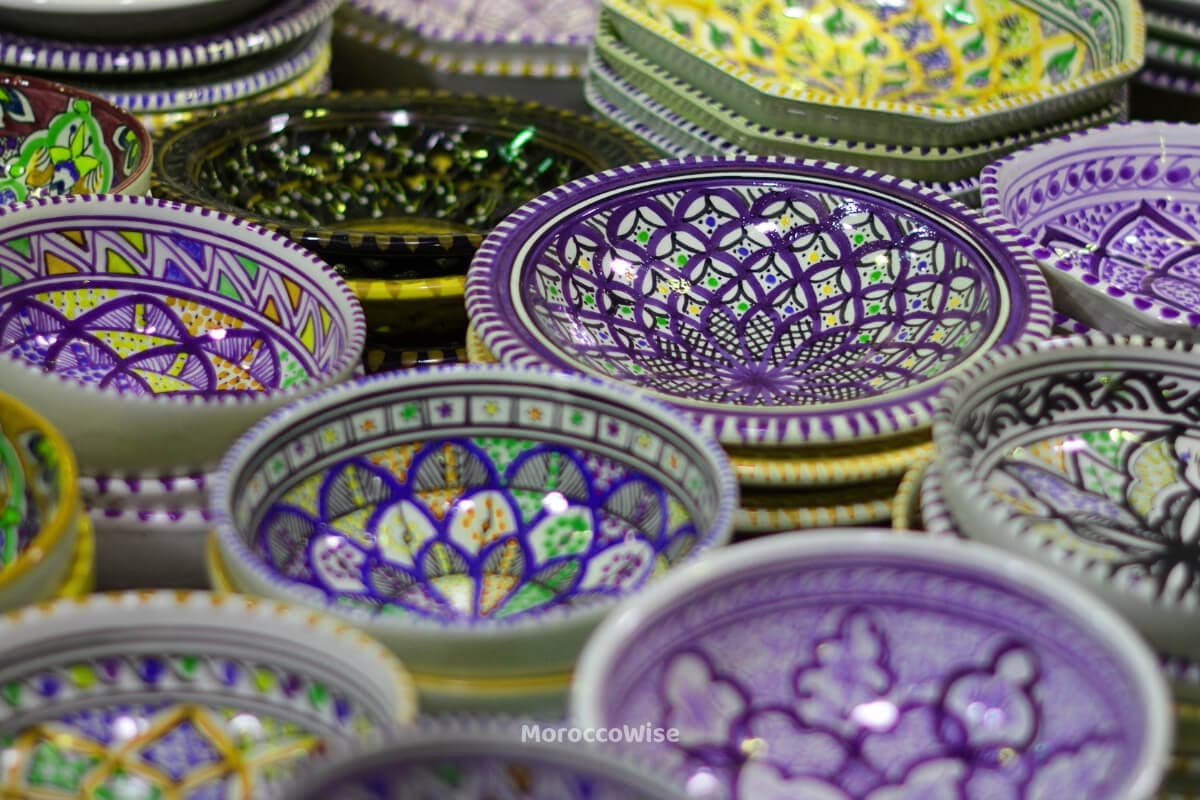
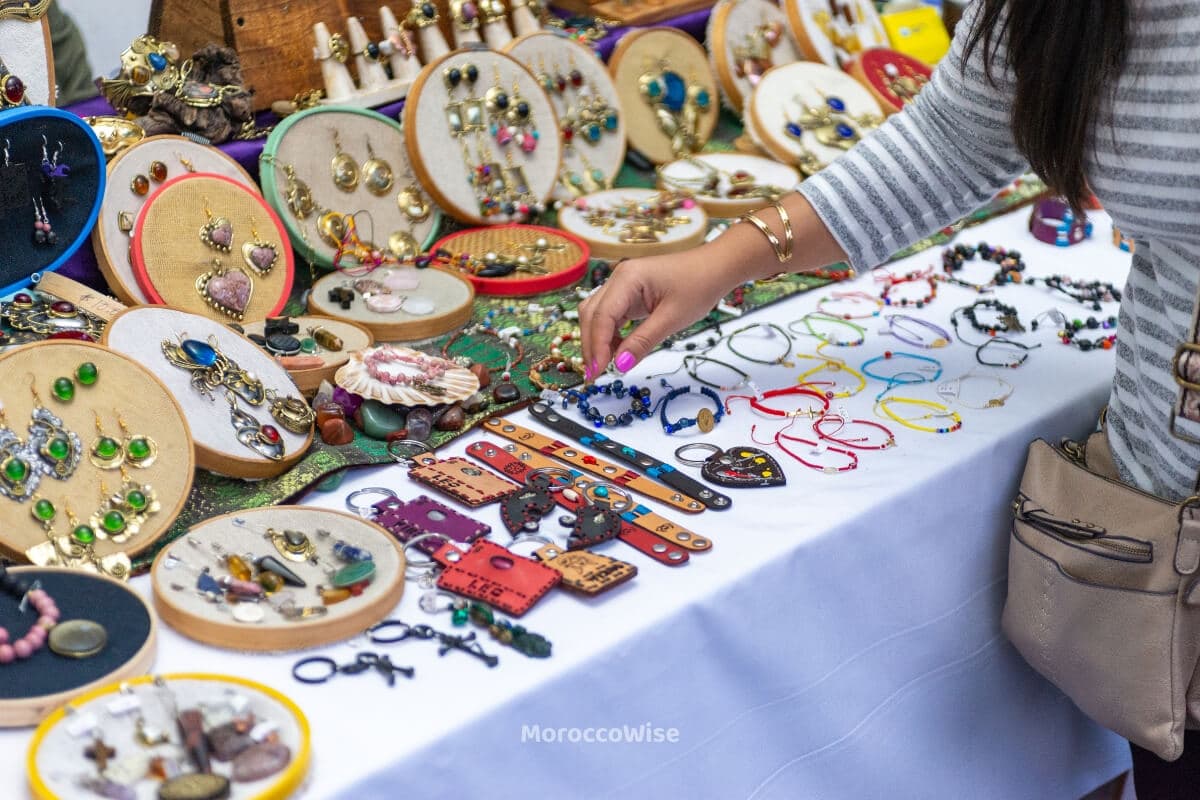
Meknes is known for damascene metalwork, a meticulous decorative technique in which fine wire—often silver—is inlaid into an iron surface. The result can be a geometric pattern, a finely detailed vessel, a box, or an ornamental object whose dark ground makes the bright lines stand out. The technique calls for patience and precision: a maker prepares the surface, incises a design, presses the wire into the grooves, and refines the finish by hand. Small irregularities can be signs of handwork rather than defects, though quality and detail vary from piece to piece.
In a workshop, observe from a respectful distance and ask before taking photographs. If a craftsperson explains the process, listen for the distinction between genuine inlay and a surface decoration that only resembles it. When buying, ask what metal is used, whether the design is handmade locally, how the item should be cared for, and whether the price reflects the labor involved. Compare several pieces and avoid pressure to purchase immediately. Buying directly from a maker or a reputable cooperative can help support the people who sustain the craft.
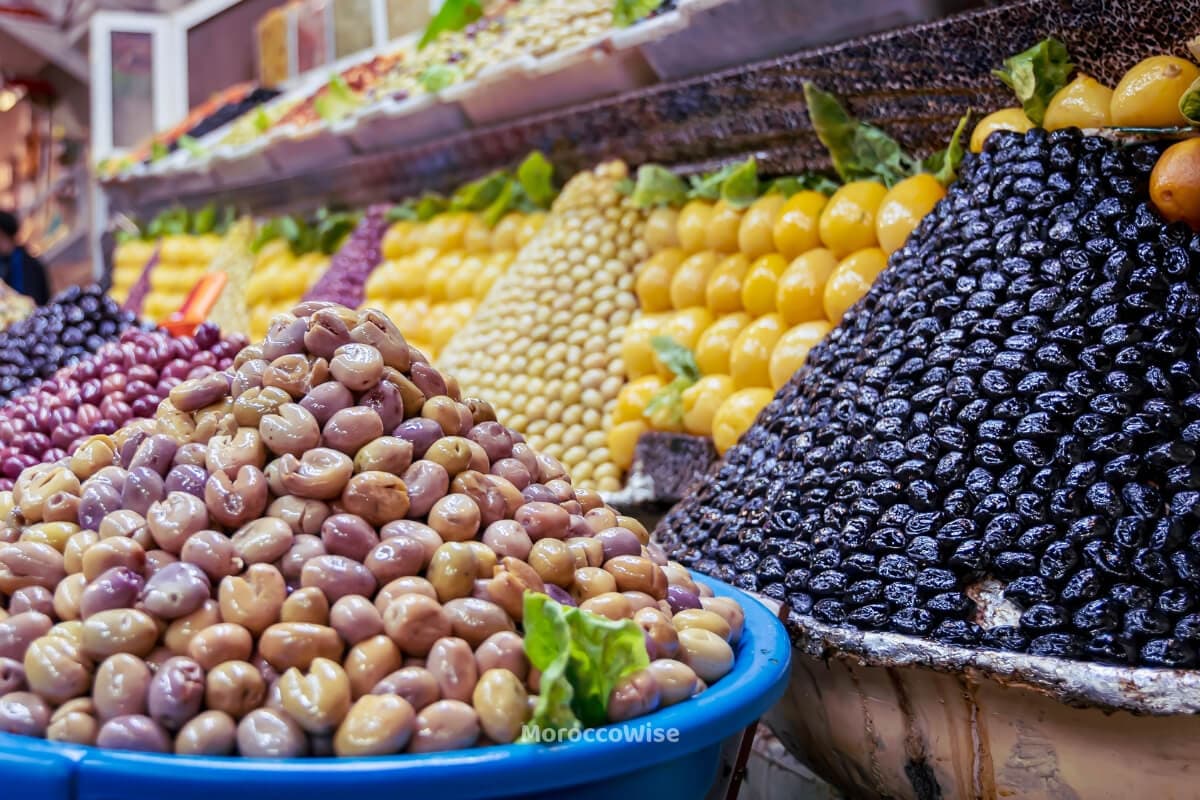
The region is also an important olive-growing area. The rolling countryside around Meknes supports olive orchards and other agriculture, and olive oil is a familiar presence in local kitchens and markets. Harvest timing, olive varieties, pressing methods, and storage all affect flavor. Fresh oil can taste grassy, peppery, or softly fruity depending on how and when it is made. If you visit during harvest season, you may see more activity around local presses and markets, though availability and opening times depend on the producer.
Try olive oil as part of a meal rather than treating it only as a souvenir. It pairs naturally with bread, salads, cooked vegetables, and regional dishes. Markets may offer several grades and origins; ask whether an oil is intended for everyday cooking or for finishing a dish. If you plan to bring a bottle home, choose a sealed, clearly labeled product, protect it against leaks, and check airline and customs rules for your route.
A market is a window into everyday Meknes
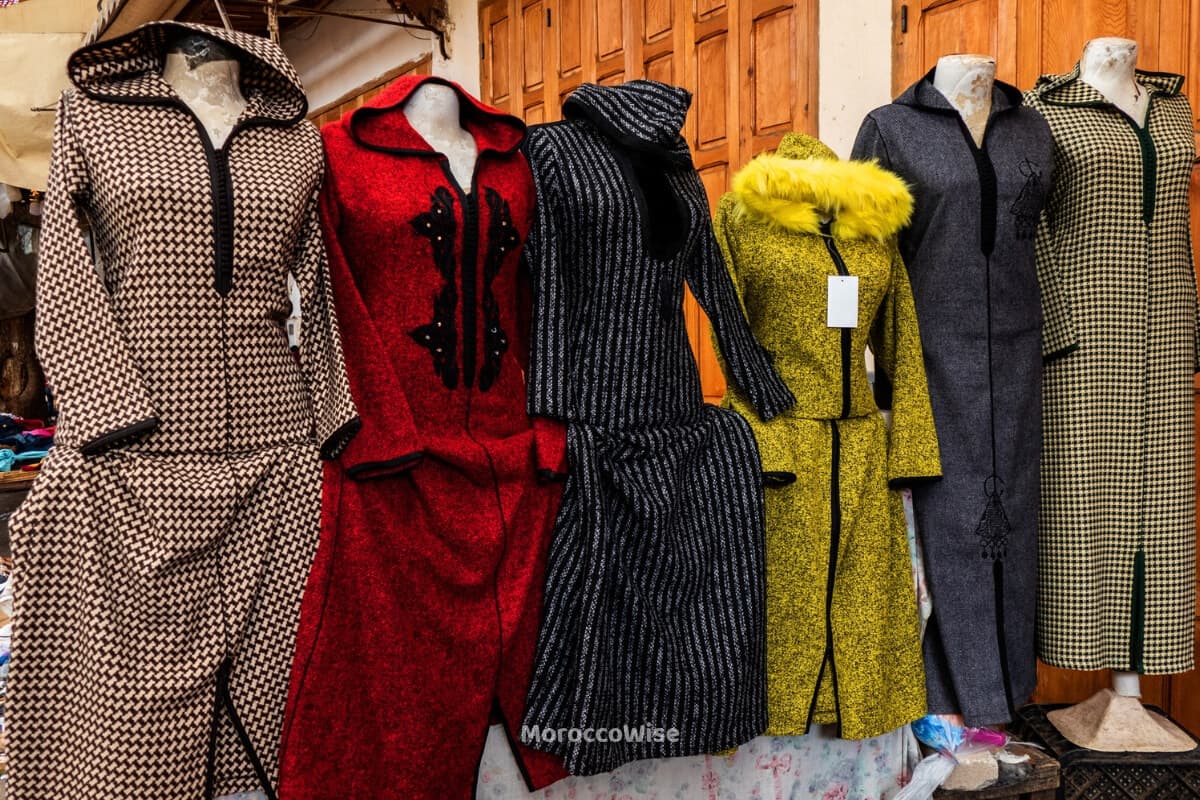
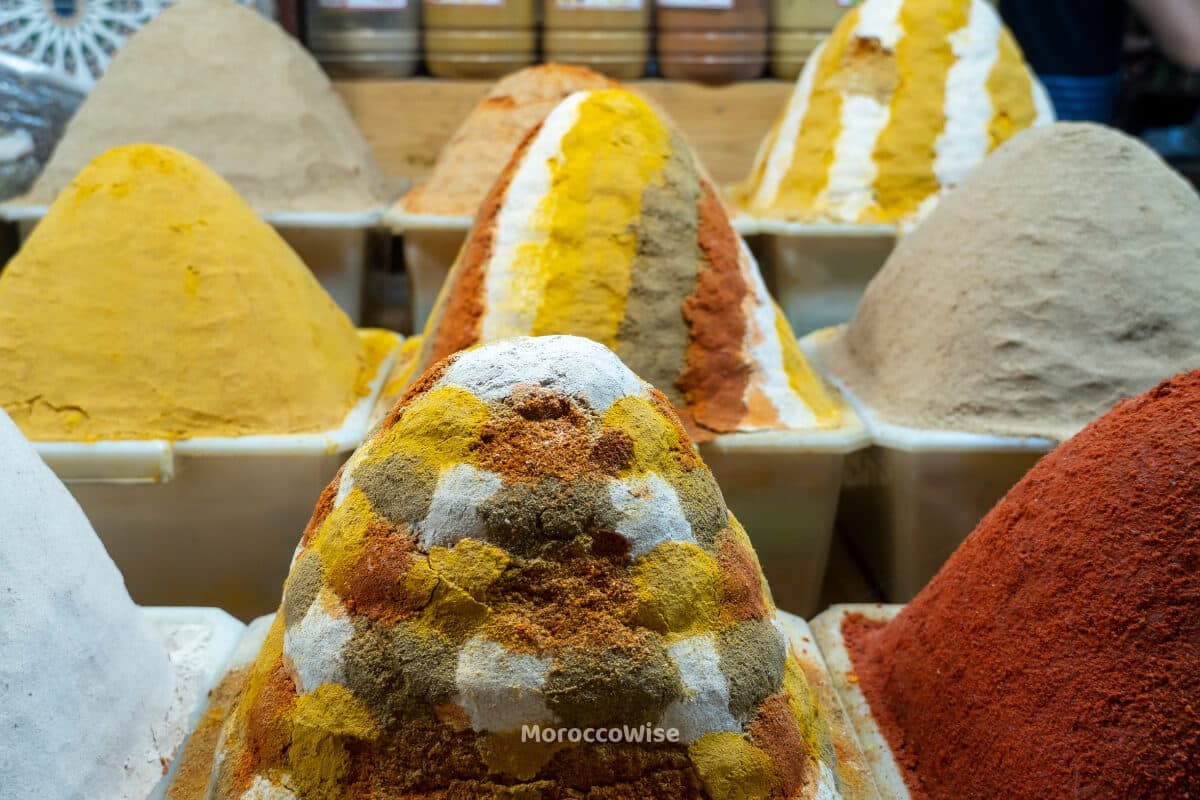
Beyond metalwork and oil, the souks reveal the variety of daily trade: produce, spices, household wares, clothing, and seasonal goods. Go with an open mind and a little patience. Ask for a price before agreeing to a service or purchase, and negotiate politely when bargaining is customary. Clear, friendly communication usually makes the experience more enjoyable for everyone.
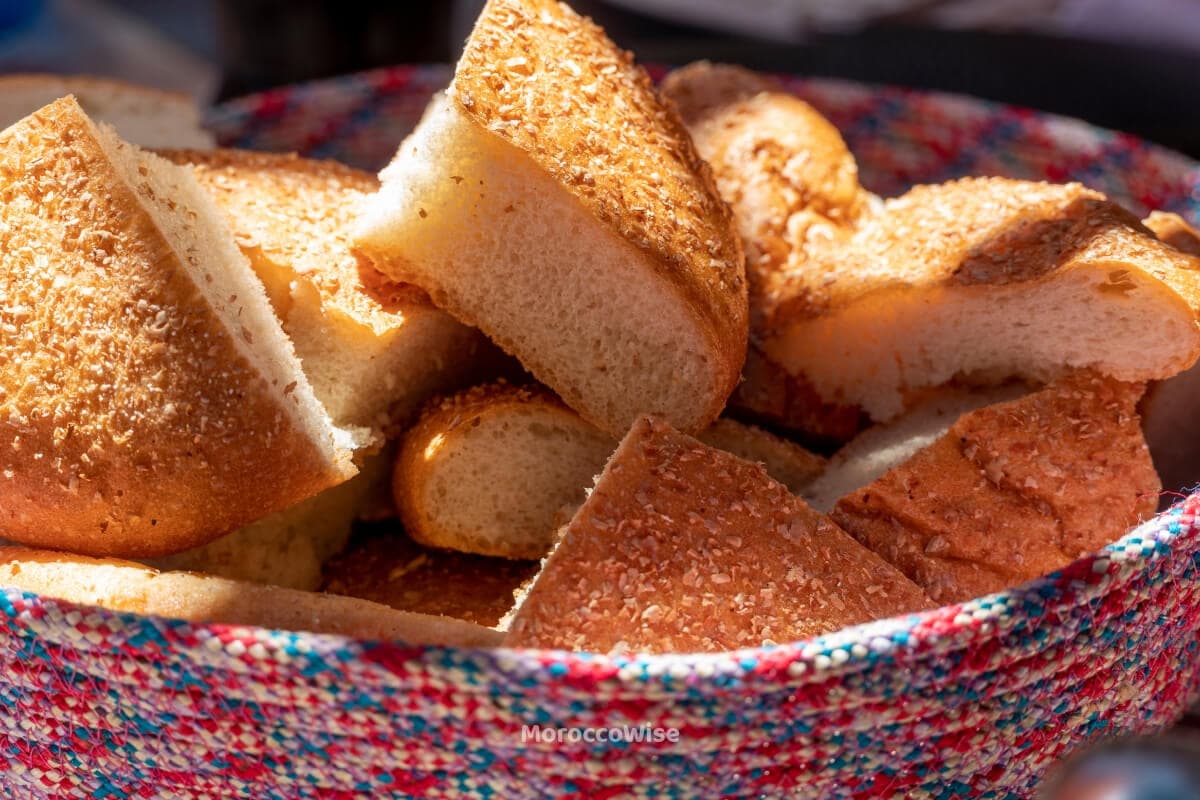
Food offers another way to encounter local agriculture. Look for olives, fresh bread, seasonal fruit, and dishes prepared with the ingredients available that day. A meal in a neighborhood restaurant can be more revealing than a search for a single “signature dish.” Ask what is cooked fresh, be clear about dietary needs, and take time over mint tea at the end. These ordinary rituals connect the imperial city to the productive landscape beyond its walls.
Craft and agriculture are not separate from the city’s historic identity. The wealth and influence that once sustained a royal capital were connected to skilled work, trade, food production, and the surrounding countryside. Today, makers and growers continue that relationship in contemporary ways. Spend with care, ask questions, and remember that each object or bottle has a story beyond its appearance.
06 / Plan a comfortable visit
Practical Meknes travel information
Meknes is easy to combine with other northern Moroccan destinations, but a little advance planning helps you balance the medina, royal monuments, and nearby day trips. Use these logistics as a starting point and confirm schedules and opening details for your travel dates.
Getting to Meknes from Fes
Fes and Meknes are relatively close by Moroccan intercity standards, making the journey straightforward by train, coach, or private transfer. Trains are often a comfortable choice between the two cities; check the current ONCF timetable, station locations, and any service updates before departure. Allow time to reach the station and purchase or collect tickets, especially around holidays and busy travel periods.
Coaches and shared taxis may suit travelers whose accommodation is more convenient to a bus terminal or taxi stand. Confirm the departure point, fare, luggage arrangements, and whether a shared vehicle leaves only when full. A private transfer costs more but offers flexibility for groups or travelers making stops. Avoid unmarked vehicles and agree the price and destination before setting off.
Arriving from Rabat and Casablanca
Meknes is connected to major Moroccan cities by rail and road. From Rabat or Casablanca, compare train schedules with intercity coach services for your date, considering the station or terminal nearest your accommodation. Rail can be convenient for avoiding road traffic, while a coach may provide a direct service at a useful time. Routes and schedules change; verify current operator information instead of relying on an old timetable or a search result from a past season.
When you arrive, use an official taxi rank or arrange pickup with your riad. The old medina has narrow lanes and may not be accessible to cars, so ask your host for the nearest drop-off point and walking directions. Keep the accommodation address available offline and clarify whether staff can meet you if you arrive after dark. If you are travelling with heavy luggage, confirm stairs, porter availability, and access before booking.
The best time of year to visit
Spring and autumn are often comfortable seasons for walking around Meknes and exploring Volubilis. Days are generally milder than the height of summer, though weather varies and an occasional cool or rainy day is possible. March through May brings greener countryside in many years, while September through November can offer warm days after the most intense summer heat has eased. These are broad patterns, not a guarantee: check a current forecast close to departure.
Summer can be hot, particularly in July and August. Plan outdoor sites such as Volubilis for earlier in the day, carry water, use sun protection, and take a break during the hottest hours. Winter days can be cool and nights cold, with rain possible, so bring layers and comfortable shoes that can handle wet streets. If you are interested in the moussem of Moulay Idriss, check dates against the Islamic calendar and expect increased demand and local changes to transport.
Where to stay in Meknes
A riad or guesthouse in the medina puts you close to Place el-Hedim, traditional markets, and many restaurants. Staying inside the old city adds atmosphere and makes evening walks easy, but rooms may be reached by stairs and cars cannot always approach the door. Ask about the precise location, luggage assistance, breakfast, heating or cooling, and whether there is a quiet courtyard or rooftop space.
Hotels in the newer city may offer easier vehicle access, larger rooms, or familiar amenities. They can be convenient if you are arriving by train or travelling with family, though you may need a taxi to reach the medina and royal monuments. For either style, check recent reviews and the exact map location. If Volubilis and Moulay Idriss are priorities, ask your host about trusted transport options and realistic day-trip timing.
How many days to allow
One full day gives you time to walk through the medina, see Place el-Hedim and Bab Mansour, and visit part of the royal precinct. Two nights make a more comfortable visit, leaving a separate day for Volubilis and Moulay Idriss Zerhoun. Add time if you want to browse workshops, explore at a slower pace, or fit Meknes into a longer route through Fes, Rabat, and the Middle Atlas.
The key is not to overfill your schedule. Opening hours can differ between monuments and may change seasonally or during religious holidays. Confirm important visits locally, and leave flexibility for a long lunch, a conversation in a workshop, or an unexpected market discovery. The imperial monuments are impressive, but the city’s everyday pace is part of what makes Meknes memorable.
Getting around and local etiquette
The medina is best explored on foot. Wear shoes suitable for uneven paving, keep valuables secure in busy areas, and use a map or agreed landmark to find your way back. Petit taxis can help connect neighborhoods and the newer city; agree on using the meter or confirm the fare before starting. For a day trip to the surrounding sites, arrange a licensed driver or a clear transport plan that includes the return journey.
Dress comfortably and respectfully, especially when visiting religious sites. Ask before photographing people, workshops, or private interiors. A greeting in Arabic or French is appreciated, and patience makes bargaining and everyday exchanges more pleasant. Keep drinking water with you, use shade in hot weather, and carry some dirhams for small purchases and services. Travel details change, so verify transport, site access, and event dates before setting out.
City details / 10 frames
Meknes, in a different light
Scroll through the gates, medina, and countryside of this enduring imperial city.
Swipe or use the arrows