
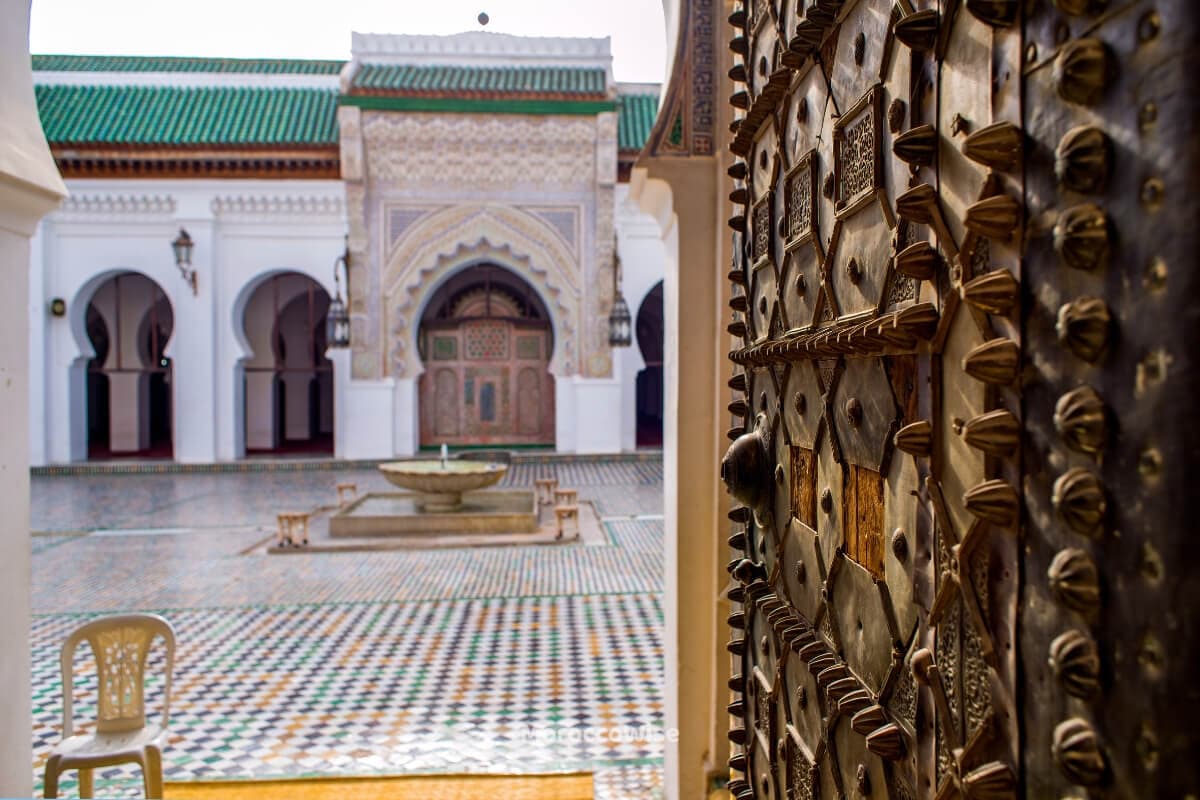
Al-Qarawiyyin is among the most important historic institutions in Fes. Founded in 859 CE as a mosque by Fatima al-Fihri, it developed into a renowned center of Islamic learning and remains associated with the University of al-Qarawiyyin. Its long history links the intellectual life of Morocco with a broader world of scholarship. The institution is often described as the world's oldest continuously operating university, although the meaning of “university” has changed across different eras and educational traditions.
Fatima al-Fihri and the foundation
Fatima al-Fihri was a woman of learning and means whose family had settled in Fes. Historical tradition credits her with founding the Qarawiyyin Mosque in 859, using inherited wealth to establish a place of worship for the growing community. The mosque was built in the city quarter associated with immigrants from Kairouan, in present-day Tunisia, from which the institution takes its name.
Stories of al-Fihri's dedication have endured across centuries and made her an especially meaningful figure in the history of education. The details of her life come through later historical accounts, and popular retellings sometimes add elements that are difficult to verify. What is clear is the institution's lasting importance: a religious foundation became a place where scholars taught, students gathered, and knowledge was transmitted over generations.
From mosque to center of scholarship
Al-Qarawiyyin began as a mosque, and religious instruction formed a central part of its early intellectual life. Over time, the institution became associated with teaching in subjects including Islamic jurisprudence, language, grammar, astronomy, mathematics, and medicine. Its reputation drew scholars and students from across North Africa and the wider Mediterranean world.
The term “university” can mean different things in different historical contexts. Al-Qarawiyyin's educational structures were not identical to the modern European university model, and the institution evolved through multiple periods of patronage and reform. It is therefore most accurate to describe it as a historic center of higher learning with a continuous educational legacy, while recognizing that claims about the world's “oldest university” depend on how the term is defined.
Architecture shaped by centuries
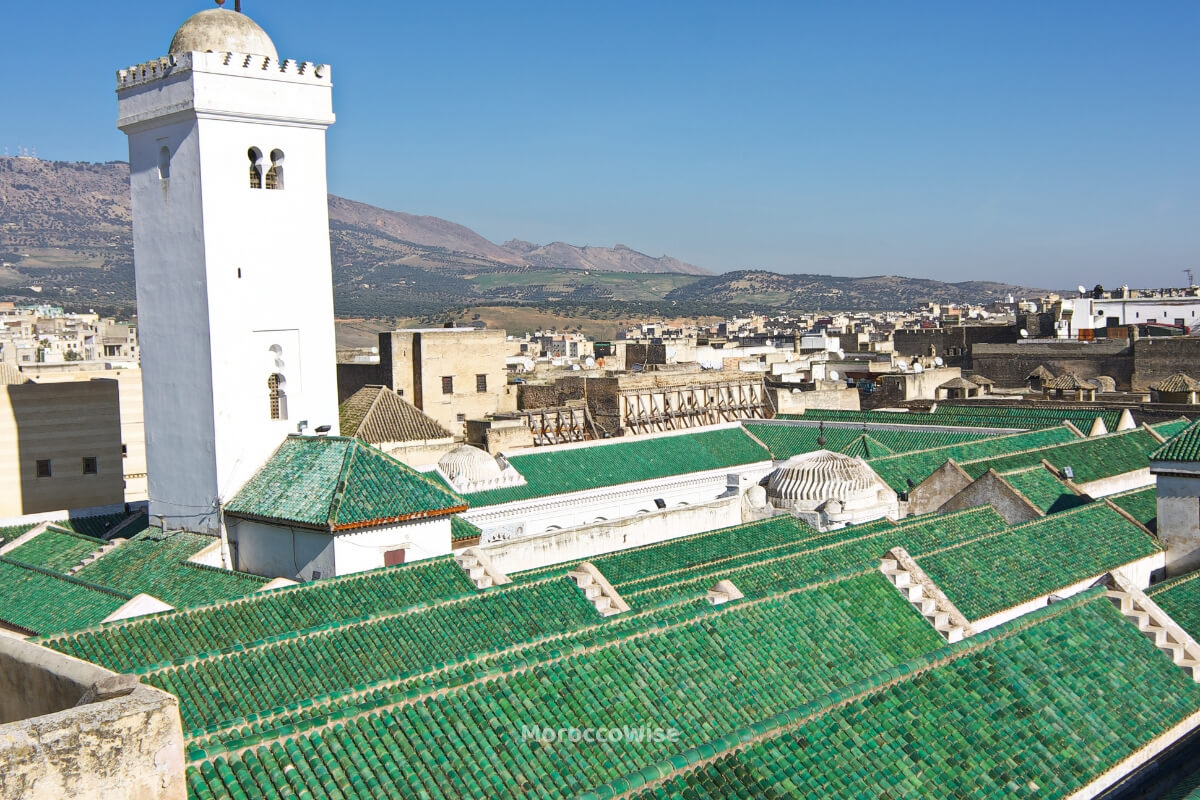
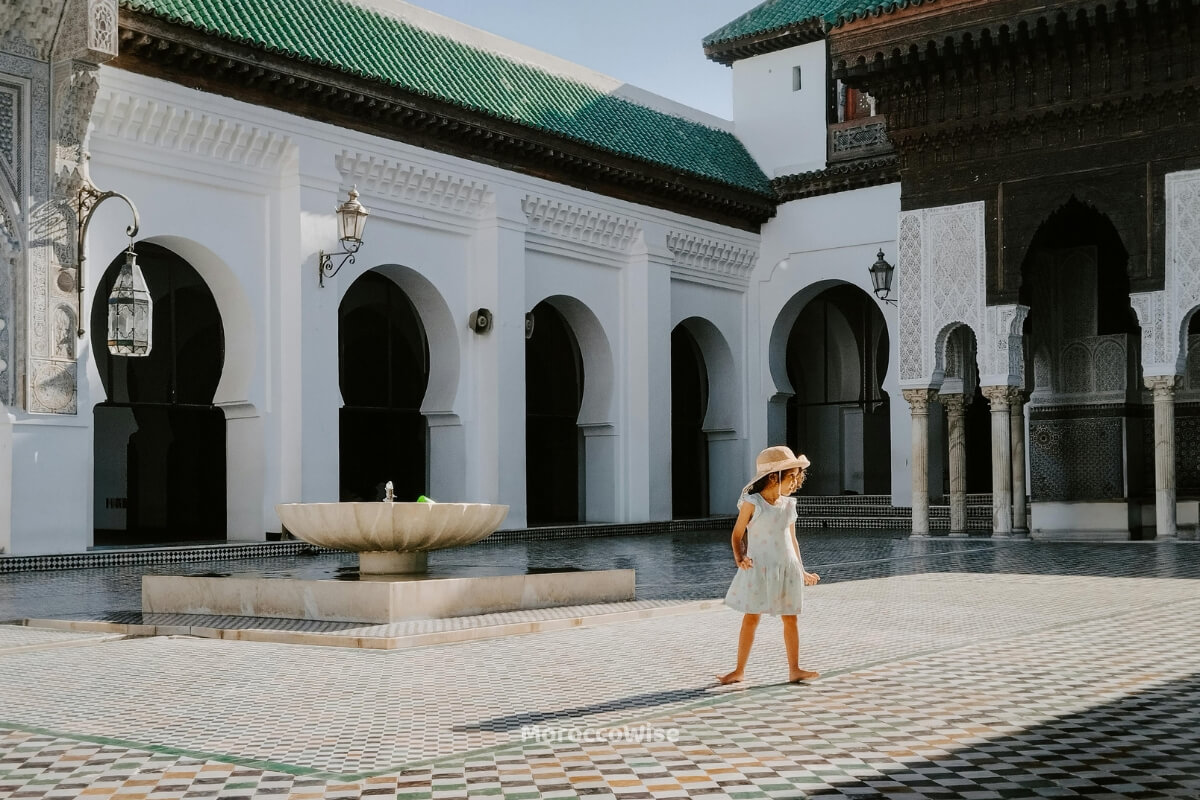
The Qarawiyyin Mosque complex expanded and was renovated under successive dynasties. Its large prayer hall, courtyards, fountains, and decorative details reflect the architectural development of Fes over many centuries. Zellij tilework, carved plaster, cedar, and calligraphic ornament create a richly layered setting, while the mosque's scale expresses its central role in the medina.
Historic libraries have also been part of Al-Qarawiyyin's legacy. Manuscripts and scholarly works connected to the institution reflect a culture of learning and preservation. Access to particular spaces and collections changes, so visitors should rely on current official guidance rather than assume that a library or interior is open for general sightseeing.
A living spiritual and academic institution
Al-Qarawiyyin is not simply a historic monument; it remains a religious and educational institution. Its significance to Fes is visible in the surrounding streets, where trade and scholarship have long existed alongside worship. The mosque is generally not open to non-Muslim visitors. Admire the exterior from public lanes, follow posted rules, and do not attempt to enter restricted spaces.
How to appreciate Al-Qarawiyyin in Fes
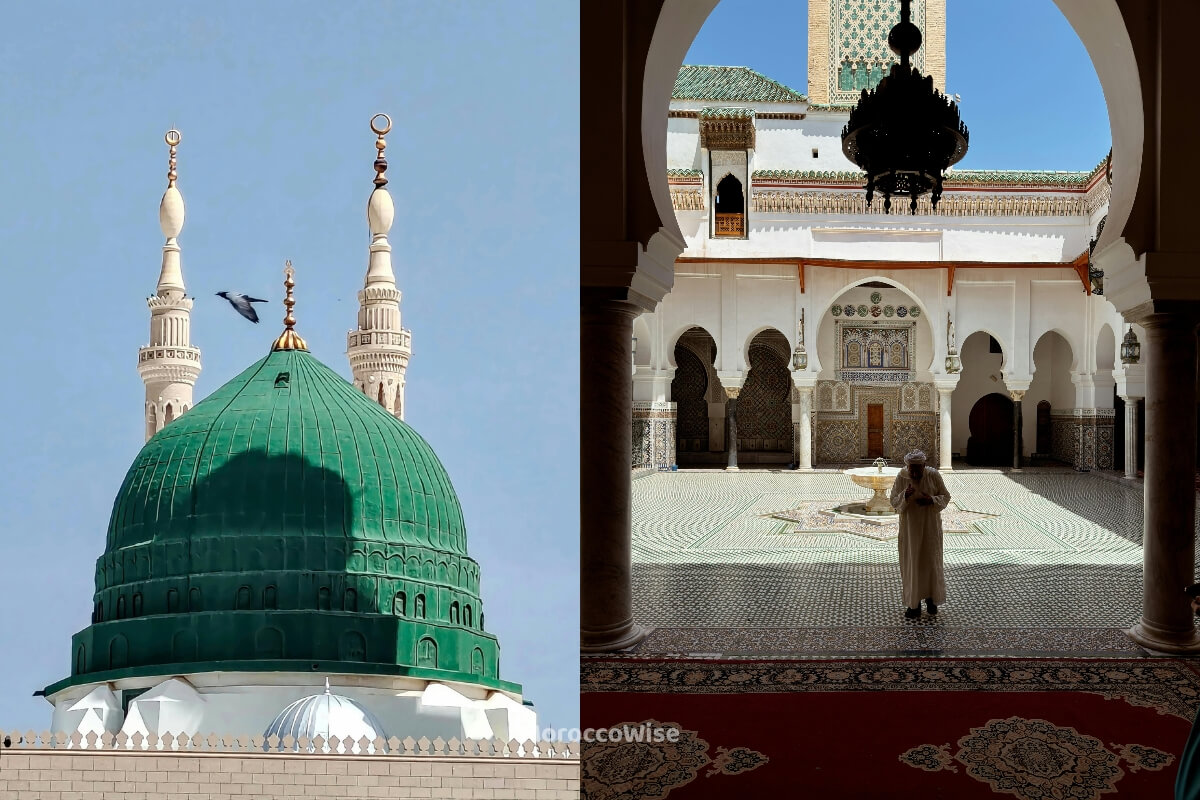
Walk through the surrounding medina with a guide or a clear route, and look for the relationship between the mosque, nearby souks, fountains, and historic educational buildings. The lanes can be crowded and confusing, so keep your phone and valuables secure and give worshippers space. Ask before photographing people, shop interiors, or private courtyards.
Al-Qarawiyyin's story matters not only because of an “oldest” label, but because it connects a founder's charitable vision with centuries of learning in a living city. Understanding that history makes a visit to Fes richer: the institution is both an architectural landmark and part of the spiritual and intellectual heart of the medina.