
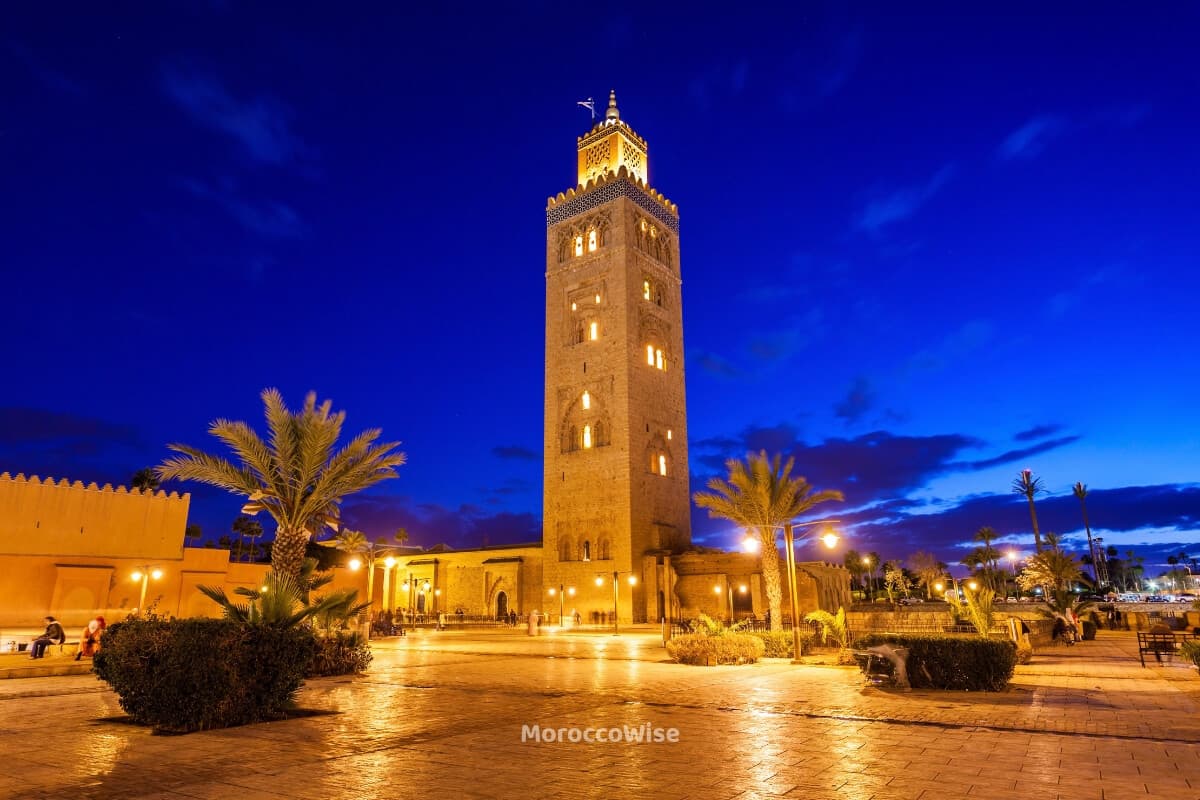
The Koutoubia Mosque is one of the first landmarks many visitors recognize in Marrakech. Its square sandstone minaret rises above the medina and can be seen from gardens, rooftops, and streets across the historic center. Built under the Almohads in the 12th century, the mosque is both a major work of medieval Moroccan architecture and an active place of worship. Its presence helps orient visitors, but it belongs first and foremost to the religious life of the city.
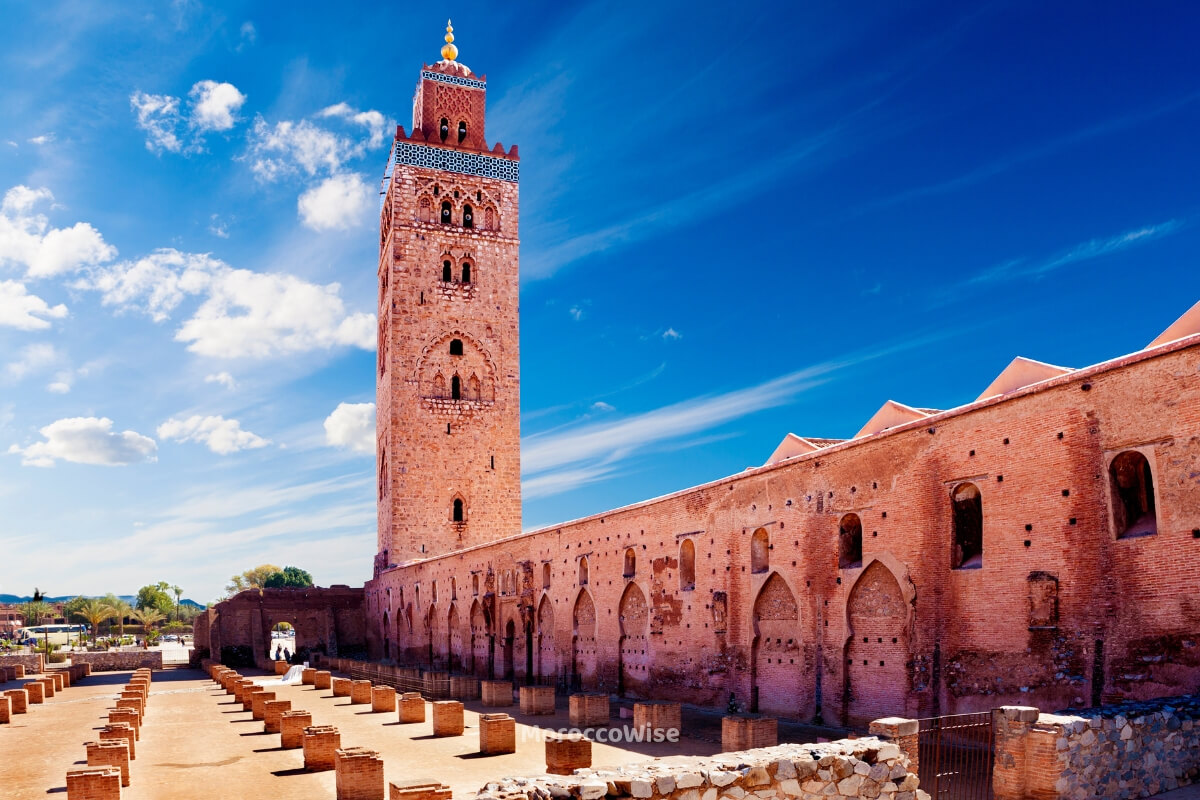
From Almoravid beginnings to an Almohad landmark
The mosque's history is closely connected to the Almohad dynasty, which made Marrakech its capital after taking the city in the mid-12th century. Construction began under Abd al-Mu'min. Historical accounts describe an earlier mosque on or near the site, followed by a rebuilt structure aligned with the Almohad rulers' religious and political vision. The surviving complex grew into a defining feature of the city.
The name Koutoubia is commonly linked to the Arabic word for booksellers. Book merchants once traded in the area around the mosque, reflecting the lively commercial life that surrounded major religious institutions. The mosque continues to serve the local community, so visitors should appreciate it as a living sacred space rather than an open museum.
The minaret and its architectural language
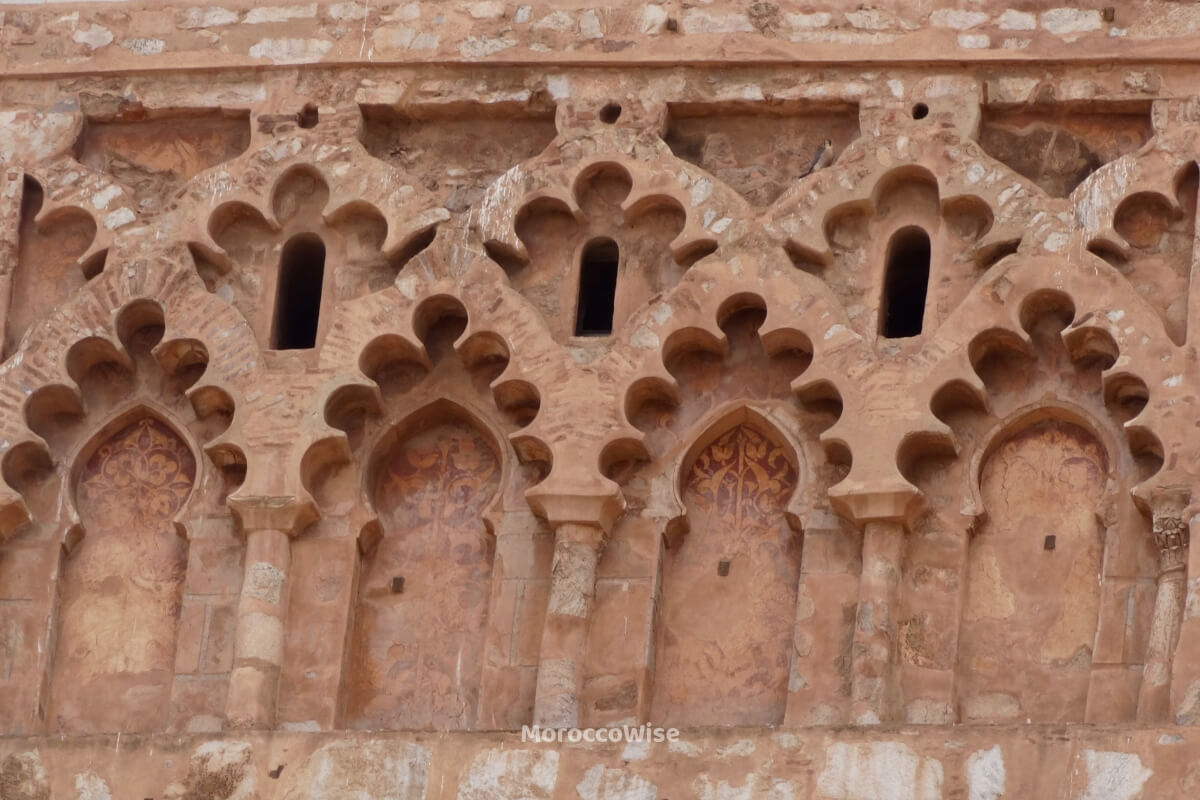
The minaret stands about 77 meters tall, including its finial, and is a landmark of Almohad design. Its square plan, restrained decoration, and carefully proportioned openings create a silhouette that is both monumental and spare. Close observers can see bands of patterned stonework, arches, and ornamental details that reward a slower look. The tower's engineering and visual balance influenced later Moroccan minarets, including the Giralda in Seville and the Hassan Tower in Rabat, both associated with the same wider Almohad architectural tradition.
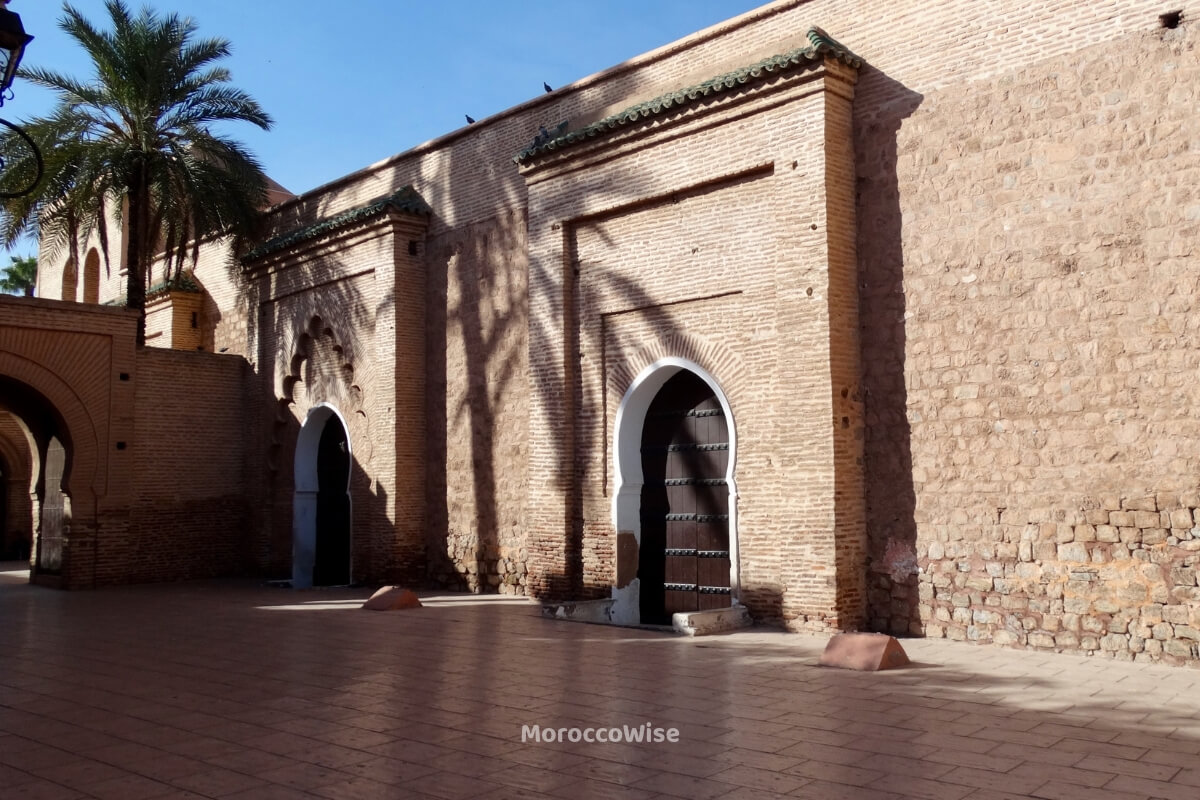
The minaret's upper section is crowned by a finial of gilded copper spheres. From a distance, this detail is subtle; from nearby viewpoints it gives the tower a distinctive finish. The Koutoubia's warm stone changes tone through the day, making early morning and late afternoon especially rewarding times to admire the exterior and photograph the building from public spaces.
A spiritual and civic reference point
For worshippers, the mosque is part of a daily rhythm marked by prayer. For the wider city, the minaret has become a point of orientation: its outline appears above the surrounding trees and rooftops, connecting the medina to the open spaces around it. Nearby paths and gardens offer room to pause, while the neighboring Jemaa el-Fnaa and commercial lanes show how religious, civic, and market life meet in central Marrakech.
Non-Muslim visitors are generally not permitted to enter mosques in Morocco, and the Koutoubia is not an exception to that general rule. Enjoy the architecture from public areas, follow signs and barriers, and avoid photographing people at prayer. Modest clothing and a quiet, respectful manner are appropriate around the grounds.
Planning a visit
Pair a walk around the Koutoubia's exterior with a visit to Jemaa el-Fnaa or a stroll along the medina walls. The area can be busy, especially near sunset, so allow extra time to cross streets and find a calm place to look. A rooftop cafe nearby can offer a distant view of the minaret, but confirm any minimum spend before settling in. If you are interested in the building's details, look for local guides who can explain its history without promising access to restricted interior spaces.
The Koutoubia is not simply a photo stop. It is a carefully composed medieval monument, a symbol of Almohad-era Marrakech, and a spiritual landmark still woven into the city's daily life. Take in its scale from the surrounding public spaces, then notice how its unmistakable tower remains present wherever the old city opens to the sky.