
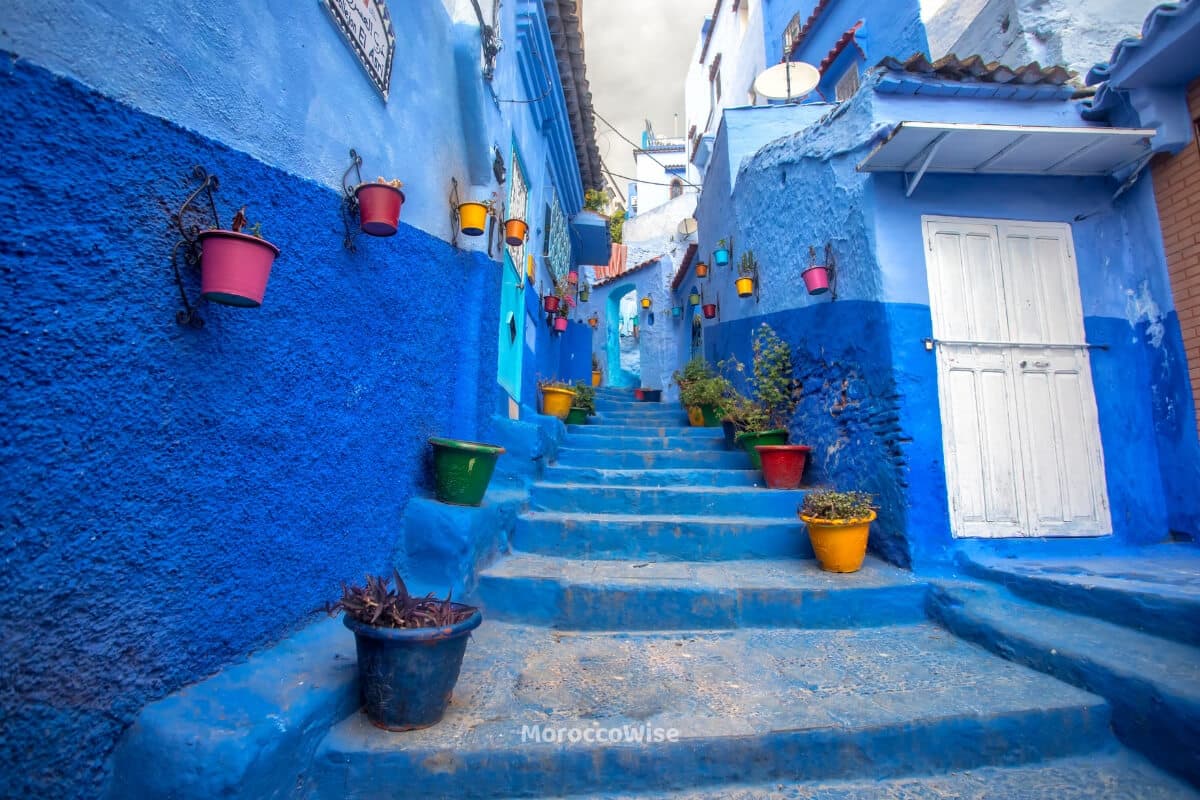
Outa el Hammam is Chefchaouen's central plaza and one of the easiest places to find your bearings in the medina. The cobblestone square is framed by cafes, restaurants, the red-walled Kasbah, and the town's Grand Mosque. It is a natural place to pause between walks through the blue lanes, watch the rhythm of the town, and choose a shaded table for tea or lunch.
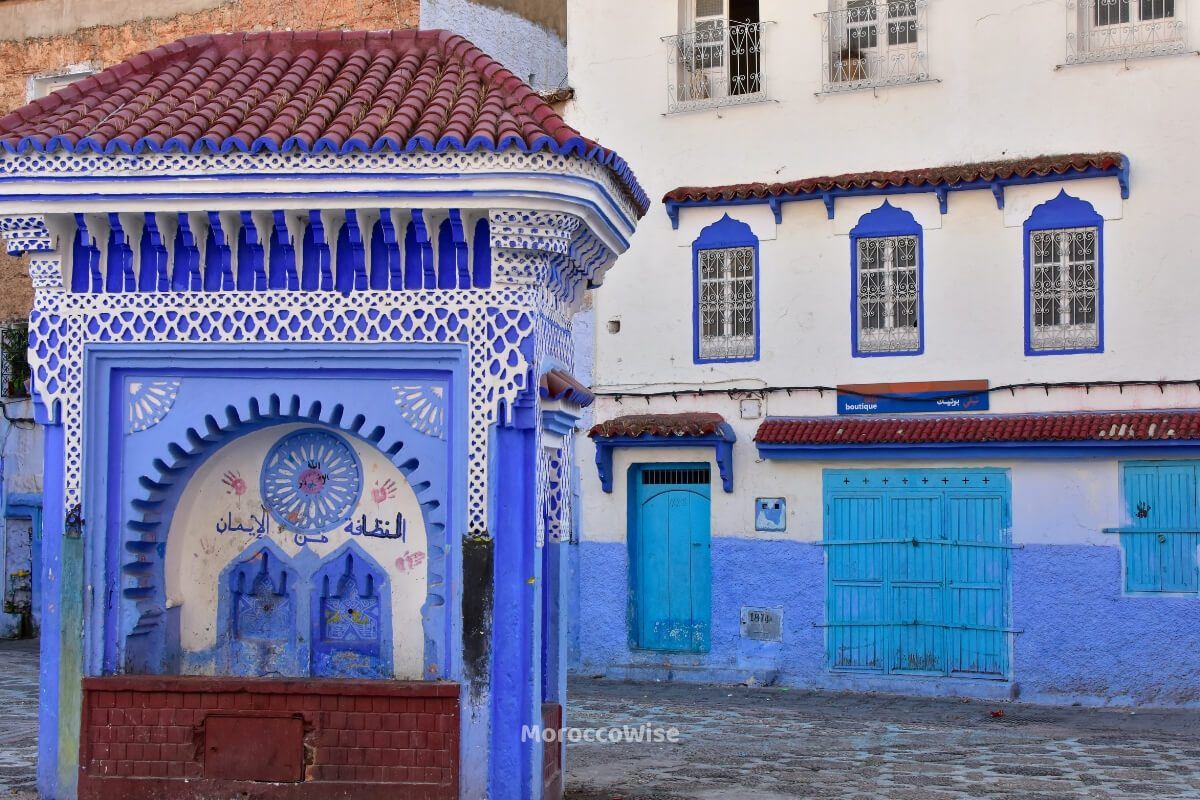
A gathering place in the old medina
The plaza brings together residents and visitors throughout the day. Its open center contrasts with the narrow alleys leading into the surrounding neighborhoods, making it a useful meeting point before or after exploring. In the morning, cafes begin to fill; later, the square becomes a lively place to rest after walking the steep lanes.
Outa el Hammam is also a practical landmark. Save its location on your map, then use it as a reference when wandering nearby streets. The medina's routes can loop and change elevation, so a familiar square makes it easier to orient yourself without trying to memorize every turn.
The Kasbah and its red walls
Along one side of the square stands Chefchaouen's historic Kasbah, a fortified complex associated with the town's early history. Its reddish walls and towers provide a striking contrast to the blue and white buildings nearby. Inside the Kasbah grounds, visitors may find a garden, museum exhibits, and views from the ramparts, depending on current access and opening arrangements.
Check locally for current hours, entry fees, and which sections are open. Allow time to explore rather than treating the Kasbah as only a photo stop; its courtyards and architectural details offer useful context for the town's development.
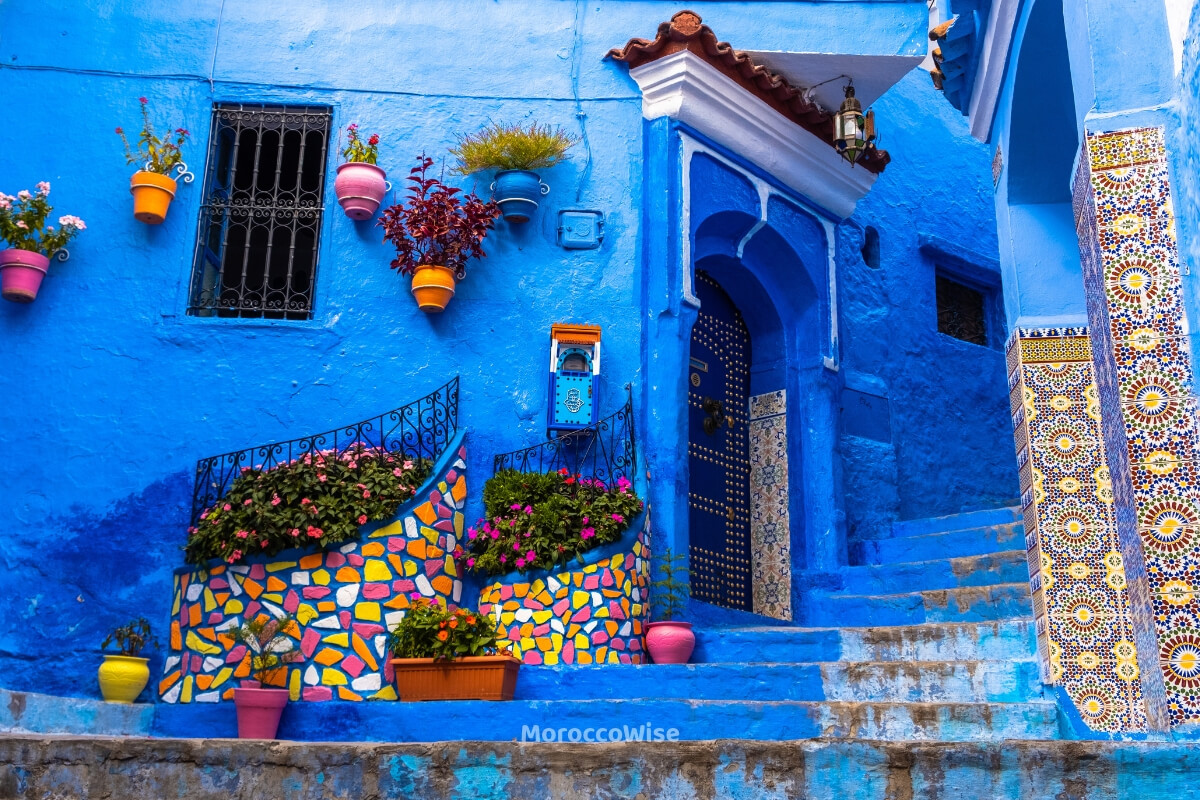
The Grand Mosque and local heritage
The Grand Mosque stands beside the square and is an important place of worship for the local community. Its distinctive octagonal minaret is a notable feature of Chefchaouen's skyline. The mosque is not generally open to non-Muslim visitors, so appreciate its exterior from public areas and avoid interrupting worship or photographing people at prayer.
The square's architecture and daily life reflect the town's layered history, including Amazigh and Andalusian influences. The best way to experience it is simply to be present: notice the changing light on the walls, listen to the conversation around you, and leave space for locals moving through their own neighborhood.
Where to eat and take a break
Restaurants and cafes around Outa el Hammam serve Moroccan staples such as tagine, couscous, salads, grilled dishes, and mint tea. Menus and prices vary, so take a look before sitting down and confirm anything that is unclear. A table on the edge of the plaza is ideal for people-watching; a quieter cafe on a nearby lane may suit you better if the square feels busy.
Making the most of the square
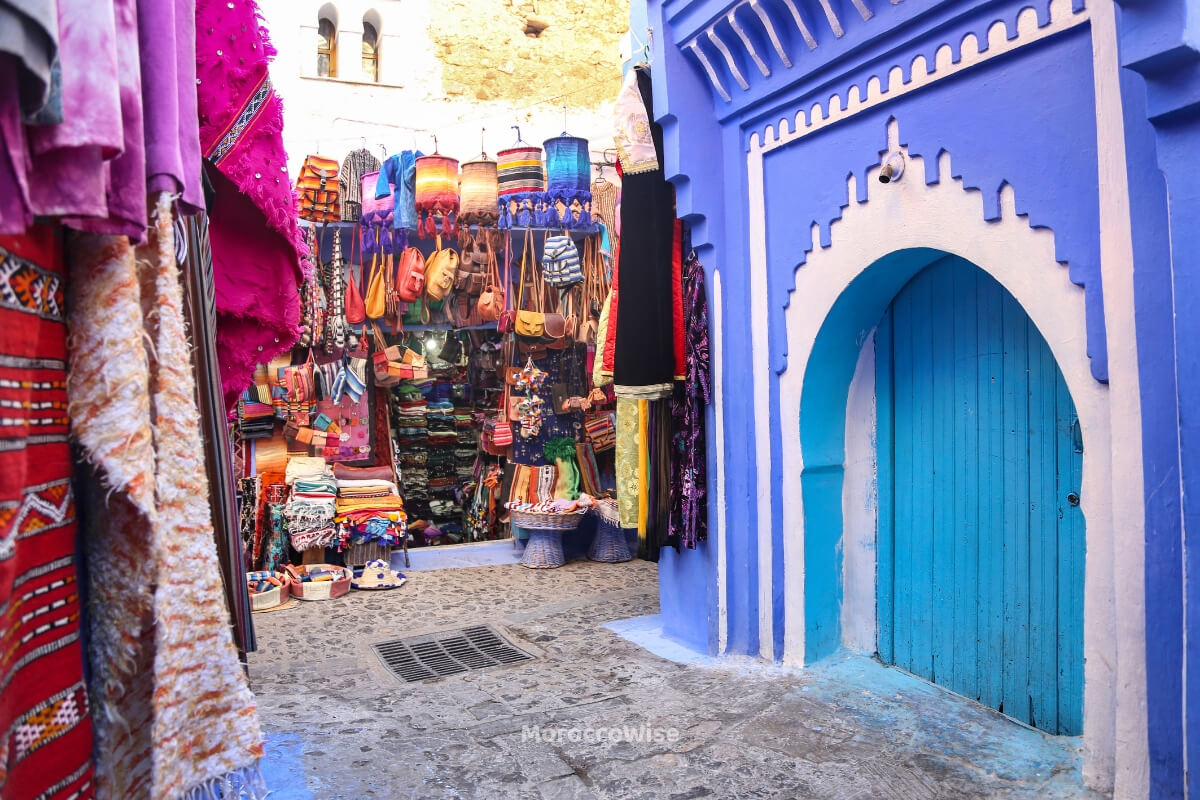
Visit at different times of day to see the plaza change character. Earlier hours are often calmer for photos and exploring the Kasbah, while late afternoon brings a lively atmosphere. The square is surrounded by active businesses, so ask before photographing staff or diners and avoid blocking cafe entrances. If you plan to shop, greet vendors and agree on prices before buying.
Outa el Hammam is more than a convenient stop between blue alleys. It is a social center where the historic Kasbah, mosque, cafes, and everyday routines meet. Give yourself time to sit, look around, and enjoy the welcoming pace that makes the heart of Chefchaouen feel like a place to linger.