
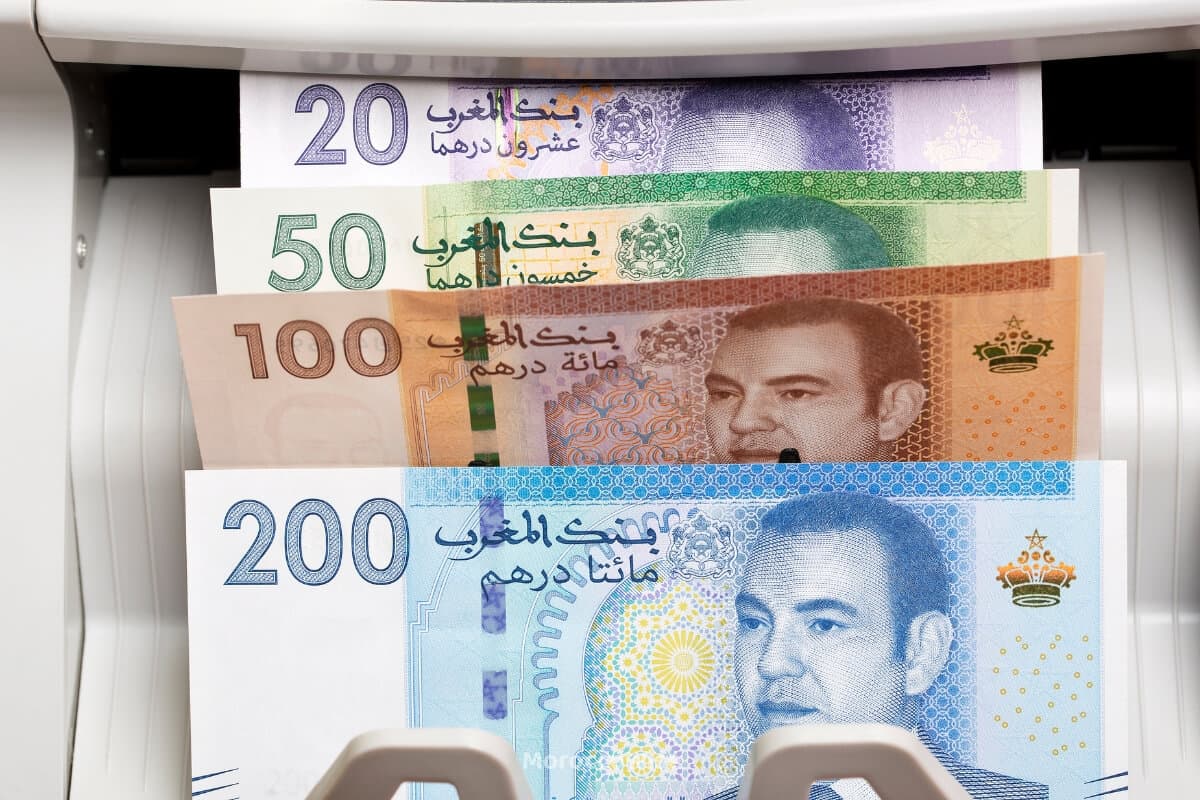
Money is one of those travel details that feels intimidating until the first ordinary purchase: a coffee, a taxi, a loaf of bread. Morocco uses the Moroccan dirham, abbreviated MAD and often written DH. You will use cash more often in medinas, taxis, small cafés, and rural areas, while hotels and larger businesses in cities are more likely to accept cards. I find it easiest to carry a modest amount of cash for the day, keep a backup card separate, and check the exchange rate through my bank before exchanging or withdrawing. There is no need to arrive with a wallet full of dirhams.
Understanding the dirham and everyday prices
The dirham is divided into 100 centimes, though everyday prices are usually quoted in whole dirhams. Notes and coins are both useful, and smaller denominations make life easier for small purchases and taxi fares. A practical habit is to break a larger note at a supermarket or café rather than expecting a tiny stall to make change for a high denomination. Count your change discreetly and keep a few small notes accessible, not loose in an open pocket.
Exchange rates move, so look up the current rate rather than memorizing a conversion that will go stale. When you pay by card or withdraw from an ATM, you may be offered a conversion into your home currency. The rate presented by the ATM or card terminal can include a markup. Compare it with the amount in dirhams and, if offered, consider choosing to be charged in MAD so your own card issuer performs the conversion. Check your bank’s foreign transaction fee and cash withdrawal fee before departure; those charges can matter more than a small difference in the exchange rate.
ATMs, cards, and carrying cash safely
ATMs are common in larger towns and cities, particularly around bank branches and busy commercial areas. Use a machine in a well-lit location, ideally attached to a bank, and shield the keypad. If a machine retains your card or behaves unexpectedly, do not accept help from a stranger; contact the bank using the number printed on the machine or your card issuer’s official number. Avoid making a large withdrawal just because the ATM offers one. A few smaller withdrawals can be less risky, though your bank’s fees may make a single sensible withdrawal more economical. Balance convenience against fees and carry only what you need.
Cards are useful at larger hotels, established restaurants, some supermarkets, and transport booking counters, but do not assume every business accepts them. Contactless payments may work in modern venues, but cash remains important for neighborhood shops, market purchases, tips, and many taxis. Carry two payment methods if possible and keep them in separate places. Leave a backup card and an emergency cash reserve somewhere secure in your accommodation. If your card is lost, freeze it promptly through your bank’s official app or hotline.
When paying in a market, agree on the amount in dirhams before the transaction is complete. If a price is shown, check whether it is per item, per weight, or for a set. At a restaurant, review the bill calmly and ask about anything unclear. A respectful question is better than assuming an error is intentional. For a taxi, confirm the fare or meter before you depart, particularly at stations and airports where tired arrivals can be easy to confuse.
Haggling in the souks without the stress
Bargaining is part of buying many goods in souks, but it is not a requirement for every purchase. Fixed-price shops, supermarkets, pharmacies, and restaurants generally list their prices. For crafts and souvenirs, start by deciding what you genuinely like and what you are comfortable paying. Ask the price, take a moment, and make a reasonable counteroffer if you want to negotiate. The first offer is a starting point, not a verdict on the seller or the item.
Good bargaining is a conversation. Keep your tone warm, do not begin negotiating as a performance if you have no intention of buying, and be willing to walk away politely if you cannot agree. If the seller accepts an offer, honor it. Before paying, confirm the final price, currency, quantity, and any delivery arrangement. Ask what an item is made from and how it was produced; this can reveal whether a low price reflects a different material or quality. When you find an artisan whose work you value, buying directly can be more meaningful than trying to force the lowest possible price.
Take extra care with high-value purchases such as rugs, antiques, jewelry, or leather goods. Compare several shops, ask for a written receipt, understand shipping and customs costs, and do not let urgency dictate a decision. If you are unsure, take a photograph of the item only with permission and return later. There is usually no need to decide in the first shop you enter.
Tipping: small amounts, sincere thanks
Tipping in Morocco is customary in some situations but is not a single fixed rule. In a café, rounding up or leaving a small amount for attentive service is appreciated. In a sit-down restaurant, check the bill for a service charge; if service is not included, a modest tip is a considerate gesture. The amount depends on the total and the experience, not on an obligation to meet a universal percentage. Carry small notes so you can tip without asking for change.
For a guide, driver, porter, or hammam attendant, a tip can recognize care and time, especially if the service was personal or lasted several hours. Ask your accommodation for a current local sense of what is customary for the service you are using. If you join a group tour, clarify whether gratuities are pooled or individual. For a taxi, rounding up is common when the service has been straightforward, but you are not expected to tip heavily for an ordinary ride. If someone demands a payment you did not agree to, stay calm, restate the arrangement, and seek assistance from your accommodation or the relevant service provider.
Above all, keep transactions clear and kind. Use dirhams, confirm prices before services begin, and treat small payments as ordinary exchanges rather than tests of cultural knowledge. Once you have a pocket of small notes and a plan for cards and cash, money becomes a minor part of the trip—leaving you free to focus on the meal, market, or conversation in front of you.