
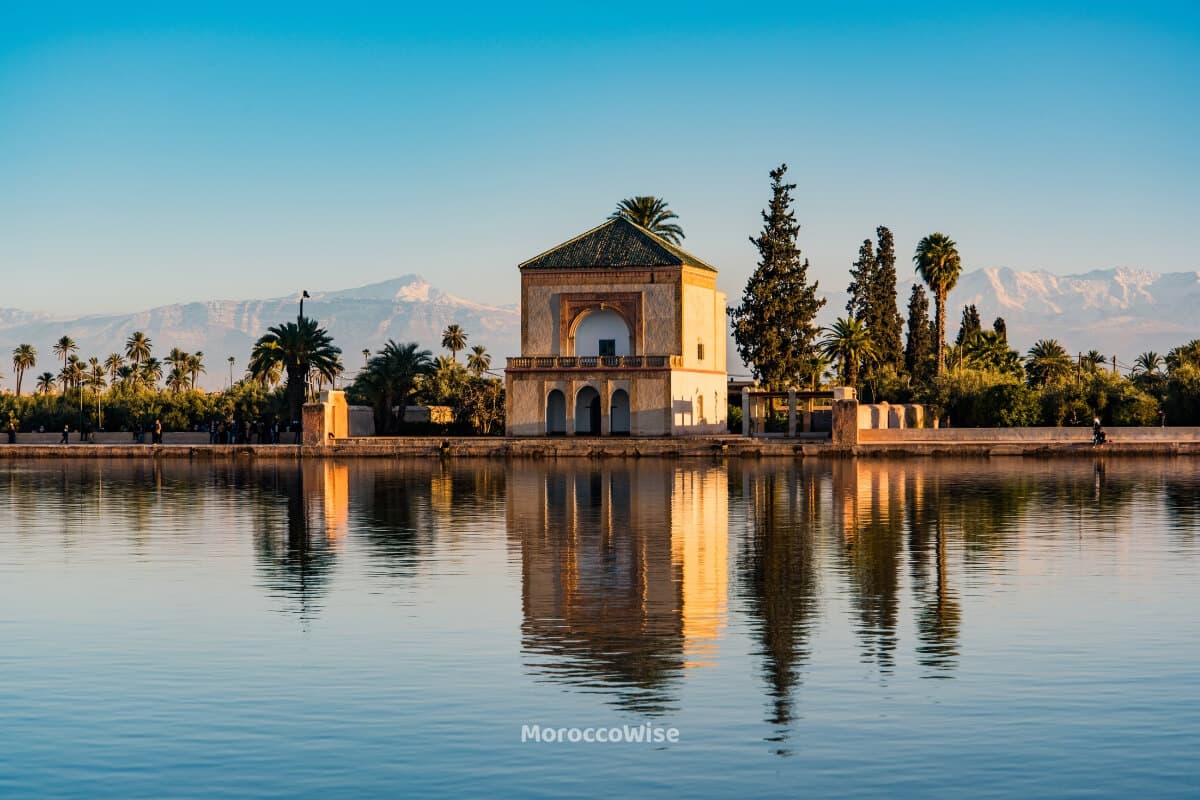
Menara Gardens offer a different perspective on Marrakech: open space, long rows of olive trees, and a large basin that reflects the changing sky. Set west of the medina, the gardens are a welcome break from the close lanes and busy markets. On clear days, the Atlas Mountains rise on the horizon behind the pavilion, creating one of the city's most memorable views.
A historic garden and water system
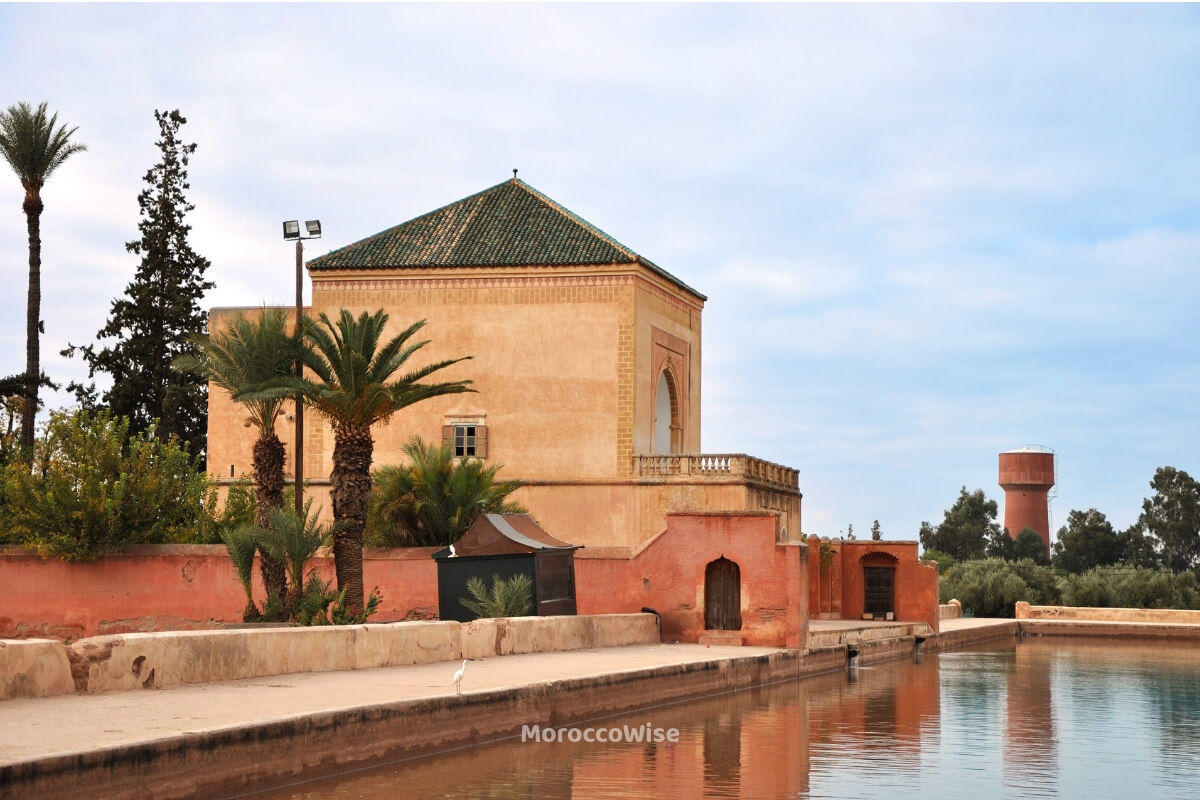
The Menara landscape is associated with the Almohad period, when rulers developed gardens and water infrastructure around Marrakech. The broad basin is supplied through a traditional system that brings water from the Atlas foothills toward the city. Its scale is practical as well as beautiful: water storage helped support cultivation, including the olive groves that give the gardens much of their character today.
Rows of olive trees create a measured, almost geometric landscape. Their shade makes the walk more comfortable, while the basin opens the view toward the pavilion and distant mountains. This combination of cultivated land, water engineering, and architecture reflects an enduring relationship between Marrakech and its surrounding environment.
The pavilion and its reflection
The pavilion beside the water is often called the Menara Pavilion. Its current form is associated with the Saadian era and later restoration, and its roofline is reflected in the basin when the water is calm. The simple composition is especially striking at the edges of the day, when low sunlight warms the building and the mountain backdrop becomes more distinct.
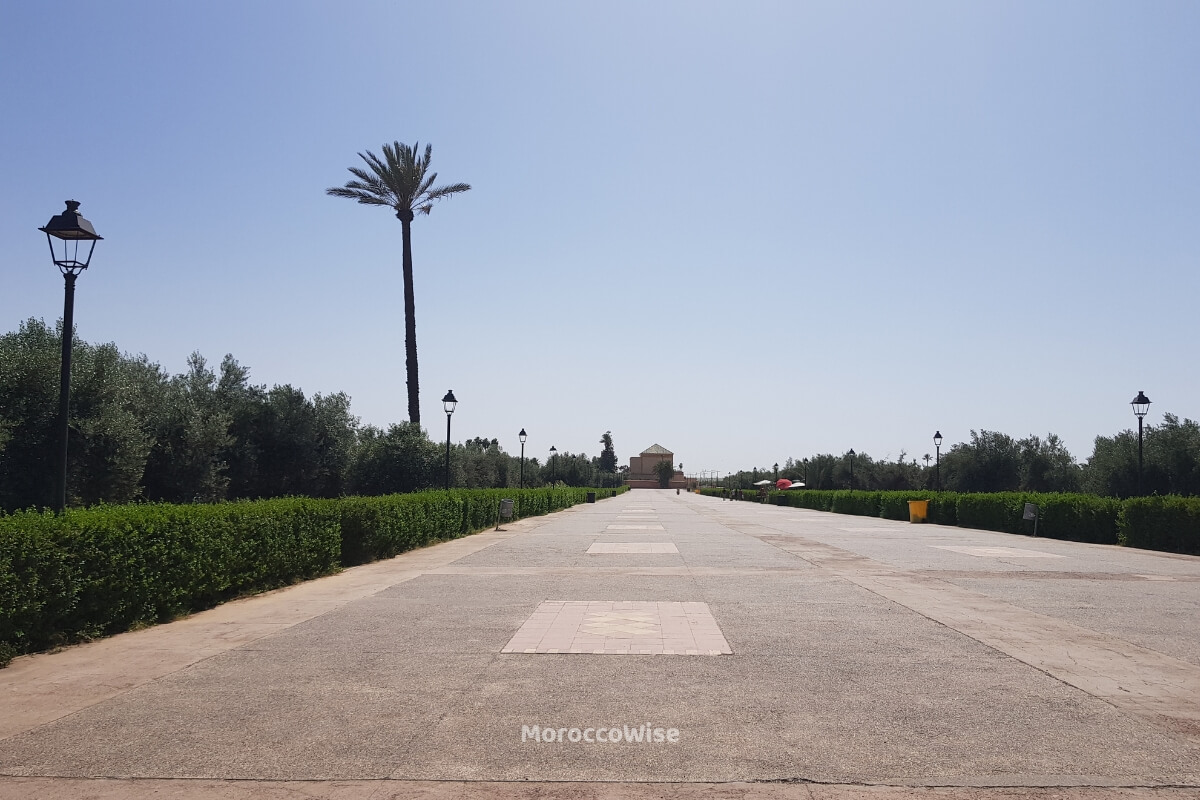
The pavilion is closed at times and access arrangements can change, so check locally before expecting to enter. Even from outside, its setting gives the gardens their familiar silhouette. Respect barriers and keep to public paths around the water, which can be deep and is not a swimming area.
Finding the Atlas Mountains view
The Atlas Mountains are visible on clear days, but haze and weather can soften or hide the peaks. Winter and early spring may bring snow to higher elevations, which is why the mountain view can feel especially dramatic after a clear morning. Bring expectations rather than guarantees: the garden remains a worthwhile visit even when clouds cover the horizon.
How to make the most of a visit
Menara is best approached as a gentle walk, not a packed sightseeing stop. Visit in the cooler morning or late afternoon, carry water, and wear comfortable shoes for the paths. The gardens sit outside the medina, so plan your transport back and confirm taxi fares or use a trusted ride option before setting off. Check opening details and any restrictions in advance, especially if you are traveling around holidays.
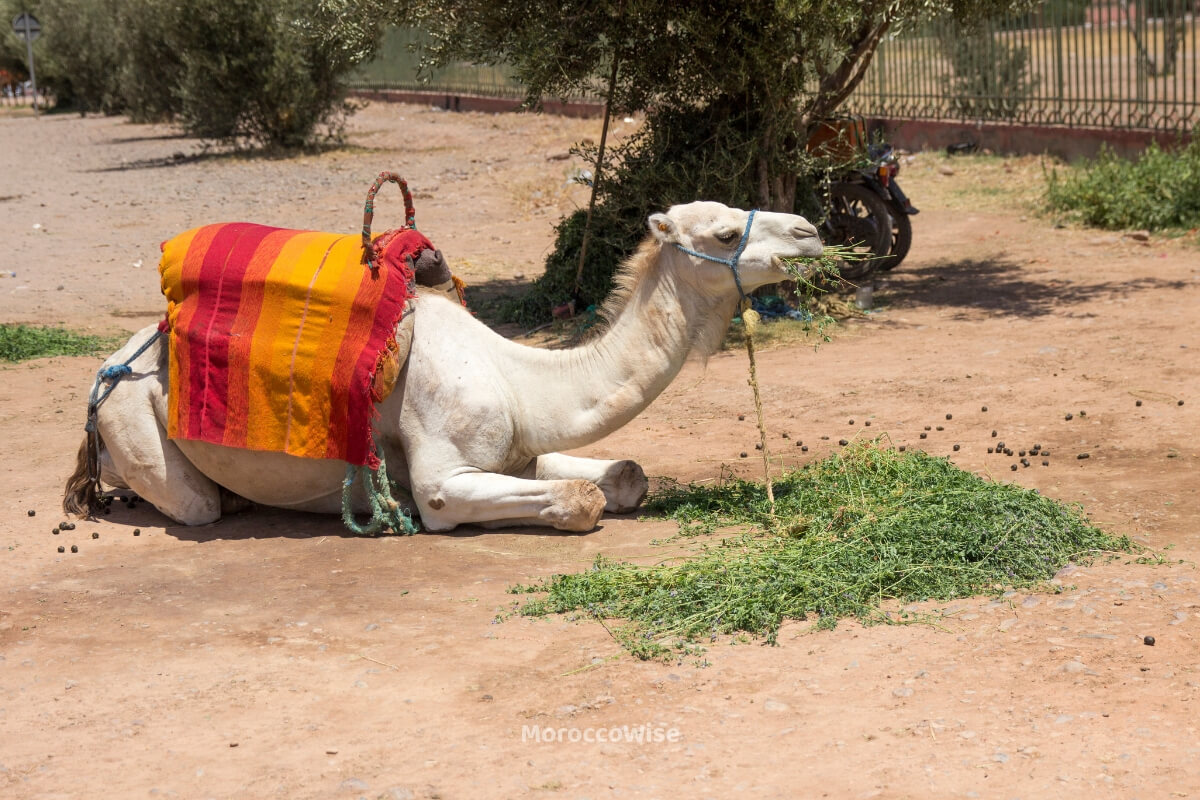
Visitors may encounter local families and people exercising or relaxing. Give them space, avoid loud music, and ask before taking portraits. The garden is a public landscape as much as a landmark. Its groves and basin reward a slower pace, with the pavilion, water, and mountains creating a quiet counterpoint to the city center.
For a balanced Marrakech itinerary, pair Menara with another nearby stop or spend the afternoon simply walking under the olive trees. The gardens connect the city's history to the land and water that sustain it. On a clear day, the Atlas view makes that connection feel especially immediate.