
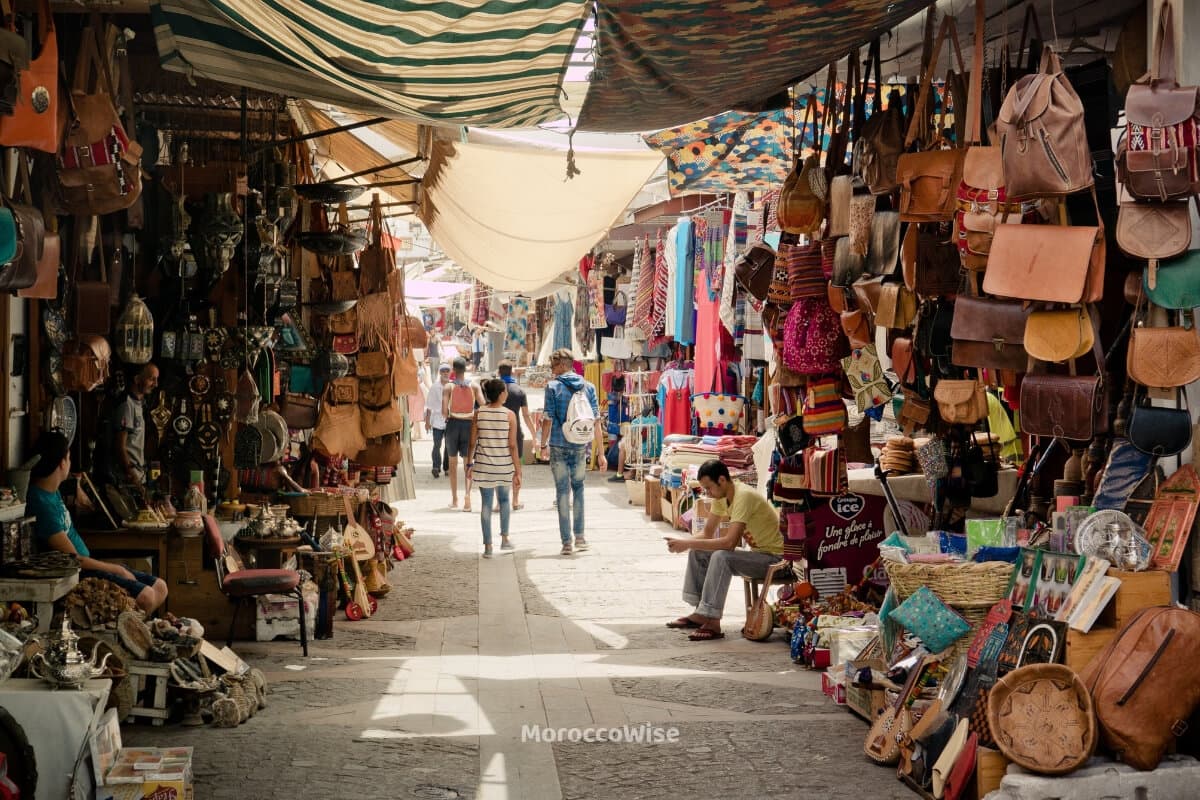
Haggling in Morocco is less a contest than a conversation: you ask, the seller answers, and both of you decide whether there is a price that feels fair. In a souk, the first amount quoted may be an opening point rather than a fixed tag, particularly for crafts, textiles, and souvenirs. Take your time, greet the person behind the stall, and remember that you are free to browse without buying.
Understand the rhythm before you negotiate
Prices work differently from shop to shop. Some stores have clearly marked fixed prices; others expect a little back-and-forth. Ask whether the price is fixed before bargaining, especially in cooperatives, food shops, and boutiques. If the answer is yes, respect it. If negotiation is welcome, start with curiosity: ask what an item is made from, how it is produced, or where the design comes from. That turns shopping into a cultural exchange instead of a race to the lowest number.
In Marrakech, the souks spread through the medina’s lanes and workshops. Use this Google Maps view of the Marrakech souks to get oriented, then explore at a relaxed pace. Our Marrakech guide has more ideas for combining a market visit with the rest of your day.
Try the one-third opening offer as a starting point
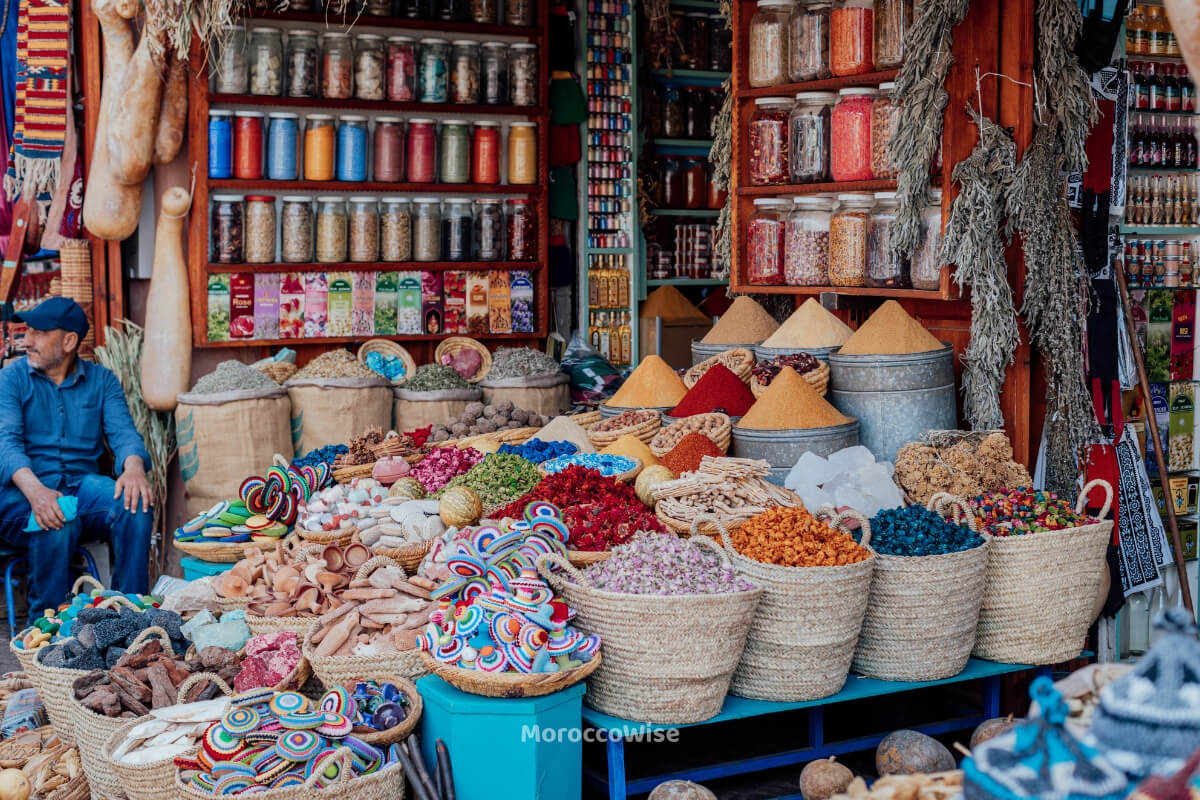
Travelers sometimes use a “one-third rule”: if a seller names a price and bargaining is clearly expected, an opening offer around one-third of that amount can give the conversation room to move. Treat this as a rough starting point, not a rule about what an item is worth or a target you must hit. In practice, Haggling in Morocco is about agreeing on an amount you both accept, not pushing every seller to the lowest possible price. Handmade work, materials, quality, and local context all matter. A very low offer can feel dismissive, especially for something crafted by hand.
A simple, friendly bargaining sequence
- Ask the price: Show genuine interest and find out whether the amount is negotiable.
- Make a considered offer: Choose a price you would actually be happy to pay, not a number chosen only to “win.”
- Move in small steps: If the seller counters, consider meeting partway or making one clear revised offer.
- Confirm the total: Before paying, check the final amount, currency, quantity, and any delivery or packaging fee.
Keep your tone light and smile if it feels natural. The seller is working, so avoid blocking the stall or turning the exchange into a performance for other shoppers. If you are comparing similar goods, ask permission before handling delicate pieces, and do not take close-up photos of artisans or their work without asking.
Mint tea, hospitality, and the choice to buy
A shopkeeper may offer mint tea while showing rugs, lamps, leather goods, or other crafts. You can accept if you would enjoy a pause and a conversation, but tea does not obligate you to make a purchase. If you are short on time or not interested, thank the host warmly and decline. Before a lengthy demonstration or custom order, clarify what is included and whether any fee applies.
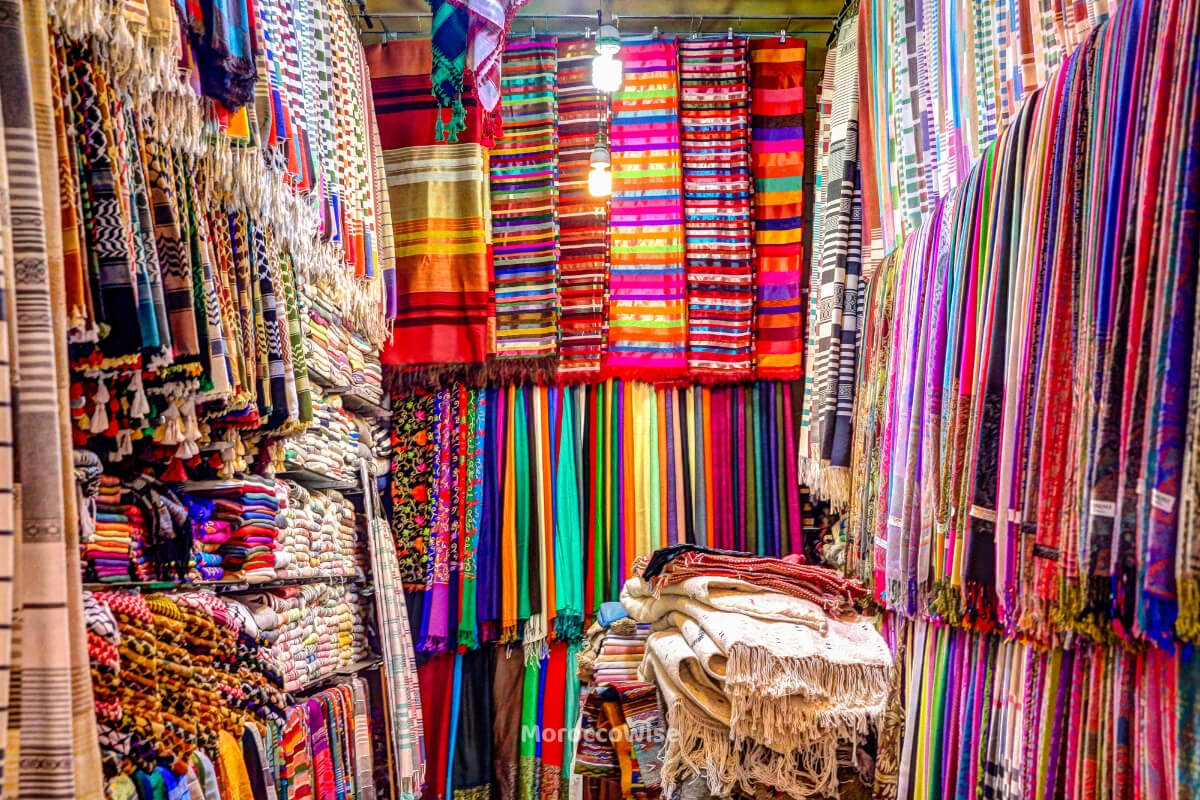
Haggling in Morocco works best when you are prepared to walk away without resentment and the seller is free to decline your offer. If you agree on a price, treat that agreement as final; do not reopen negotiations after the item has been wrapped. Likewise, you can end a conversation before an agreement with a polite “Thank you, I’ll think about it” or “No, thank you.” You do not need to give a reason.
Shop thoughtfully and bring home what you love
Look beyond the first stall
For widely available souvenirs, compare a few stalls to understand the range of styles and quality. For a distinctive handmade piece, ask about the maker, materials, care instructions, and whether the item can be shipped. A cooperative or clearly identified workshop can be a good place to learn how a craft is made. Do not assume every object is locally produced; ask straightforward questions and make your own decision.
Check fragile items before paying, agree on any repair or delivery terms in writing where possible, and keep your receipt. If you plan to travel onward by bus or train, think about weight and packaging before choosing a large purchase. Carry a small amount of cash for markets, keep the rest secured, and check your change discreetly.
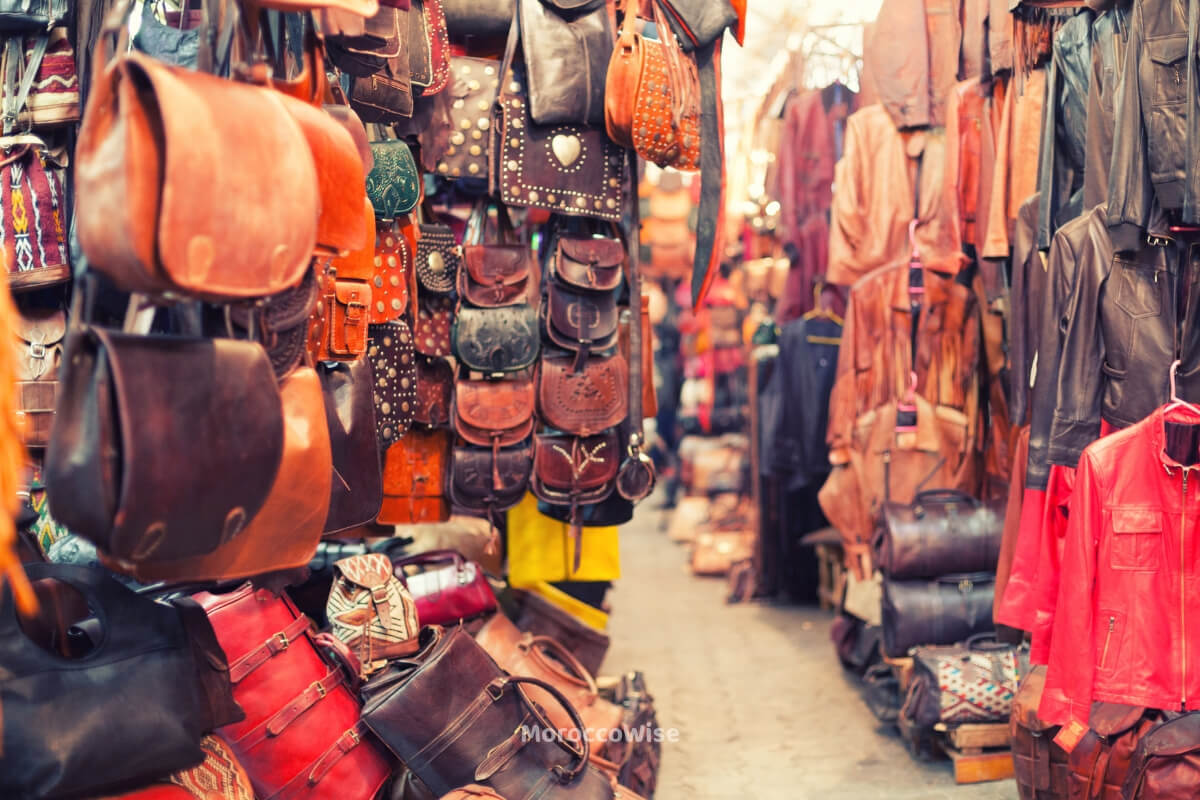
Haggling in Morocco can be one of the most enjoyable parts of a market visit when respect goes both ways. Browse with curiosity, offer a fair price you can stand behind, and let a “yes” or “no” be a perfectly good ending. The best souvenir is not always the cheapest one; often it is the piece you chose thoughtfully and the story you learned along the way.