
Fes el-Bali is one of Morocco’s great urban experiences: a dense, inhabited medina where workshops, bakeries, mosques, homes, and small markets share the same maze of lanes. It can feel like stepping into another century, yet this is not an open-air museum. People live and work here, and the most rewarding way to visit is with curiosity, patience, and respect for daily life.
Plan for the medina’s scale
Stay at least two nights so you can explore without rushing. The medina has multiple gates and entrances; save your accommodation location and a few recognizable landmarks offline, and ask your host for a reliable route. Streets are often too narrow for cars, and map apps can struggle with the dense alleyways. A licensed local guide can help explain the city’s history and lead you through areas you might miss. Confirm the tour length and fee beforehand, and say clearly if you want a history-focused walk rather than shopping stops.
Wear comfortable shoes with grip. The stone lanes can be uneven, and donkeys and handcarts sometimes use the same narrow passage. Step aside where space allows and avoid blocking doorways. A simple map is useful for orientation, but do not worry about seeing every lane. Pick one or two neighborhoods and allow time to pause.
Look beyond the famous viewpoints
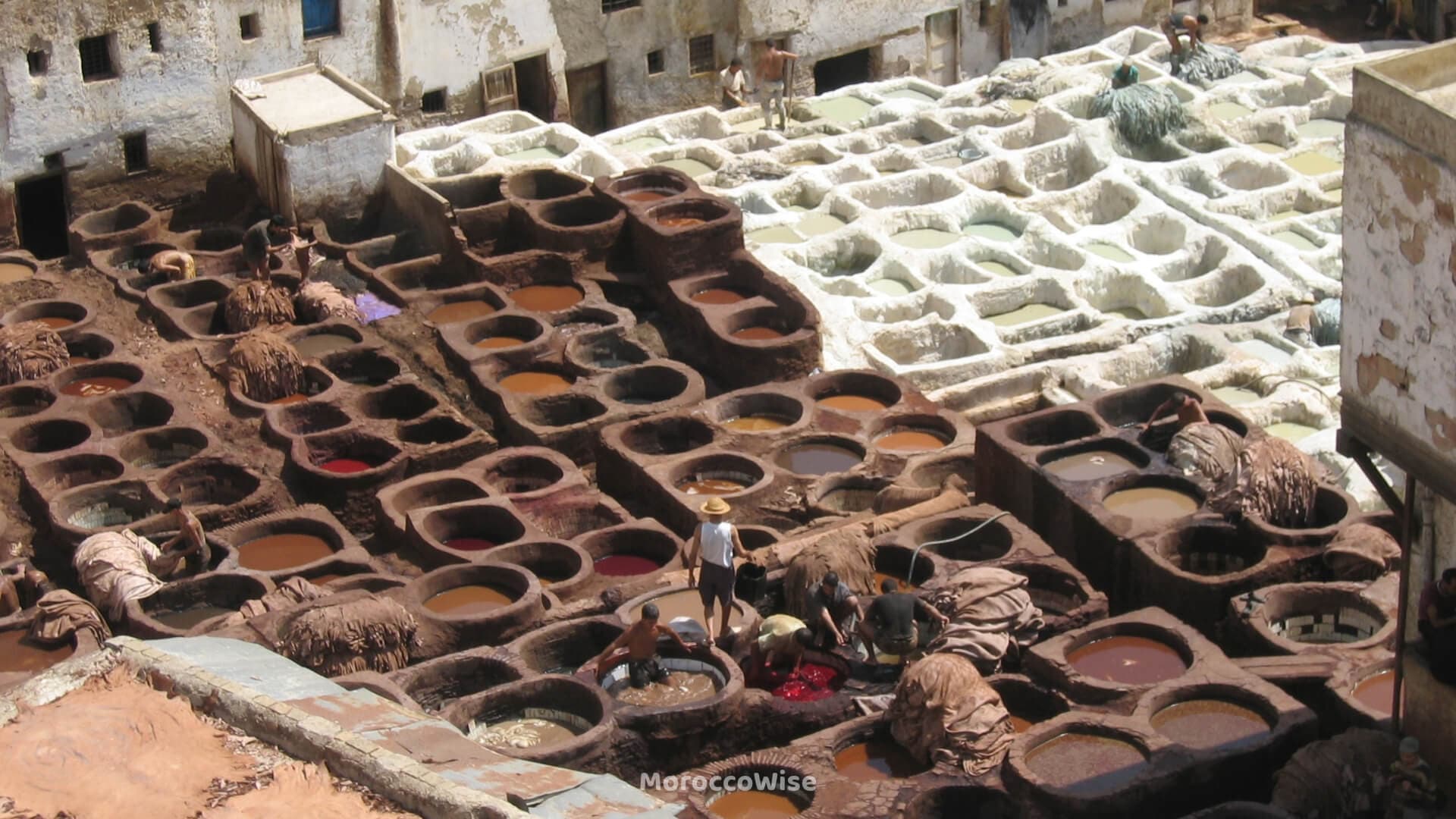
Start early, when the streets are cooler and workshops are opening. The Bou Inania Madrasa is known for its detailed zellij tilework, carved plaster, and cedar wood; check visitor access and opening times locally. The tanneries are a working part of the city and are often viewed from nearby terraces. A shop may offer a sprig of mint to soften the smell and expect visitors to browse afterward. You are not obliged to buy: ask about the viewing arrangement before entering, and decline politely if the visit feels pressured.
Notice the craft rather than treating artisans as scenery. Metalworkers, weavers, leatherworkers, and carpenters keep specialized skills alive. Ask before photographing people or their work, and consider buying directly when you genuinely want an item. Ask what it is made from, how it was produced, and whether it can be shipped; a thoughtful question often leads to a richer conversation than haggling alone.
Make time for quieter landmarks, too. The Nejjarine Museum of Wooden Arts and Crafts sits in a beautifully restored funduq, while the nearby fountain offers a glimpse of the city’s historic public architecture. The Andalusian quarter across the river has a different rhythm from the busiest central souks. Because mosques are generally not open to non-Muslim visitors, appreciate their exteriors and courtyards only where access is clearly permitted.
Eat and rest well
Try Fassi specialties such as pastilla, a layered savory-sweet pie, or a carefully prepared tagine. Restaurant terraces provide a welcome pause and a chance to look across the rooftops. Choose places with clear prices and food that is freshly prepared; carry water and take breaks, especially in summer. Many riads have peaceful interior courtyards where a short rest can reset your day.
Fes is a city to experience with all your senses, not conquer in a single afternoon. Begin with a guide or a clear plan, then leave space for a bakery scent, a tiled doorway, or a conversation that makes the medina feel less like a maze and more like a neighborhood.