
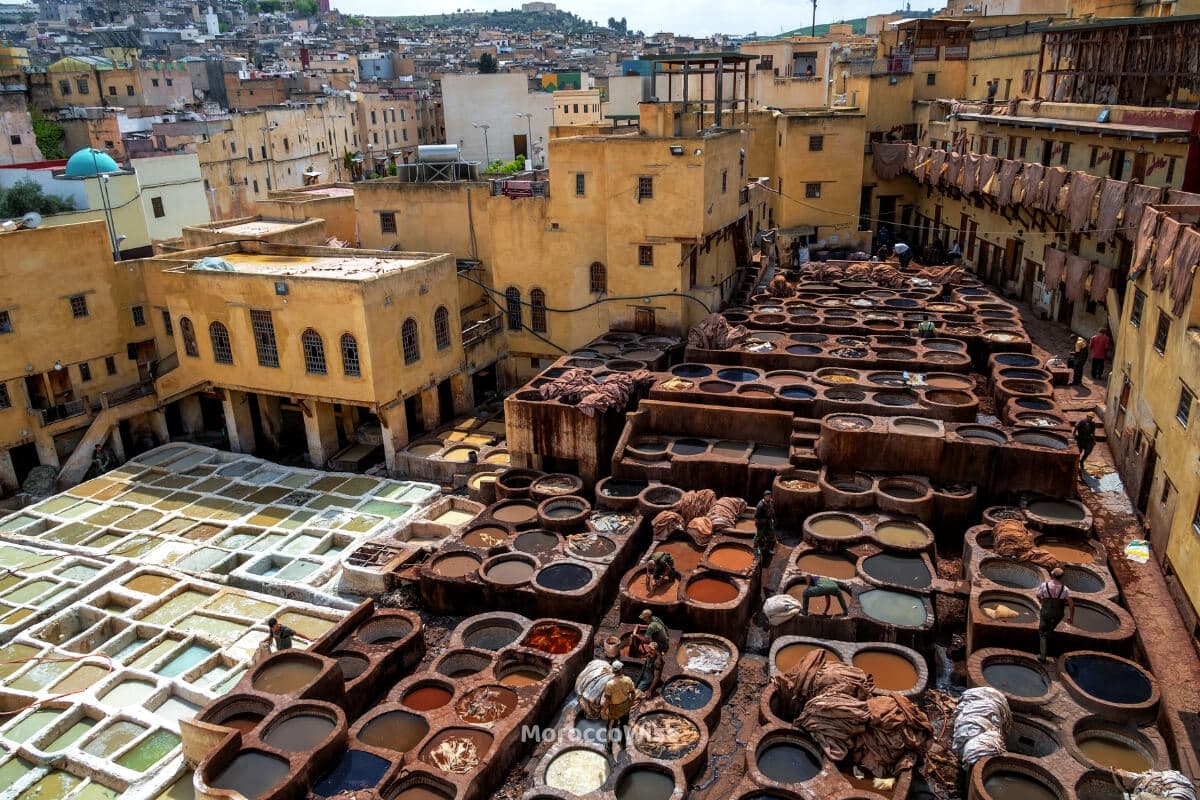
The Chouara Tanneries are among the most recognized sights in Fes el-Bali. From surrounding terraces, visitors can look down on round stone vats arranged across a working leather-dyeing district. The view is striking, but this is also an active place of labor. Tanners prepare hides and work through stages of washing, softening, dyeing, and drying using knowledge passed between generations.
A craft district with a long history
Leather production has been part of Fes's economy for centuries. The tanneries sit within the medina, close to the river and workshops involved in other stages of leatherwork. Hides arriving from different sources are cleaned and prepared before being treated and dyed. Once processed, leather can be cut and shaped into slippers, bags, belts, and other goods by artisans working nearby.
Historical accounts describe tanning in Fes across many eras, though the exact age and continuity of individual vats can be difficult to establish. The enduring impression comes from seeing a traditional craft still practiced in the heart of a modern city. The tanneries are not a reconstruction: they form part of a working network of labor, trade, and specialist knowledge.
How leather is prepared and colored
Traditional tanning involves several demanding stages. Hides are cleaned and treated to remove hair and prepare them for further work. They may then be softened and dyed using colorants drawn from a variety of natural and mineral sources. Ingredients and processes vary by workshop and product; descriptions of any one “recipe” should not be assumed to apply everywhere.
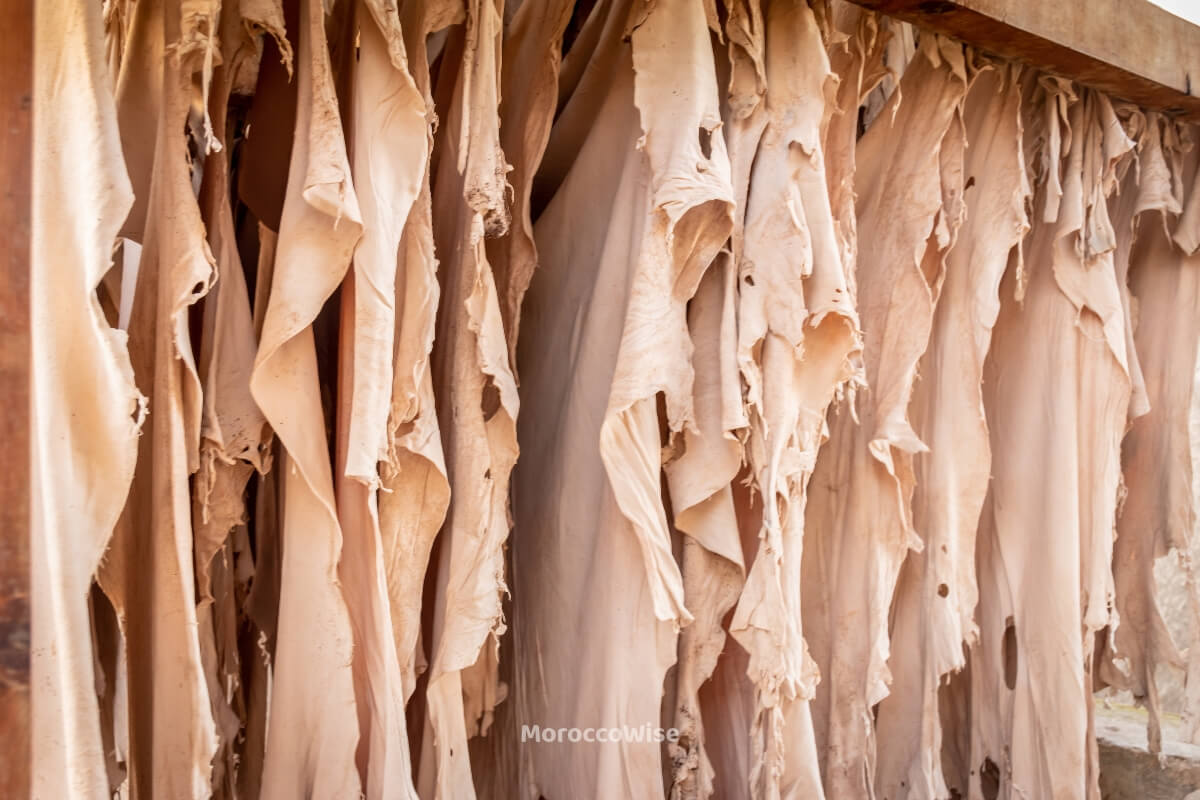
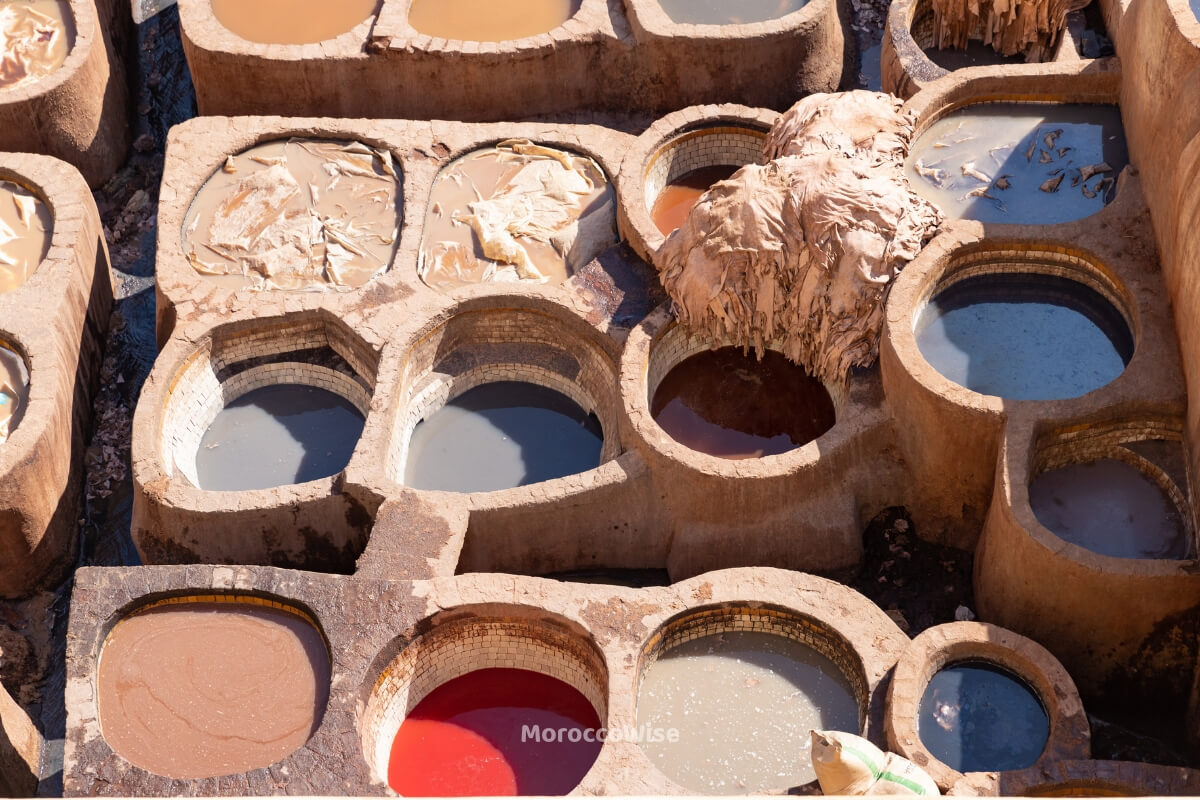
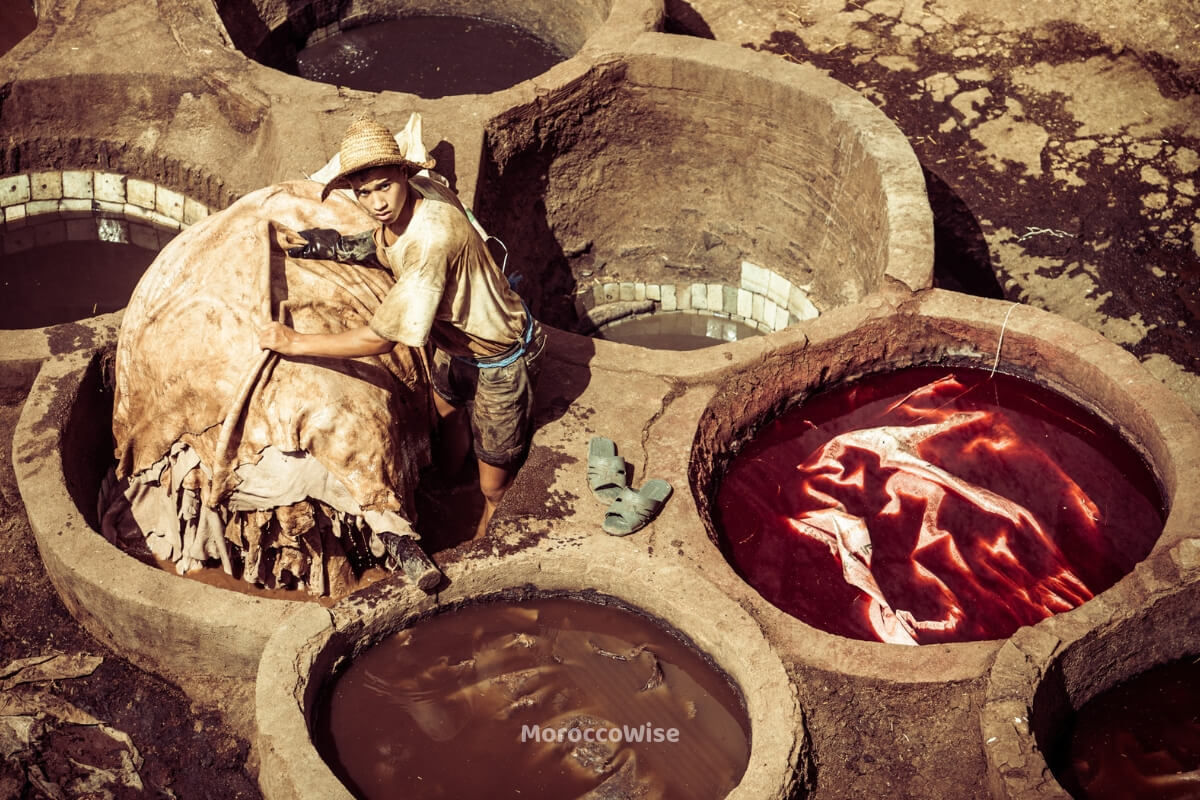
Large vats hold mixtures used for soaking and coloring. The workers move between them as part of physically intensive work that calls for experience and care. After treatment, the hides are drained and dried, often on rooftops or nearby racks. The colors visible from above—earthy browns, ochres, and brighter shades—reflect different stages and materials.
Viewing the tanneries from nearby shops
Many visitors see Chouara from terraces attached to leather shops. Staff may offer a mint sprig to soften the strong smell, then show leather goods for sale. A viewing visit can be a useful chance to understand the craft, but clarify at the outset whether there is a fee or expectation to shop. You are free to decline a purchase, and a polite thank-you is sufficient.
The terraces are workplaces and retail spaces, so be courteous to staff and other guests. Ask before taking photographs of workers or close-up images of their products. Do not throw anything into the vats or lean over barriers. If you buy leather, ask what material it is, how it was made, and whether the shop can explain care instructions. Check seams, lining, and finish before paying.
What to expect from the experience
The smell can be powerful, particularly on warm days. A mint sprig may help, but it does not remove the odor entirely. If you are sensitive to strong smells, have respiratory concerns, or are visiting with young children, consider viewing from a distance or skipping the terrace. The best time to visit depends on working conditions and weather; ask locally rather than expecting a particular color display or level of activity.
Visit with curiosity and respect
Combine the tannery with a walk through nearby craft lanes, but remember that artisans are working rather than performing for visitors. A guide can explain the stages of leather production and help navigate the medina; agree on the route and price first. Wear sturdy shoes, keep your belongings secure, and make room for residents and handcarts in the narrow streets.
Chouara is compelling because it brings the material history of Fes into view. The vats, tools, and surrounding shops show how a craft links raw materials to finished objects and supports a wider community of specialists. Observe thoughtfully, ask questions, and let the view be a starting point for understanding the work behind the leather goods in the souks.