
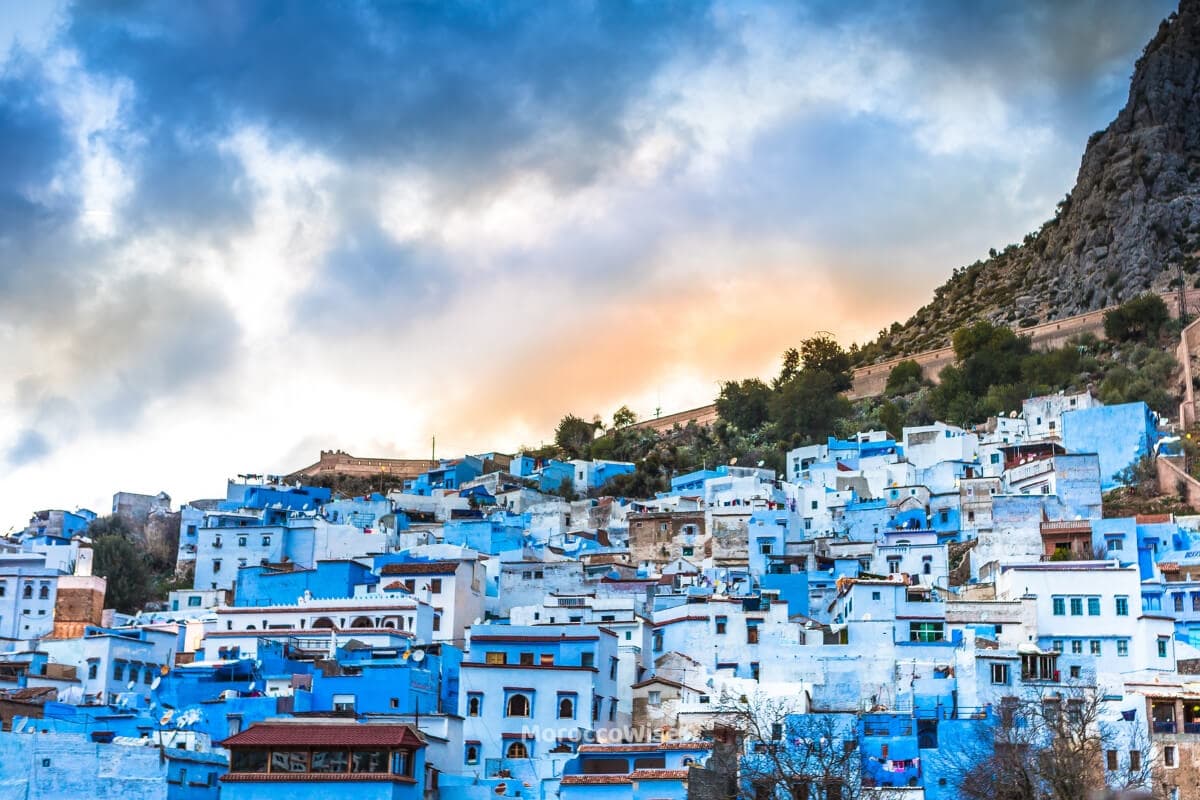
Nestled in the Rif Mountains of northern Morocco, Chefchaouen is known for its blue-painted lanes, mountain setting, and relaxed pace. The town was founded in 1471 by Moulay Ali Ben Rachid as a stronghold against Portuguese expansion. In the centuries that followed, Muslim and Jewish families arriving from al-Andalus helped shape its culture and architecture. Today, its medina is still a lived-in neighborhood, not simply a backdrop for photographs.
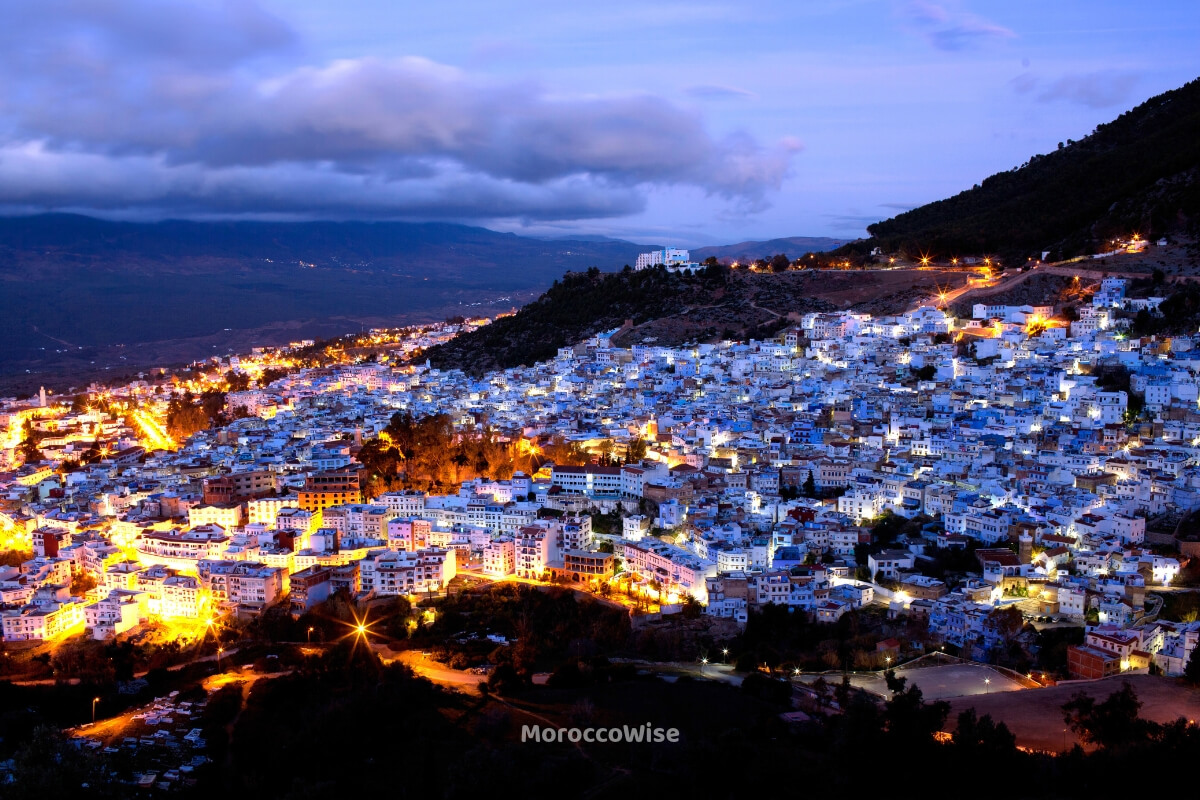
A mountain town with Andalusian roots
Chefchaouen's name is often understood in reference to the horns or peaks of the mountains that rise above it. The town's early position in the Rif made it a strategic refuge and a meeting point for communities shaped by the region's Amazigh heritage and migration from Iberia. Andalusian influence can be seen in local building details, tiled courtyards, and the historic medina's compact layout, though the town's culture is distinctly Moroccan and rooted in its mountain setting.
For centuries, Chefchaouen remained relatively closed to outsiders. Its geography helped preserve a strong local identity and a slower pace compared with Morocco's larger imperial cities. The town expanded beyond its original walls over time, but the old medina still offers a sense of its historic scale: narrow passages, small plazas, whitewashed and blue facades, and homes built along the slope.
Why are the walls blue?
There is no single universally accepted explanation for Chefchaouen's blue palette. Some accounts connect the bluewashing tradition to Jewish residents who settled here, for whom blue carried spiritual associations. Other explanations point to the color's practical appeal in a warm climate, its use to keep insects away, or a more recent local custom strengthened by tourism and community upkeep. These ideas are often repeated, but none should be treated as the definitive origin story.
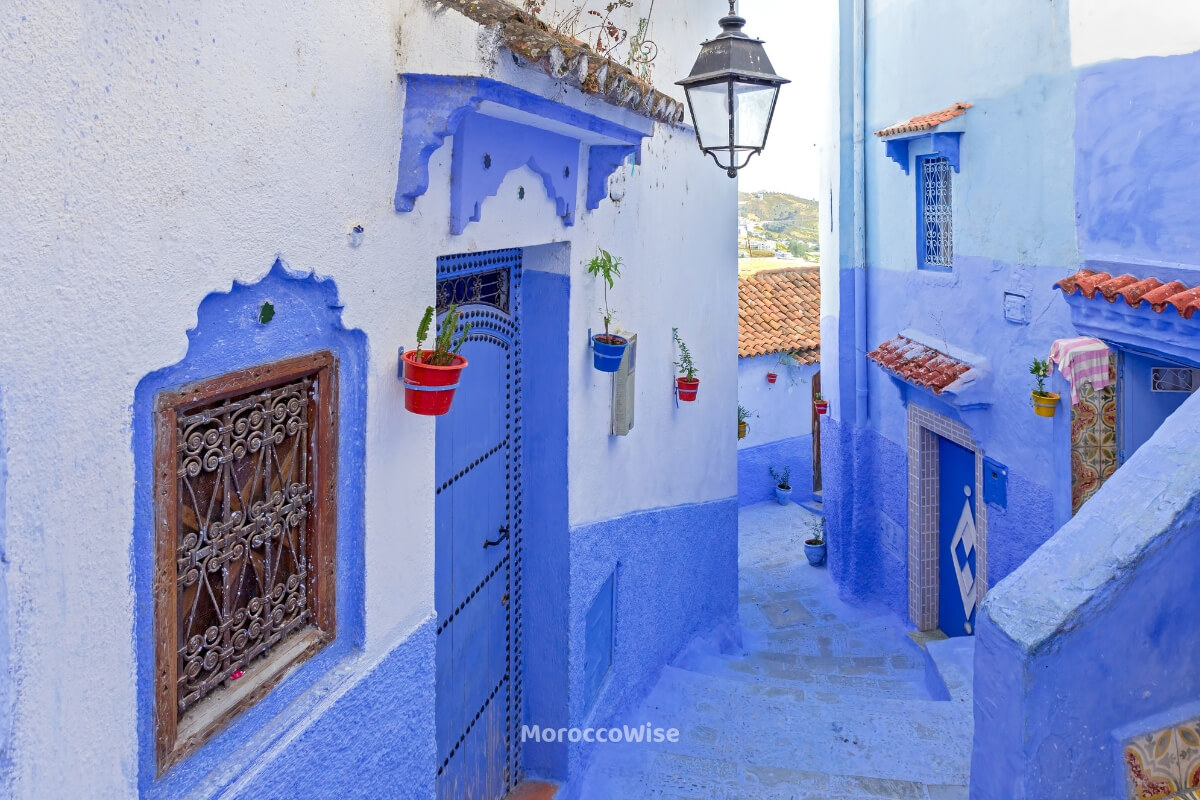
What is certain is that maintaining the blue is now part of the town's visual identity. Different shades appear from doorway to doorway, set off by white trim, flowerpots, woven baskets, and the changing mountain light. The most memorable details are often small: a cobalt step, a pale arch, a patch of shade on a sloping lane.
A living medina and local culture
Chefchaouen's medina centers on Outa el Hammam, a plaza framed by cafes, restaurants, the Kasbah, and the Grand Mosque. From there, lanes climb and twist toward quieter residential areas and viewpoints. Local artisans sell woven textiles, wool garments, leather goods, and other crafts shaped by the Rif region. Shop with curiosity, ask before photographing people or workshops, and bargain politely only when you genuinely want to buy.
The town's pace can feel gentler than that of busier tourist destinations, but residents are still going about their daily routines. Keep voices low in residential alleys, avoid blocking doorways, and remember that a colorful staircase may be part of someone's home. A friendly greeting and permission before taking a portrait help make travel more respectful.
Enjoying the Blue Pearl at a thoughtful pace
Plan at least one unhurried day to explore the medina, visit the Kasbah museum if it is open, and take in the view from a nearby hillside. Wear shoes with grip for uneven stone steps and bring a light layer: mountain weather can change quickly, especially outside summer. If you want to hike beyond town, check current trail conditions and consider a local guide for unfamiliar routes.
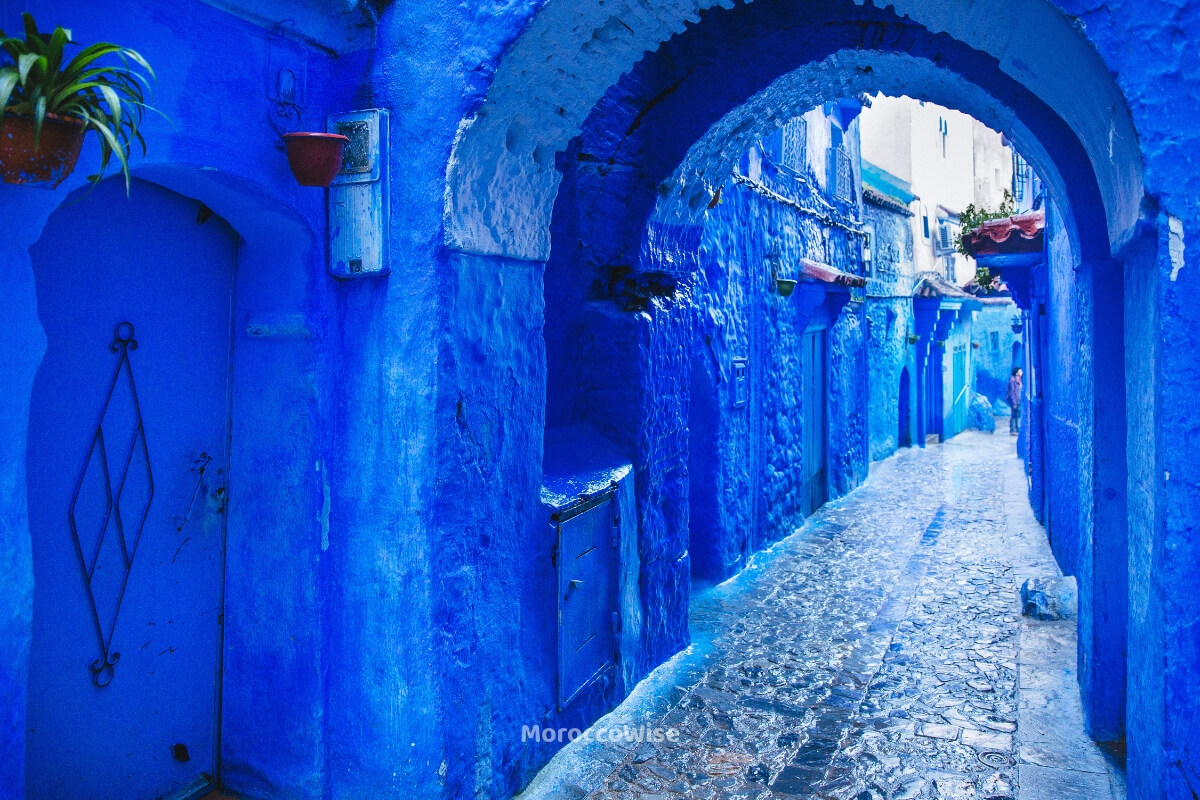
Chefchaouen's appeal is not only its color. Its history reflects movement between mountains and the Mediterranean, and its identity continues through local language, food, craft, and community life. Take time to notice those layers, step aside for residents, and let the blue medina reveal itself one lane at a time.