
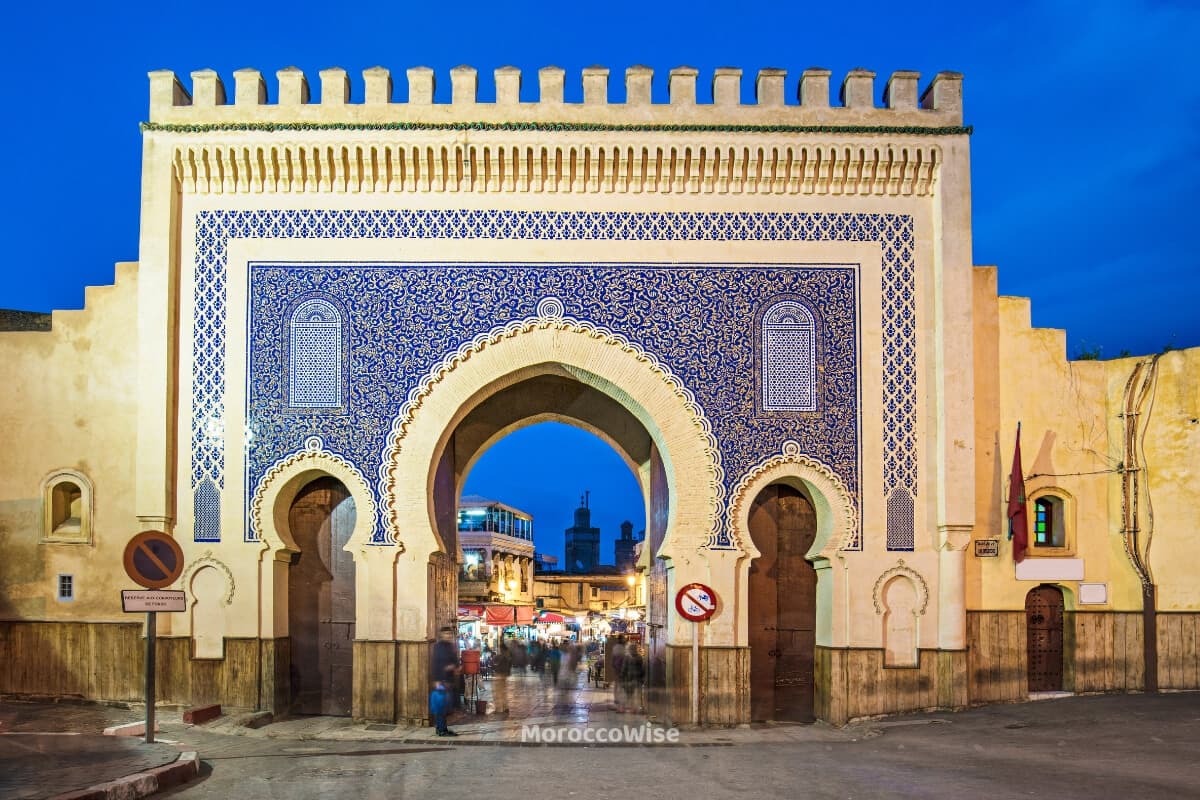
Bab Bou Jeloud, widely known as the Blue Gate, is one of the most recognizable entrances to Fes el-Bali. Its decorated facade stands at the edge of the old medina, where broad streets and cafes meet the dense network of historic lanes. For many visitors, it is the natural starting point for exploring Fes. The gate is more than a photogenic landmark: it frames a transition into a neighborhood where daily life, commerce, and centuries of history overlap.
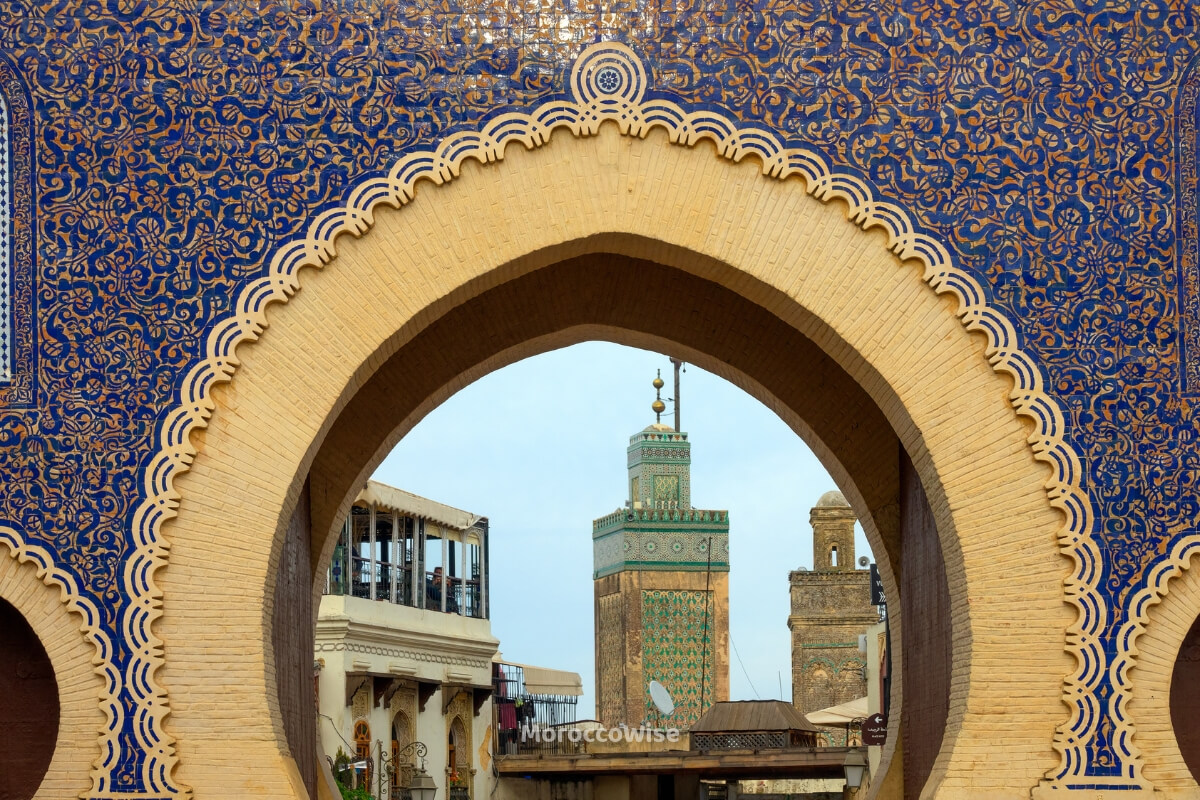
A gateway between the new city and old medina
The current monumental gate dates to the early 20th century and was built during the French Protectorate period, near the site of an older entrance. Its position connects the newer parts of Fes with the historic medina. Step through and the scale changes quickly: traffic and open streets give way to narrower lanes, small shops, and pedestrian passages.
Bab Bou Jeloud is often treated as a convenient meeting point. Before entering, note the way back and save your accommodation location offline. The medina's streets are not a simple grid, and a familiar gate can make it easier to reorient at the end of a walk. If you are meeting a guide, confirm which side of the gate and the exact time.
Blue on the outside, green on the inside
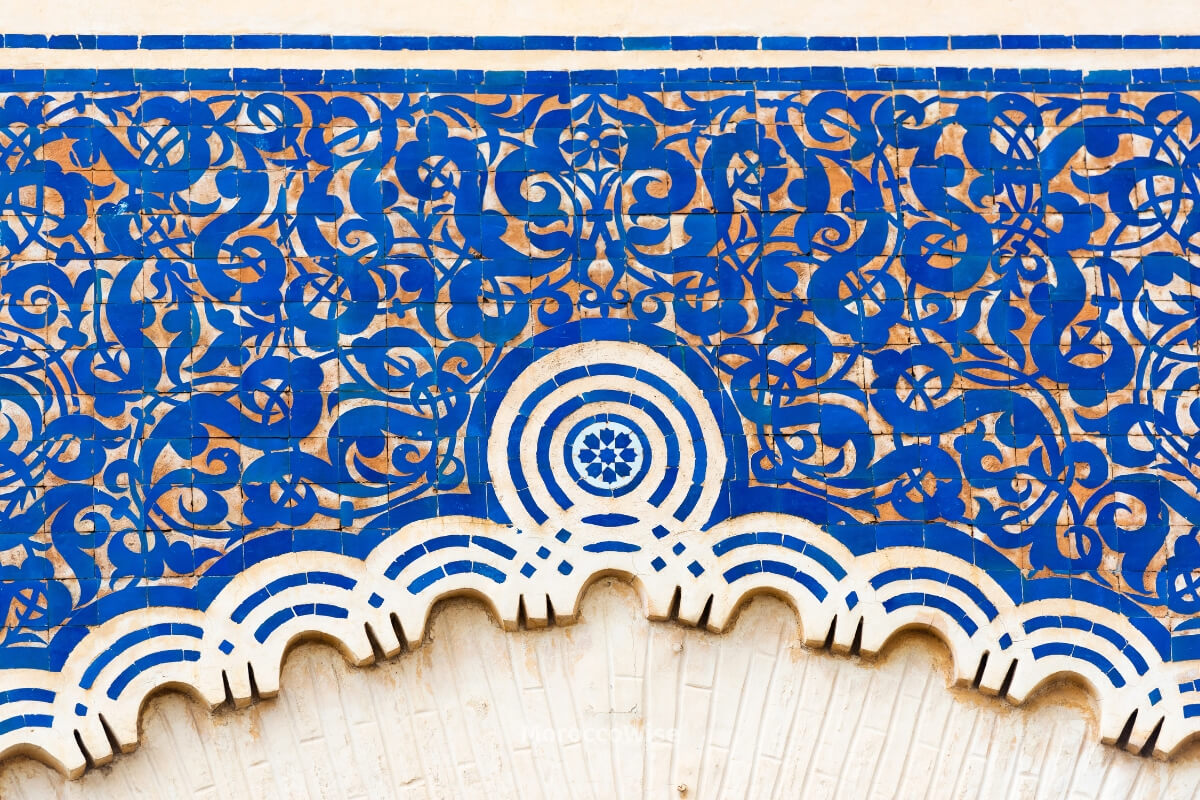
The gate's horseshoe arches and geometric tilework draw on Moroccan architectural traditions. The exterior facing the newer city is predominantly blue, while the side facing the medina is green. Blue is strongly associated with Fes, and green has important associations with Islam. The colors provide a memorable visual contrast, while the patterned zellij reflects the skill of tile artisans.
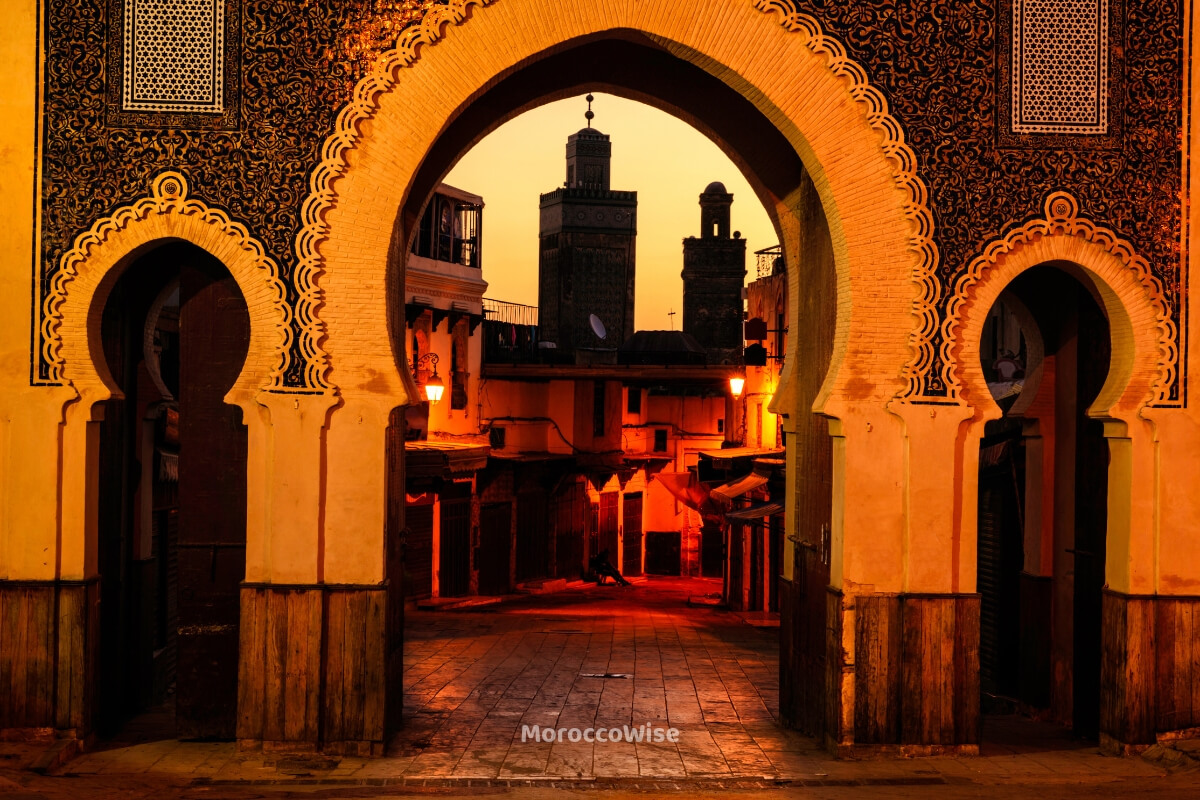
Pause to notice the layers of the facade rather than only taking a quick photograph: the pointed arch, repeated geometric shapes, and surrounding stonework. The gate is in an active public area, so leave space for people passing through and do not block the entrance while taking pictures.
Cafes and streets around the gate
The streets outside the gate have cafes and restaurants where visitors can take a break before or after exploring. Some offer views toward the gate and a chance to watch the flow of people entering the medina. Check menus and prices before ordering, particularly if you choose a rooftop table. A mint tea or light meal can be a comfortable pause after walking the uneven lanes.
Beyond Bab Bou Jeloud, routes lead toward historic madrasas, souks, mosques, and residential quarters. Ask your accommodation which landmarks are easiest to reach from this entrance. A guide can help explain the gate's context and the surrounding districts; agree on the itinerary and cost clearly before setting off.
Visiting respectfully
The area can be busy throughout the day. Watch for traffic near the outer streets and handcarts or service vehicles inside the medina. Wear comfortable shoes and keep valuables secure. Residents use these lanes to reach homes and work, so avoid blocking doorways and ask before photographing individuals, shops, or private spaces.
Bab Bou Jeloud is a beautiful threshold into Fes el-Bali, but the experience does not end at the arch. Use it to orient yourself, then follow the medina at a slower pace. Its tilework offers an introduction to Fes's craft traditions; the streets beyond reveal how those traditions continue to belong to a living city.